
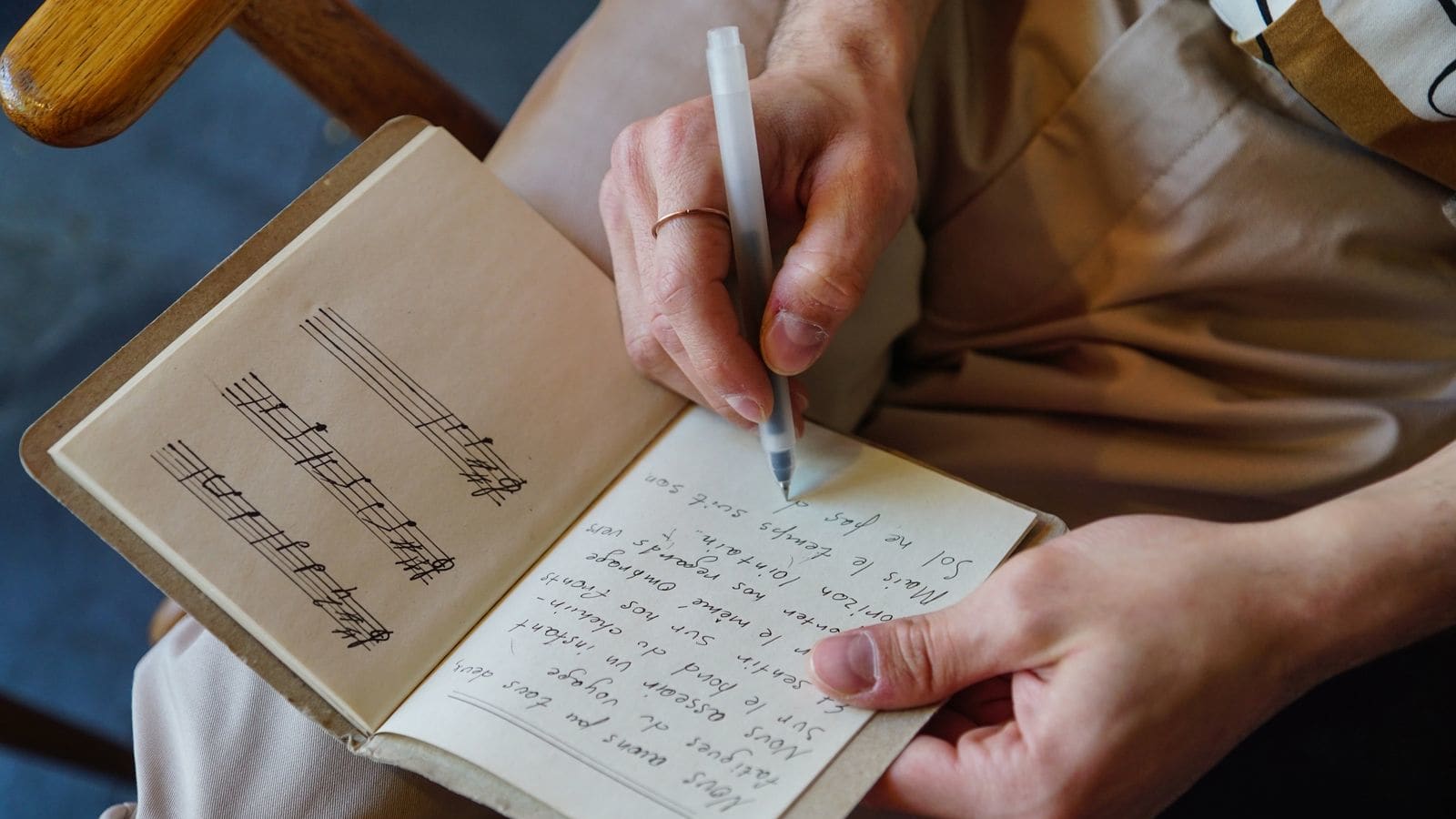
Messy practice notes usually fail at the moment you need them. They might be full of good observations, but if you cannot find the right note when you sit down tomorrow, the note is not doing much work.
The fix is not a prettier notebook. It is a simple sorting system. Every useful practice note needs a home, a location, a problem label, and a next action. Once those four things are clear, the note stops being a memory dump and starts acting like a cue.
The organizing rule
Stop keeping one giant pile of notes
The most common practice-note problem is not laziness. It is mixing too many different jobs in one place. A single page might contain lesson reminders, tempo markings, emotional reactions, fingerings, questions for the teacher, and vague entries like "practice this more." That feels productive while writing, but it becomes annoying later because every future session has to search through the whole pile.
One giant pile also makes all notes look equally urgent. A note about a fingering problem in bar 18 sits next to a note about buying strings, which sits next to a reminder that the recital is in May. Your brain has to sort the pile again every time you practice. That is exactly the work an organization system should remove.
A better system starts by separating notes by their job. Some notes are about a piece. Some are about a technique that appears across several pieces. Some are questions for a teacher. Some are weekly review notes. If those categories stay mixed, the notes become clutter. If they are separated, each note has a practical use.
| Type of note | Where it belongs | Example | When to review it |
|---|---|---|---|
| Piece note | Under the specific piece | "Bars 21-24 rush when hands join." | Before practicing that piece |
| Technique note | Under a skill tag | "Fourth finger collapses in repeated thirds." | During warmups or drills |
| Teacher question | In a short lesson list | "Ask whether bar 12 fingering should change." | Before the lesson |
| Review note | In the weekly summary | "Rhythm slips appeared in two pieces this week." | At the end of the week |
Start with the piece, then the smallest useful location
The first folder is the piece. Not the date. Not the total practice time. Not the general mood of the session. The piece is where your future self will go looking when that music is on the stand again. If a note is attached to the wrong place, it becomes hard to find even when the content is good.
After the piece, add the smallest useful location. That may be a bar number, a rehearsal mark, a phrase, a chord change, a shift, a bowing, a lyric entrance, or a page turn. The goal is not tiny detail for its own sake. The goal is to make the next session start without a search. "Beethoven, bar 32, left-hand leap after rest" is immediately useful. "Beethoven needs work" is just a feeling wearing a label.
This lines up with how many good practice resources frame the work. A NAfME plan-practice-reflect worksheet asks students to state goals around small passages of four to eight measures, choose strategies, and then reflect on what goals should come next. That scale is useful because it is small enough to act on. A note attached to a whole piece rarely tells you what to do first.
If you use a notebook, give each active piece its own page or spread. If you use a notes app, make one note per piece. If you use Practis, keep session notes connected to the piece and goal so the history is searchable later. The tool matters less than the rule: when you return to the piece, the relevant notes should already be nearby.
Example piece page
Clementi Sonatina - active notes
Label the problem by type, not by mood
"Bad," "messy," "hard," and "confusing" are honest words, but they are poor labels. They describe how practice felt, not what needs to happen next. A useful system replaces mood labels with problem labels: rhythm, fingering, shift, memory, sound, tension, reading, tempo, coordination, attention. Those labels are not fancy. They are handles.
Problem labels help because they reveal patterns across pieces. If three different pieces have notes tagged "rhythm," the issue is probably bigger than one bar. If several notes are tagged "memory," the next week may need more cold starts and entry points. If "tension" appears repeatedly, the right move may be slowing down, checking setup, or asking a teacher before pushing harder.
This is one reason session notes should not only record time. The Boston Youth Symphony Orchestras practice log, for example, asks students what they practiced, why, what the specific goal was, and includes space for metronome marking. The format is plain, but the idea is useful: a practice record should connect material to purpose. For a deeper breakdown of what belongs in each entry, what students should write down after practice gives examples of notes that are specific enough to use later.
End each note with the next action
A note without a next action is only half finished. "Bars 21-24 rush" is useful, but it still leaves tomorrow's first decision open. "Bars 21-24 rush. Start next time at bar 19, count aloud, stay at 60" is much better. The action does not need to solve the entire passage. It only needs to make the next start obvious.
This is where many note systems become too polite. They collect observations but avoid decisions. A student writes down what happened, closes the notebook, then returns the next day and has to decide all over again. If the end of the note includes the first move, practice can begin before motivation has a chance to negotiate.
The University of Texas Center for Music Learning makes a related point in its practice guidance: musicians should work to make one small thing great and should make difficult tasks more manageable by changing as little as possible. That is a good standard for next actions. The action should be small, concrete, and close to the real music: "hands separate at 56," "sing top line before playing," "start two bars before the leap," "play once cold before warmup." It should not be "practice more."
"The best practice note is not the one with the most detail. It is the one that removes the next decision."
Keep a simple status for every note
Notes also need a way to leave the active pile. Otherwise the system becomes a museum of old problems. A bar that was difficult three weeks ago may no longer deserve attention. A tempo target may be outdated. A teacher question may have been answered. If old notes never move, the useful notes get buried.
Use three statuses: active, watch, and solved. Active means the note should shape the next session. Watch means the problem is mostly improved but still needs a cold test or a run-through check. Solved means the note can stay in history, but it no longer needs daily attention. This does not have to be elaborate. In a paper notebook, use a small checkbox or circle. In a digital tool, use tags or status fields.
The point is to keep the system honest. If a note stays active for a long time, it may need a better strategy or a teacher's help. If everything becomes solved too quickly, you may be closing issues before they hold under real playing. The weekly scan is where this cleanup happens. The process in reviewing a week of music practice in 10 minutes pairs well with this because it gives you a regular moment to move notes instead of letting them accumulate forever.
Three-note status board
Build the note map once, then keep it boring
The system should not become another hobby. Spend one setup session making the map: one place for each active piece, one place for technique notes, one place for teacher questions, and one place for weekly review. After that, keep the daily habit boring. Add the note. Sort it. Give it a next action. Move on.
This is the same reason practice time alone is not enough. Time tells you that a session happened, but organized notes tell you what the session changed. If you are deciding what to track, practice goals vs practice time explains why goals and outcomes usually carry more practical information than minutes alone.
A good note map makes returning to music feel less like starting over. You open the piece, see the current active notes, and begin with the next action already waiting. That small reduction in friction matters. Most practice sessions do not fail because the musician forgot how to care. They fail because the first five minutes are spent trying to reconstruct yesterday.
Music practice note map
That is the quiet win of organized notes: the next session does not have to begin with remembering. It can begin with playing.


