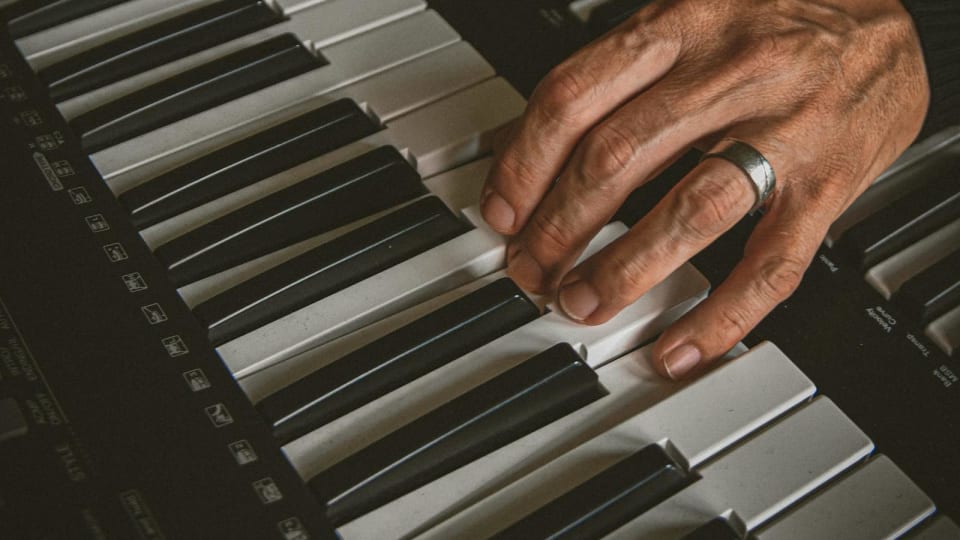
The practice room lets you cheat. You can stop after a slip, replay the good bar, start over from the top, and leave feeling better than you would have felt under real pressure. That is useful for learning, but it can create a false sense of readiness.
Performance asks for something else: continuity, memory retrieval under stress, recovery after mistakes, and enough control to keep communicating when the conditions stop being comfortable. If you want to perform better, you have to train some of those conditions directly instead of assuming they will appear automatically once the piece feels good in private.
Why practice-room success does not always transfer
The gap between private practice and performance is not just in your head. The Royal College of Music's Performance Simulator project makes the problem unusually clear: practice rooms differ significantly from concert venues, and many students get too little repeated exposure to realistic performance situations. In other words, musicians often train the notes thoroughly while undertraining the environment in which the notes actually have to survive.
That distinction also shows up in research on public versus private music making. A 2020 protocol paper by Guyon and colleagues frames performance quality and physiological response as changing from a private performance to a public one, precisely because the perceived demands are different. And in a study of Schumann recordings, Shoda and Adachi found that audience-present recordings differed from audience-absent ones, with listeners often preferring the live versions. The presence of stakes changes the output.
That is why a piece can feel stable on Tuesday night in your room and suddenly feel narrower, faster, more exposed, or less memorable in front of listeners on Saturday. The notes may be learned. The conditions are not.
Before changing your routine, it helps to name what the practice room quietly gives you for free, and what those comforts fail to test:
| Practice-room advantage | What it hides | What to train instead |
|---|---|---|
| You can stop whenever something goes wrong | Continuity and emotional recovery | One-take no-stop runs of sections or whole pieces |
| You usually start from the top | Weak restart points and weak memory map | Random starts from landmarks and section entries |
| You are alone and unobserved | Pressure response is untested | Camera runs, small audiences, timed starts |
| You fix every slip immediately | No skill at getting back on track | Recovery drills that continue to the next anchor point |
| You mostly work in fragments | Stamina, pacing, and larger-form focus | Integrated run-throughs after the detail work is done |
The core shift is simple: stop asking private repetition to train public delivery. Some of it transfers. Some of it does not. The missing part has to be practiced on purpose.
Memory security is a retrieval problem, not just a repetition problem
Many musicians think memory is secure because they can get through the piece once from the beginning. That is a weak test. Real performance memory is not just serial flow. It is the ability to locate yourself, restart, and know what comes next even when the expected chain gets interrupted.
Roger Chaffin and colleagues showed this in detail in their study of a cellist preparing Bach for ten public performances. The player did not simply repeat the piece until it stuck. She practiced memory retrieval at each stage, using structural and expressive landmarks as performance cues. Those cues acted like a mental map. When the memory chain weakened, the landmarks still told the performer where she was and how to continue.
A related case study from Lisboa, Chaffin, and Demos is useful because it shows this is teachable. An 18-year-old piano student learned to memorize by recording her thoughts while practicing; those thoughts later functioned as retrieval cues during performance and reconstruction. That matters because it turns memory from a mysterious talent into a strategy problem.
For practical purposes, this means your memory has to be tested in more than one direction. Can you enter at the bridge, the recapitulation, the second verse, the modulation, the return of the theme, or the exposed shift after the rest? If not, the piece may feel memorized, but it is still fragile.
If you want a stricter performance standard, use this memory audit before calling a piece secure:
- You can start from at least five random landmarks without a warm-up run.
- You can name the next section, chord area, lyric line, or fingering plan before you play it.
- You can resume after an intentional skip without collapsing all the way back to the top.
- You can play the piece cold after a break, not only after twenty minutes of rehearsal.
- You can keep going after a small error without mentally treating it as a disaster.
This is the same reason musicians benefit from stronger memorization methods. Performance memory is rarely saved by one more top-to-bottom repetition. It is usually saved by better landmarks and better retrieval practice.
Recovery is part of the skill, not proof that you were unprepared
A lot of musicians prepare as if the goal were to prevent every possible deviation. That is understandable, but it is incomplete. Even very strong performances contain disturbances: a split note, a tense attack, a distracting sound, a page problem, an accompanist who pushes, a breath that arrives late, a finger that lands a little wrong. If your only plan is "do not let anything happen," then the first disruption can take down much more than the one moment itself.
Silke Kruse-Weber and Richard Parncutt make a useful point in their error-management framework for musicians. They argue that performers need more than error avoidance. They need anticipatory training, simulation of likely disturbances, and constructive responses during and after mistakes. Their framework is blunt about it: musicians should practice under similar circumstances and learn to anticipate events so the consequences are smaller when something does go wrong.
That changes how you should rehearse fragile spots. Instead of only trying to produce the clean version, occasionally train the save. What is your nearest landmark? Which beat or harmonic arrival lets you rejoin? Which bowing, sticking, fingering, or breath pattern helps you stabilize quickly? Recovery is not panic. Recovery is a prepared route.
A simple recovery drill can look like this:
- Choose one high-risk spot. Pick the place where tempo rushes, memory fogs, or coordination usually narrows.
- Deliberately disturb it. Skip a note, enter late, change the dynamic plan slightly, or begin from the bar before the danger point.
- Continue to the next anchor. Do not stop immediately. Your job is to land on the next stable point in time.
- Name what actually saved you. Maybe it was the bass line, the lyric cue, the harmonic turn, the bar line, or a physical setup gesture.
- Repeat with a different disturbance. The aim is not one lucky escape. It is a flexible recovery habit.
That method pairs naturally with self-correction in the practice room, because the same skill is involved: notice what broke, identify the category, and test one better response at a time.
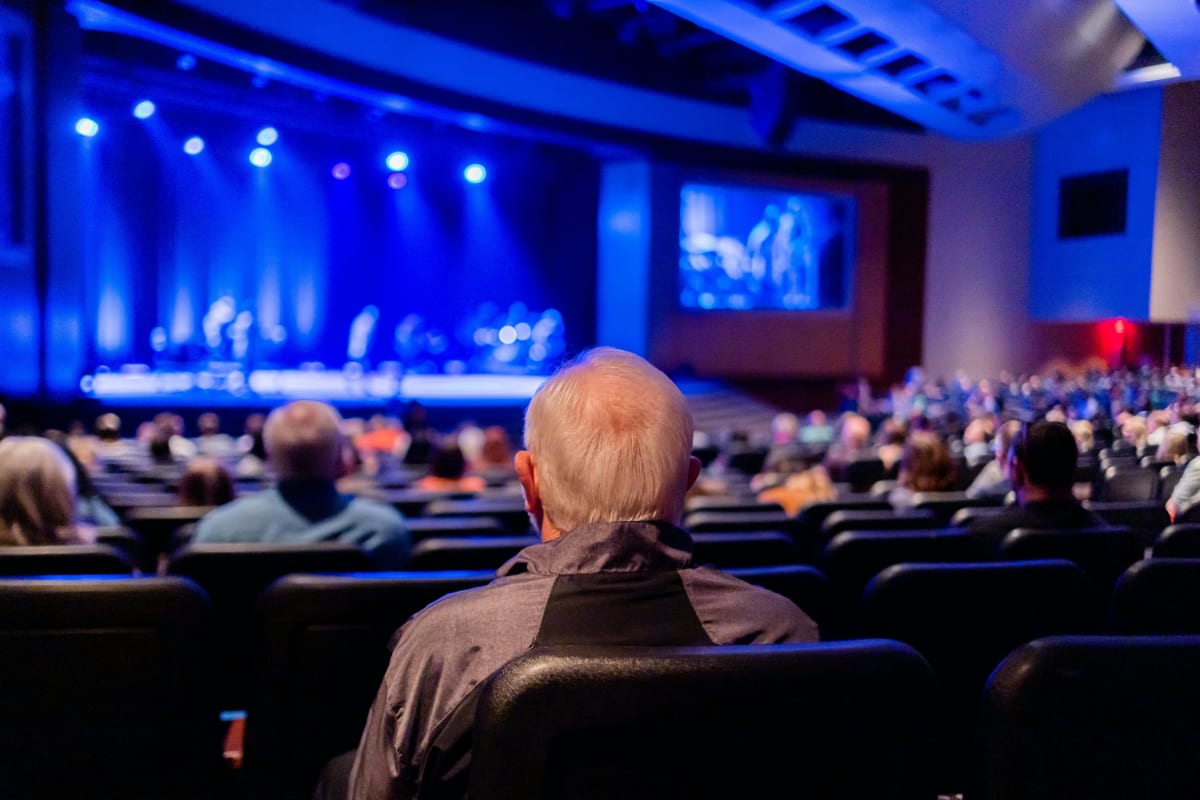
Photo: Caleb Oquendo via Pexels
If every practice slip triggers an immediate stop, you may be training interruption more than recovery. That is useful in detail work, but it becomes a liability if you never also rehearse how to continue.
Run-throughs are tests, not your main practice diet
Musicians often swing between two bad extremes: no run-throughs at all, or constant run-throughs as if repetition alone will harden the piece. Neither is ideal. Too few run-throughs leave continuity, pacing, and stamina undertrained. Too many run-throughs turn practice into performance cosplay, where problems are repeatedly exposed but not actually solved.
Chaffin's cello study helps here too. The performer repeatedly took the piece apart and then re-integrated sections into practice performances across stages of preparation. That is the useful model. Fragment work and performance work are not enemies. They alternate. You isolate, solve, rejoin, test, then isolate again if the test exposes another weak link.
Antonini Philippe and colleagues found something similar in conservatory exam preparation: many students preferred technical and musical work to the more exposed challenge of playing in front of the public, and the authors argue students would benefit from better organization before important performances. That pattern is familiar. Musicians often keep polishing in private because private polishing feels productive. Performance testing feels riskier, so it gets delayed.
A useful run-through has one purpose. Maybe you are testing memory continuity. Maybe stamina across the full program. Maybe the opening minute. Maybe stage pacing between pieces. What it is not for is general emotional self-punishment.
After a run-through, do a short review rather than another immediate top-to-bottom attempt. Ask:
- Where did continuity break first?
- What stayed reliable under pressure?
- Which restart points were available and which were missing?
- Was the problem memory, timing, tension, attention, or pacing?
- What is the first repair task for tomorrow?
That review process is the same bridge described in reviewing a practice session so tomorrow goes better. A run-through without diagnosis is just exposure. A run-through plus diagnosis becomes preparation.
You can simulate stakes without a formal stage
Most musicians do not have access to a recital hall every week, and they do not need one. The point is not to recreate Carnegie Hall perfectly. The point is to remove some of the comforts that make the practice room unrealistically forgiving.
The Royal College of Music built an entire performance simulator because repeated exposure to realistic conditions helps musicians train how they manage audience demands and performance stress. You do not need that level of technology to borrow the principle. You just need conditions that make the task less editable and more exposed.
Ritchie and Sharpe's study of self-recorded performance assessments is helpful here. Students who chose to submit their recorded assessments reported more strategies in their preparation and higher self-efficacy than those who deferred. Recording changes the preparation because it imposes consequence. A one-take video is still not a concert, but it is much closer to performance than endless reversible practice.
A simple ladder of mock stakes works well for most musicians:
- One-take phone run. No stopping, no editing, no retry.
- Cold start within ten seconds. Walk in, announce the piece, and begin.
- One listener. Friend, teacher, partner, colleague, or video call.
- Mini program. Play the actual sequence, including pauses and transitions.
- Disturbance layer. Use lights, shoes, outfit, page turns, backing track, accompanist, or standing setup if those belong to the real event.
If you use Pract.is, this is a natural place for it: log the mock run, note what broke first, capture the reliable tempo, and write down the restart points that failed. Performance preparation improves faster when those observations stop living only in memory.
This also connects directly to what actually helps with performance anxiety. One reason nerves feel so chaotic is that the conditions themselves have barely been rehearsed. Simulated stakes do not eliminate anxiety, but they make it less unfamiliar.
Practice and performance overlap, but they are not the same job. If you only train the safe version, the exposed version stays undertrained. The stage usually reveals that gap with brutal honesty.