
Functional Ear Trainer vs Perfect Ear
Both are ear training apps. Functional Ear Trainer ear training focused on hearing scale degrees in context; Perfect Ear ear training, rhythm, solfège, theory, and note-reading app. Here is how they compare on the things that decide it.
About Functional Ear Trainer
Functional Ear Trainer is a mobile ear-training app built around the Alain Benbassat method, which teaches listeners to recognize tones by their function within a key rather than by memorizing isolated intervals. The app establishes a key by playing a short chord cadence and then asks the user to identify how a played note relates to that tonal center. Its core Basic Training mode plays a cadence followed by a single tone, and the user identifies the scale degree, training functional pitch recognition through repeated short sessions. An advanced mode extends this by playing two notes sequentially or simultaneously so users can identify scale degrees and the interval between them. The app is designed around short daily practice, and includes configurable playback and label settings, an optional intro game for new users, daily practice reminders, and the ability to share results. It is intended for musicians who want to improve relative pitch for playing by ear, improvising, and transcribing. The app is available on iOS and Android and follows a freemium model, with a substantial set of free exercises and additional features unlocked through paid upgrades.
About Perfect Ear
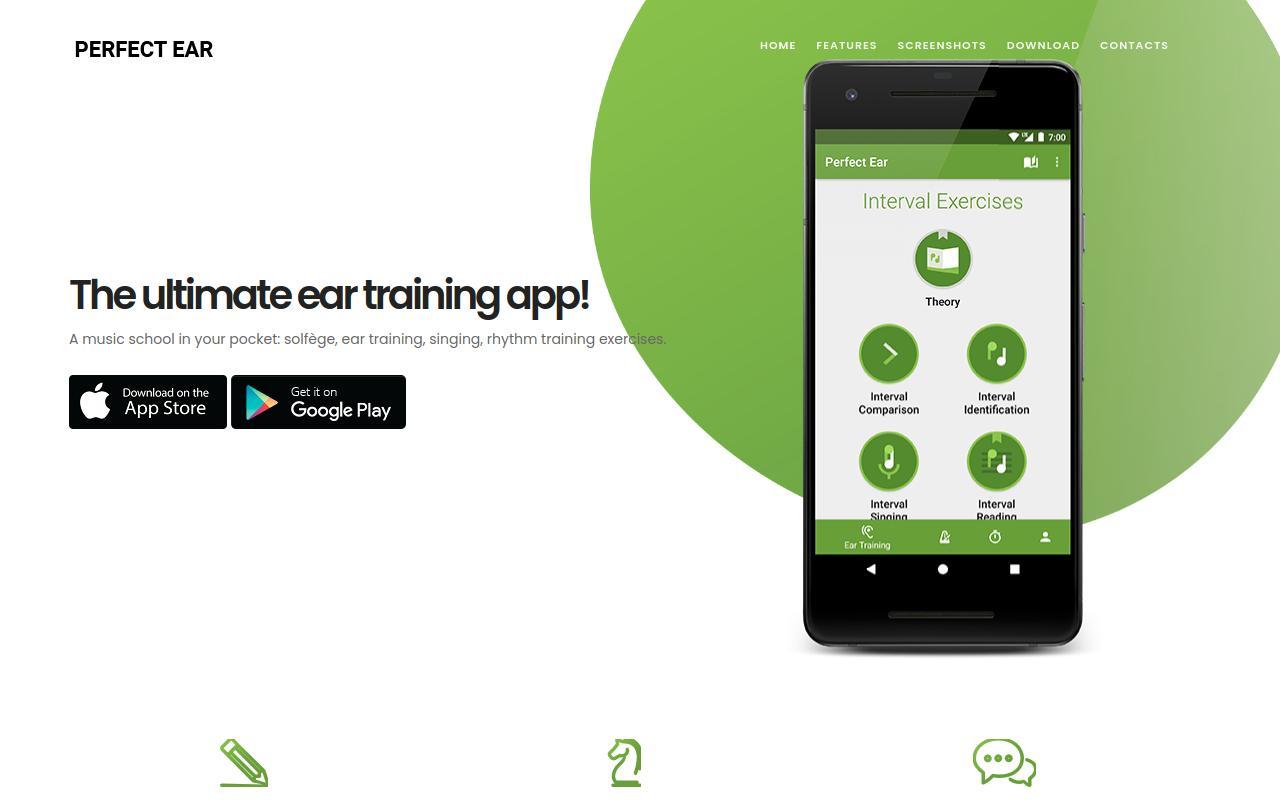
Perfect Ear is a mobile musicianship and ear-training app, developed by Crazy Ootka Software, that bundles a broad range of exercises and reference material into a single "music school in your pocket." It is designed to develop aural skills, sight-reading, rhythm, and music-theory knowledge for musicians of varying levels. The app offers exercises across several categories: interval exercises (comparing, identifying, and reading intervals), scale exercises (identifying scales by sound and notation), and chord exercises covering identification, inversions, reading, and progressions. It also includes singing exercises, rhythm exercises for reading, tapping, and imitation, and sight-reading drills for recognizing notes on the staff. A theory section provides articles covering foundational topics. Exercises range from basic to advanced and can be used by amateurs and professionals. Perfect Ear is aimed at music students, hobbyists, and working musicians who want structured practice on a phone or tablet. It is available on Android (Google Play) and iOS (App Store) and uses a freemium model: a large amount of content is free, while some exercises and features require a paid upgrade.