
Moises vs Opus
Both are ai music tools apps. Moises ai music app for stem separation, practice, and remixing; Opus classical music guide. Here is how they compare on the things that decide it.

About Moises
Moises is an AI-powered creative suite for musicians, built to help them practice, perform, create, and collaborate. Its signature capability is separating any recording into individual stems so users can isolate or mute parts of a track. Core features include stem separation for vocals, instruments, and drums; a chord detection/finder that identifies a song's chords; a speed changer and key/pitch adjustment for building practice tracks; and automatic lyric transcription. Additional tools include video recording with studio-quality audio, an AI Studio for generating context-aware stems and expanding musical ideas, and a Voice Studio that adds vocals modeled on real singers across various styles. Moises states it only trains its models on licensed material and does not train on users' uploaded data. Moises is aimed at practicing musicians, learners, and producers. It is available as a browser-based web app and as applications for desktop, iPhone, iPad, and Android. It uses a freemium model: a free tier provides a limited number of uploads each month with a select set of features, while unlimited uploads and full functionality require a paid subscription.
About Opus
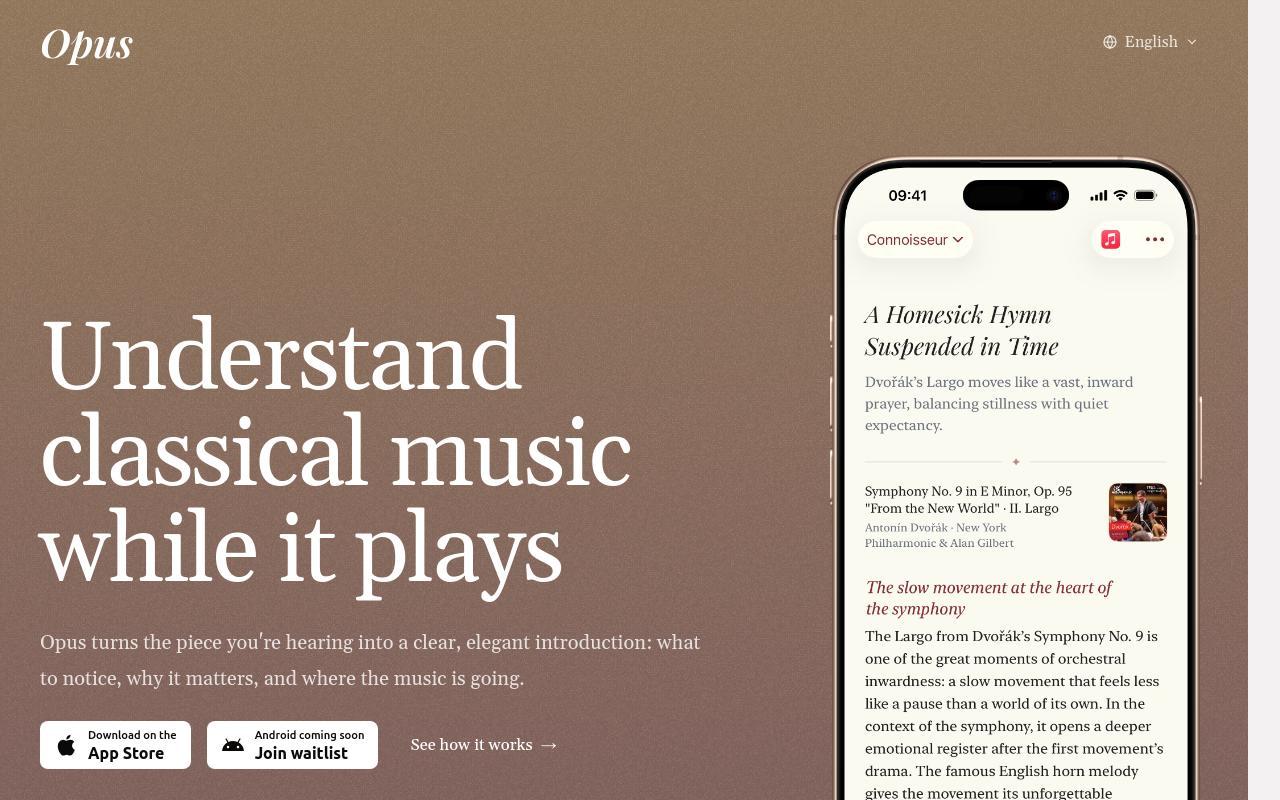
Opus is an educational companion app that turns whatever classical piece you're listening to into a clear, elegant introduction — what to notice, why it matters, and where the music is going. It syncs with Apple Music, Apple Music Classical, and Spotify, or accepts a manually shared track, and uses AI-guided musical context to explain works, movements, and composers at several listening-depth levels. A free Listener tier is available forever, with an Opus Pro tier that unlocks deeper listening levels for those who want to go further.