No, not everyone needs 88 keys immediately. But a lot of people who ask this question are really asking a different one: “What kind of player am I trying to become?”
That is the useful question. Because 61, 76, and 88 keys are not just different sizes. They point toward different use cases, different tradeoffs, and different ceilings.
Model examples and specs below were checked on March 9, 2026 using current official product pages, mainly Yamaha’s PSR-EW320, PSR-E383, and P-145 pages. The goal here is not to crown one brand. It is to make the decision logic clear.
The Short Answer
Before getting into the details, this is the quickest useful version.
| If your goal is... | Best starting point | Why |
|---|---|---|
| Learning piano seriously | 88 weighted keys | It supports real piano technique and full repertoire from the start |
| Trying music casually with a small budget or space | 61 keys | Cheaper, lighter, and enough for basic coordination, chords, and simple songs |
| Wanting more room than 61 keys without jumping to full piano size | 76 keys | A workable compromise, especially for pop, arranging, or limited space |
What the Number of Keys Actually Changes
The number of keys affects four practical things:
- Range: how much music you can play without octave-shifting or simplifying.
- Comfort: how cramped the left and right hands feel, especially as music gets more complex.
- Portability: smaller boards are easier to move and cheaper to store.
- Price: more keys, and especially weighted keys, usually mean more money.
What it does not change by itself is whether the instrument feels like a piano. That is where key action matters.

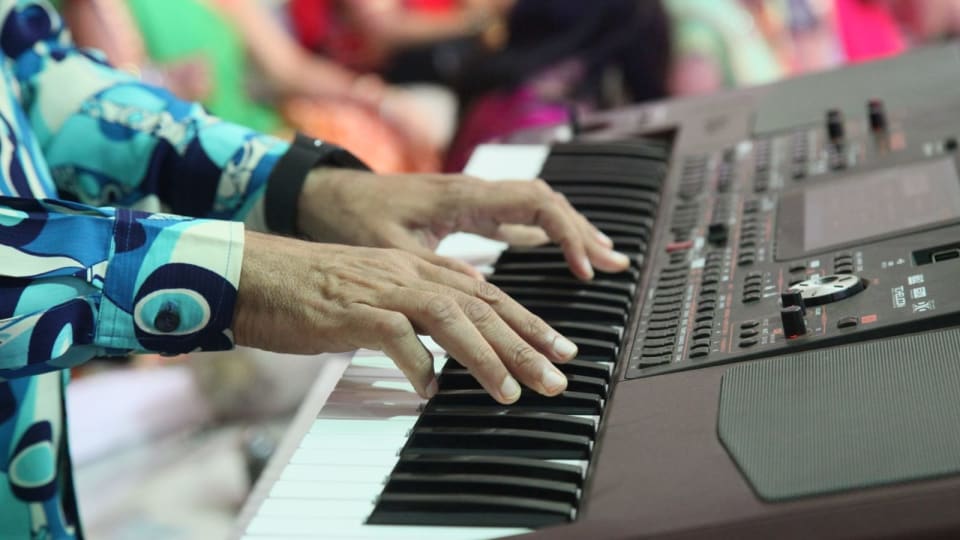
Photo: MART PRODUCTION via Pexels
When 61 Keys Are Enough
61 keys are enough if your goal is starting, not necessarily staying there forever.
A current example is Yamaha’s PSR-E383, which has 61 touch-sensitive keys. A keyboard like this makes sense if:
- you are on a tight budget
- space is limited
- you mainly want to learn basic chords, melody, rhythm, and coordination
- you are more interested in general keyboard use than in classical or acoustic-piano technique
What 61 keys do not do well is support long-term piano literature. The range runs out sooner than many beginners expect. Once two-hand textures get broader, or once you start playing pieces that really use the full instrument, the compromise becomes obvious.
When 76 Keys Make Sense
76 keys are the middle option people rarely talk about clearly. They are not a gimmick. They are also not the perfect answer for everyone.
Yamaha’s PSR-EW320 is a good current example: 76 touch-sensitive keys, more range than a 61-key board, still lighter and more affordable than a typical full digital piano.
76 keys make sense if:
- you want more room for two-hand playing
- you play pop, worship, songwriting, or arranging more than classical literature
- you want something more portable than a full 88-key digital piano
The limitation is that 76-key boards are usually still built more like keyboards than pianos. So the range improves, but the action often still does not teach the hand what an acoustic piano demands.
When 88 Keys Are the Right Answer
If your actual goal is to learn piano, not just to own a keyboard, 88 keys are still the safest default.
The clearest current beginner example is Yamaha’s P-145, which has an 88-key weighted GHC keyboard. That is the kind of specification that matters if you want a beginner instrument that behaves more like a real piano.
88 keys matter most when:
- you expect to take lessons
- you want to play classical repertoire properly
- you want technique that transfers to an acoustic piano
- you do not want to outgrow the instrument quickly
This is why the usual teacher answer is still “get 88 weighted keys if you can.” It is not snobbery. It is future-proofing.
Weighted vs Unweighted Matters Almost as Much as 61 vs 88
This is the part beginners often miss.
An 88-key instrument with light keyboard action is still not the same thing as a piano. And a smaller keyboard with decent touch sensitivity still does not solve the range issue. These are separate questions:
- How many keys do you have?
- How do those keys feel?
If the long-term goal is piano technique, weighted action is a big deal. It changes how the fingers, wrist, and arm learn to interact with the instrument. That is why someone planning to study seriously should usually choose 88 weighted keys over a cheaper full-size keyboard with light action.
The Honest Recommendation by Situation
Here is the decision in more human terms.
| Your situation | Best fit |
|---|---|
| You want to see if you enjoy playing at all | 61 keys is fine |
| You want a compact keyboard for songwriting or casual use | 61 or 76 keys |
| You want one board that is flexible but still portable | 76 keys |
| You want to learn real piano and avoid replacing the instrument soon | 88 weighted keys |
| You expect to work with a teacher | 88 weighted keys |
So, Do You Actually Need 88 Keys?
If the goal is serious piano study, yes, probably.
If the goal is a first, low-risk way into keyboard playing, not necessarily.
The mistake is treating those two goals as if they are the same purchase. They are not.
If you are unsure, it helps to pair this question with what kind of learner you actually are and whether you expect teacher feedback. Those answers usually clarify the keyboard choice faster than another hour of spec-sheet scrolling.
Buy for the player you want to be six months from now, not just for the box that fits the room this weekend.
FAQ
Can you learn piano on 61 keys?
Yes, up to a point. A 61-key keyboard is enough for beginner coordination, chords, scales, and simple songs. It becomes limiting faster if the goal is full piano technique or broader repertoire.
Is 76 keys enough for beginners?
Often yes, especially for pop, worship, songwriting, and general keyboard use. It gives more space than 61 keys, but it still usually does not solve the action problem if the goal is authentic piano feel.
Why do teachers usually recommend 88 weighted keys?
Because that setup supports real piano technique, transfers better to acoustic pianos, and delays the point where the instrument starts holding the student back.