

"Piano lessons" used to mean one thing: a teacher, a bench, a weekly appointment. In 2026 the same two words cover three completely different products. There are apps that listen to you play and gamify your progress for the price of a streaming subscription. There are real teachers who now teach anyone on earth over Zoom — a Vienna-trained pianist is as bookable from Ohio as from Austria. And there is a third option almost nobody advertises but a striking number of successful learners quietly run: a hybrid of the two, using an app or self-study for daily momentum and a real teacher, less often, for the things software can't see.
Most "best piano lessons" advice pretends only one of these exists. This is the whole map: what each path actually is, what it honestly costs this year, where each one breaks, and a simple way to decide — including the situations where the answer isn't the one you'd expect.
Three products wearing the same name
The confusion is understandable, because all three market themselves with the same photos of hands on keys. The differences underneath are structural, and they decide everything downstream — cost, speed, and what kind of player you become. Here's the honest side-by-side before we take each in turn.
| Apps | Real teacher (online) | Hybrid | |
|---|---|---|---|
| Who watches you play | Software (notes only) | A trained human, in real time | Human, on a slower cadence |
| Best at | Momentum, note-reading, fun | Technique, interpretation, getting unstuck | Steady progress on a budget |
| Blind spot | Hands, posture, tone, habits | Costs the most per hour | Needs self-discipline between check-ins |
| Typical cost | $10–25 / month | $35–90 / hour | $25–70 / month all-in |
| Fits best | Beginners building the habit | Stuck, serious, or exam-track players | Most adult learners after year one |
When an app is the right call
Apps earn their place honestly: they are cheap, endlessly patient, and genuinely good at the beginning of the journey — learning the keyboard's geography, reading notes, building the show-up-daily habit with streaks and instant feedback. For a total beginner who isn't yet sure piano will stick, $15 a month is a far saner first bet than $200 of lessons, and the best apps have become very good at that job. (Which ones are actually worth it is its own question — we keep a current, tested ranking in the best piano learning apps for adults.)
The ceiling arrives quietly, usually somewhere in the second year. An app hears which keys you pressed and when; it cannot see the collapsing wrist that's making the passage unreliable, hear that your "correct" notes have no tone, or notice the tension that will become pain at faster tempos. So app-taught players tend to accumulate songs while their underlying technique stays frozen at month three — everything new gets harder to learn, and nobody can tell them why. If that sensation is familiar, the ceiling isn't your talent. It's the format. We wrote a whole guide for exactly that moment: what to use after piano learning apps stop working.
"An app hears which keys you pressed. It cannot see the wrist that's about to make every new piece harder than the last."
When only a real teacher will do
Three situations make a live teacher the clear answer rather than a luxury. The first is being stuck — the same passage failing for weeks, pieces that plateau at 80% — because diagnosis is precisely what a trained ear does in minutes and software can't do at all. The second is anything physical: tension, fatigue, pain, or technique you can feel is wrong but can't name. The third is a real deadline — ABRSM or Trinity grades, an audition, a performance — where you need someone who knows what the panel listens for.
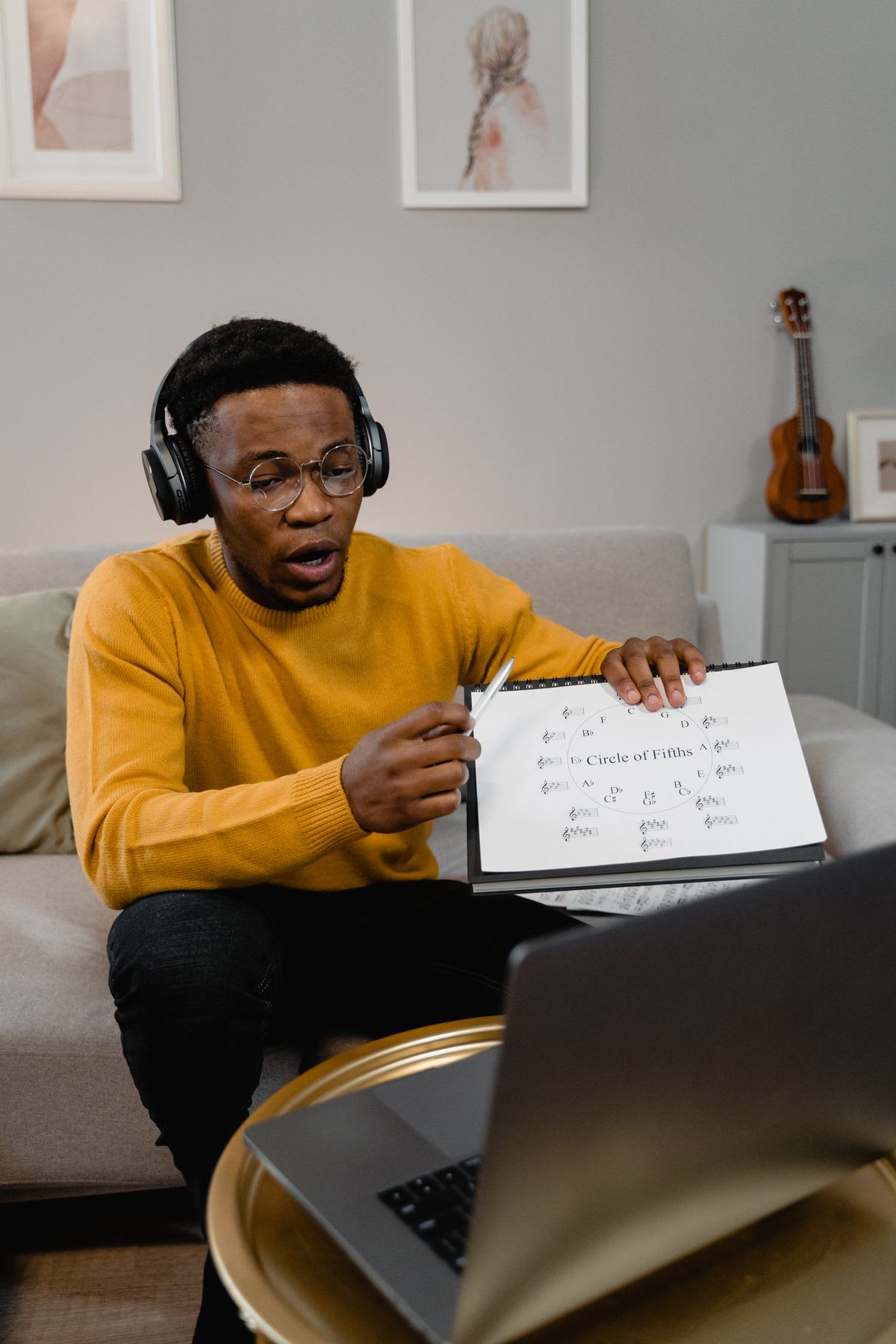
The good news of 2026 is that "a real teacher" no longer means whoever happens to live nearby. Our pick for serious one-to-one work is PianoTechSupport — a Vienna-trained concert pianist (M.A., Music University of Vienna) teaching live over Zoom, whose lessons are built around exactly the things apps miss: root-cause technique diagnosis, repertoire and interpretation, sight-reading, and a concrete practice plan for the week between lessons. At $45 for a full hour (with trial lessons available) it sits well under the $70–90 that conservatory-credentialed teachers typically charge, and the free YouTube channel lets you sample the teaching style before you book anything. For the wider field — including strong picks for kids, blues and jazz, and structured courses — the full comparison is in the best online piano teachers in 2026.
The hybrid path most players actually land on
Here's the option the marketing wars ignore, and the one that fits more real lives than either pure path. You don't have to choose between $15-a-month software and $180-a-month weekly lessons — the formats aren't competitors, because they fail in opposite places. Apps are excellent at the daily and terrible at the deep; teachers are unmatched at the deep and unnecessary for the daily. So run them at different frequencies: self-study or an app for the everyday momentum, and a real teacher every two to four weeks as your correction layer — catching the technique drift, resetting the plan, choosing repertoire that stretches you properly.
The math is friendly: a monthly $45 lesson plus a modest app subscription lands around $55–60 a month — a third of weekly-lesson cost, while preserving the one ingredient pure self-study lacks: a trained ear that regularly hears you. The single point of failure is the gap between check-ins, because a monthly teacher can only coach what they can see of your month. This is where keeping an honest record of your practice stops being a nice habit and becomes the hinge of the whole system — arrive with your last twenty sessions logged (what you worked on, where it broke down) in a tracker like Practis, and a monthly hour delivers most of what weekly students get, because none of it is spent reconstructing your month from memory.
Concretely, a hybrid month has a simple rhythm, and seeing it laid out makes clear why it works so well for adults with jobs:
One hybrid month, laid out
"Apps are excellent at the daily and terrible at the deep. Teachers are the opposite. The trick is running them at different frequencies."
Picking your path
Strip away the marketing and the decision usually takes three questions: Are you brand new and mostly testing whether piano sticks? Are you stuck, in discomfort, or working toward an exam? And if neither extreme fits — which is most people past their first year — the hybrid is probably your answer.
Which piano-lessons path fits you in 2026?
A few situational notes the diagram can't hold. For kids, start with a child-specific program and add a live teacher as they advance — the full picks are in the teachers guide. For returning players coming back after years away, a short run of teacher sessions beats an app — you need someone to triage what survived. And for adults weighing the pure app-vs-teacher question in more depth, we've argued that case from both sides in should adults learn piano with an app or a teacher.
Common questions
Are online piano lessons worth it in 2026?
Yes — with the caveat that "online lessons" means three different things. Live Zoom lessons with a good teacher deliver nearly everything in-person lessons do, and open up teachers you could never reach locally. Apps are worth it for what they're good at (habit, note-reading, fun) as long as you know their ceiling. The people who feel burned usually bought one format expecting the other's strengths.
Can I learn piano from apps alone?
To a real but limited level, yes — many players get one to two enjoyable years from apps alone. What apps cannot do is see your hands, so technique errors accumulate silently and eventually tax everything you learn. If you're app-only, budget for at least an occasional live lesson as a technique audit; one hour every couple of months catches most of what software misses.
How often do I need a teacher in a hybrid setup?
Every two to four weeks works for most learners — frequent enough to catch drift before it hardens into habit, spaced enough to stay affordable. The honest requirement isn't the frequency; it's arriving with your practice documented, so the lesson spends its minutes on correction rather than on reconstructing what you did since last time.
If you take one action from this map, make it small and concrete: beginners, install one well-reviewed app tonight and play for ten minutes. Everyone else — especially anyone stuck, hurting, or circling the same plateau — book a single trial lesson with a real teacher this week. One honest hour with someone watching you play will tell you which path you're actually on, and it costs less than the months most people spend guessing.


