
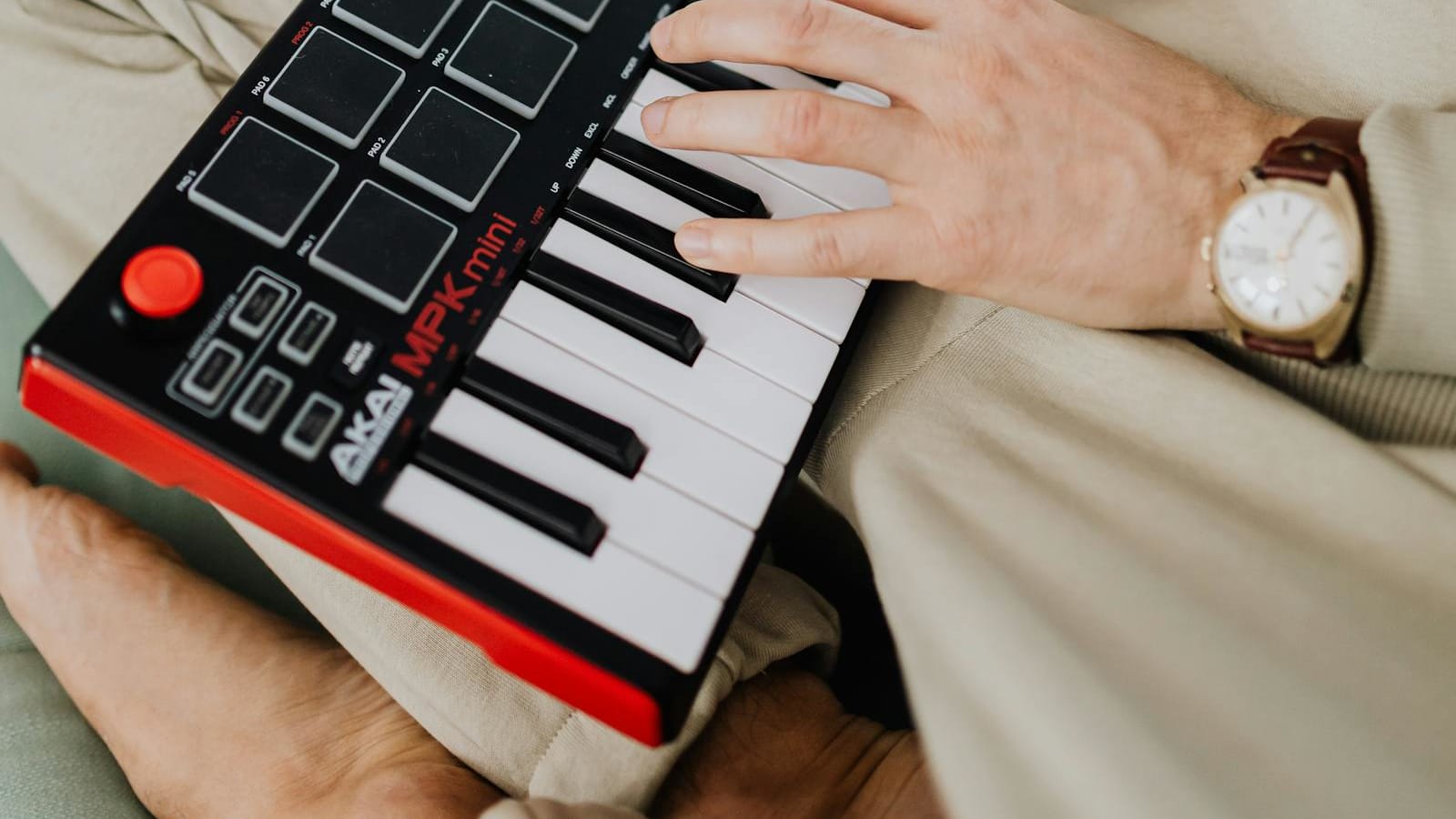
Most adults should choose Simply Piano if they need a guided beginner course, and Flowkey if they already want to learn specific songs from a score-like interface. That is the cleanest split. Simply Piano is better at keeping an absolute beginner moving through lessons. Flowkey is better when the adult wants video, sheet music, hand separation, looping, and a less game-like way into repertoire.
The tricky part is that both apps can look similar from the outside. They both listen through a device microphone or MIDI connection, both offer instant feedback, both have song libraries, and both promise a low-friction way to start piano at home. The difference shows up after the first week: Simply Piano tells the learner what to do next; Flowkey gives the learner more room to choose what to work on.
Fast recommendation
Choose Simply Piano
if you are starting from zero, need a clear path, and want short tasks that make progress obvious.
Choose Flowkey
if you want to learn songs with video, notation, loops, slower tempos, and separate-hand practice.
The adult beginner split is structure versus repertoire
Simply Piano is built around momentum. The Google Play listing says the app teaches from reading sheet music to playing with both hands, gives real-time feedback, works with any keyboard or piano, includes personalized 5-Min Workouts, and offers more than 5,000 songs in its song library. It also says the app is used by tens of thousands of music teachers worldwide and that more than 1 million songs are learned every week through Simply products. Those are marketing claims, but they point to the app's real identity: fast onboarding, clear sequencing, and low-friction repetition.
Flowkey is built around song study. Its own teaching page describes a workflow where the learner watches a pianist's hands while sheet music scrolls alongside, uses Wait Mode so the app pauses until the right notes are played, slows tracks down, loops difficult sections, and learns hands separately. The Google Play listing describes the same set of tools: loop, Wait Mode, hand selection, microphone or MIDI feedback, and a free version with selected songs and lessons. That makes Flowkey feel less like a course treadmill and more like a guided practice room for individual pieces.
That distinction matters for adults because adult beginners usually do not quit from lack of interest. They quit because the weekly practice pattern breaks. A course-led app can help when the adult is too tired to decide what to do. A repertoire-led app can help when the adult is motivated by a specific piece. The wrong app is the one that asks the learner to supply the thing they lack. If the learner lacks structure, Flowkey can feel too open. If the learner lacks musical buy-in, Simply Piano can feel like a lesson conveyor belt.
For broader context across more apps, the full piano learning apps for adults guide compares these tools against Skoove, Piano Marvel, and others. This comparison stays tighter: two apps, two learning personalities, and one adult decision.
| Category | Simply Piano | Flowkey | Adult advantage |
|---|---|---|---|
| Best first week | Very strong | Good | Simply Piano |
| Song-learning workflow | Good | Very strong | Flowkey |
| Structured path | Clear and guided | More flexible | Simply Piano |
| Practice tools | Feedback and short workouts | Loops, Wait Mode, speed control, hand selection | Flowkey |
| Family use | Up to 5 profiles on Family Plan | Family plan up to 5 profiles | Tie |
Choose Simply Piano if you need the app to make decisions for you
Simply Piano is the safer choice for adults who are truly starting from zero. The app's strength is that it reduces the number of decisions in the beginning. Instead of asking the learner to choose pieces, manage a score, design a weekly routine, and understand what matters next, it turns the first phase into short lessons with obvious feedback. That can feel basic to a returning pianist, but it is exactly what many adults need when they have only twenty minutes after work.
The personalized 5-Min Workouts are part of that fit. A five-minute workout will not make someone a strong pianist by itself, but it lowers the threshold for touching the instrument. That is not trivial. A beginner who plays five short sessions in a week usually gets further than a beginner who waits for one perfect hour and never takes it. Simply Piano understands that habit formation is part of the product.
The app also has a strong family argument. Simply's help center says the Family Plan supports up to 5 profiles on the same account, lets each person save individual progress, and includes full access to all Simply apps under one subscription. On iOS, Simply also describes a Duo Plan for one additional family member with Simply Piano only. For a household where a parent and child both want to try piano, or where someone may also use Simply Guitar or Simply Sing, that package can change the value calculation.
The weakness is that Simply Piano can feel too guided after the early phase. Adults who want to read normal notation, shape tone, choose repertoire independently, and work through longer pieces may eventually want more control than the app's path gives them. That is not a failure if the app got them playing. It just means the learner should know when the beginner scaffold has done its job.
Simply Piano score
8/10
for adults who need a beginner path and quick feedback.
Flowkey score
8/10
for adults who are motivated by repertoire and guided score work.
Teacher replacement
No
both apps miss touch, tension, phrasing, and technique correction.
Choose Flowkey if songs are the reason you practice
Flowkey is stronger when the adult already has musical targets. If the learner wants to play an arrangement of a film theme, a pop song, a simple classical piece, or a piece that sounds good quickly, Flowkey's workflow is more natural. The app places video and notation together, lets the learner slow down, and makes it easy to repeat a small section. That encourages the kind of focused passage work that adults need, especially once both hands are involved.
Flowkey's Wait Mode is useful at the start of a piece because it lowers panic. The app waits for the correct notes instead of forcing the player to keep up with a recording. That helps the learner understand keyboard geography before rhythm becomes the main demand. The important move is to stop using Wait Mode as soon as the notes are known. If time always waits for the player, rhythm can stay weak even while the app shows progress.
Flowkey also suits adults who dislike cartoonish gamification. It still has app feedback, subscriptions, and progress cues, but the center of the experience is more often a piece of music. That can feel more respectful to a returning adult who learned some piano as a child and does not want to be treated as a child. It also fits adults who already know they will practice if the reward is a recognizable piece rather than a badge.
The weakness is choice. More freedom means more responsibility. An adult can open Flowkey, browse the song library, sample five arrangements, and leave without doing serious practice. The app gives good tools, but the learner has to apply them with discipline. Anyone who tends to browse more than practice should either use a strict weekly plan or choose a more course-led app first.
Official app info
Simply Piano
Check current app-store features, subscription prompts, and device requirements before buying.
Official app info
Flowkey
Check the current song-access tiers, free content, and whether the library matches your taste.
Pricing favors the app you will actually open
Neither app should be judged only by its monthly price. Simply Piano's help center says subscription cost varies by country, platform, plan, and limited-time offers, and that users should open the app for the current price. Flowkey is more explicit in its public help center: the free account includes 8 free songs and some course exercises, all learning features are available, and paid plans separate Classic, Premium, and Family access. Flowkey's public page also lists monthly and yearly options, with Individual and Family plans.
That difference affects how adults should trial them. With Simply Piano, the key test is whether the course structure gets the learner to sit down repeatedly. Do not judge it only by how exciting the first lesson feels. Judge whether it removes enough friction that practice happens on busy days. With Flowkey, the key test is whether the song library and practice tools lead to focused repetition rather than browsing. The app can look excellent and still be the wrong purchase if the learner never commits to a piece.
Family pricing also changes the answer. Simply's Family Plan includes up to 5 premium profiles and all Simply apps under one subscription, while Flowkey's Family plan shares Premium access with up to 4 other people at home, making 5 total profiles according to its help center. If several people in one home will use the app, either family plan can be reasonable. If one adult is learning alone, the best subscription is the one that produces steady practice, not the one with the longest feature list.
There is one more practical detail: device setup. Both apps can listen through a microphone, and both benefit from MIDI when available. Adults using digital pianos should strongly consider a MIDI connection if note recognition feels inconsistent. Microphone feedback is convenient, but it can be affected by room noise, speaker volume, and the instrument's tone. A bad recognition experience can make a decent app feel broken.
The weak point is the same: neither app sees your technique
Both apps can reward correct notes while missing how those notes were produced. This is the central risk for adult beginners. A phone can hear whether the right pitch happened. It cannot reliably see whether the wrist is tense, the shoulders are lifted, the thumb is twisting, the hand is collapsing, or the sound is harsh because the player is pressing rather than releasing weight. That is why no app should be treated as a full teacher replacement.
This limitation shows up differently in each app. Simply Piano can move a learner through early tasks quickly enough that the hands may accumulate shortcuts. Flowkey can make a learner dependent on visual modeling, Wait Mode, or the hand video instead of reading and listening independently. In both cases, the solution is not to reject the app. The solution is to add one non-app test to every week of practice.
For Simply Piano users, that test might be playing a short lesson piece without looking at the app, then recording it once. For Flowkey users, it might be playing the same section from the score only, without Wait Mode or hand video. If the music collapses away from the app, the app has helped with recognition but not yet with ownership. That is the point where a practice log helps, because it records the real problem instead of only the app's progress score. The guide to using a practice log without turning it into homework gives a simple version of that habit.
Adults should also watch for pain or tension early. If hands, wrists, forearms, neck, or shoulders hurt after app practice, do not solve that by grinding through more lessons. Stop, reduce the session length, check posture, and get human feedback if the discomfort repeats. The post on what to do when your hands hurt after practicing covers that problem more directly.
Photo: Pavel Danilyuk via Pexels
The practical answer by learner type
The easiest way to choose is to ignore which app looks more popular and ask what kind of practice problem the adult actually has. A complete beginner who needs a path should start with Simply Piano. A returning adult who wants to learn songs and can tolerate more choice should start with Flowkey. A learner who wants exam preparation, classical technique, serious sight-reading, or long-term repertoire should use either app only as a supplement.
A family should compare the plans differently from a single learner. If several people want to try music learning and some might use guitar or singing too, Simply's broader family bundle may be attractive. If the household is focused on piano and wants a shared song-learning tool, Flowkey's Family plan may make more sense. The best family plan is the one where the second, third, and fourth profiles actually get used.
A learner who is already bored by gamified lessons should not force Simply Piano just because it is beginner-friendly. Bored adults quit. A learner who constantly jumps between songs should not choose Flowkey without a strict plan. Browsing adults also quit, just more slowly. The right app is the one that corrects the learner's most predictable failure pattern.
Decision flow
Simply Piano or Flowkey?
Starting from zero?
Choose Simply Piano first.
Have target songs?
Choose Flowkey first.
Need family access?
Compare profile use, not only price.
Want classical depth?
Use either app as support.
For most adults, the final choice is less dramatic than the marketing suggests. Simply Piano is the better first app for people who need structure. Flowkey is the better first app for people who need music they care about. If neither one helps practice happen consistently, the problem is no longer app selection; it is the practice system around the app.


