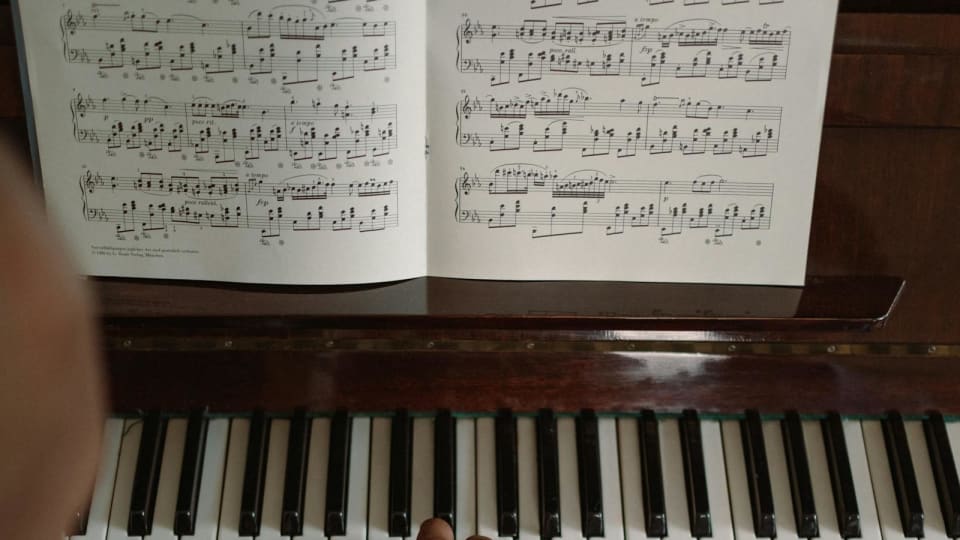
Under $500, a digital piano is always a compromise. The goal is not to find a cheap instrument that feels like a $1,500 piano. The goal is to avoid the bad compromises: springy keys, weak pedals, toy speakers, no useful connectivity, and an instrument you outgrow before your first year is over.
The short version: the Roland FP-10 is the strongest key-action pick at the $500 ceiling, the Yamaha P-45 is the safest cheaper Yamaha, the Yamaha P-143 is the cleaner current Yamaha if you can spend the full amount, the Alesis Recital Pro is the most feature-heavy budget pick, and the Casio CDP-S160 is a smart buy when you catch it below $500.
Price note: prices checked for this guide on May 9, 2026. Budget digital piano prices move constantly, so treat the dollar amounts as a snapshot and verify the current store price before buying.
Quick Picks
If the budget is firm, start with the instrument's action and the real price today. Extra voices, apps, and bundles matter only after the piano still feels serious enough to practice on every week.
| Pick | Typical street price checked | Best reason to buy it | Main trade-off |
|---|---|---|---|
| Roland FP-10 | $499.99 | Best action feel at the ceiling | Basic speakers and minimal front-panel controls |
| Yamaha P-45 | $399.99 | Safest lower-cost Yamaha | Older, simpler sound engine and 64-note polyphony |
| Yamaha P-143 | $499.99 | Current compact Yamaha with Smart Pianist support | Still intentionally stripped down |
| Alesis Recital Pro | $399.00 | Most features per dollar | Action and tone are less refined than Yamaha or Roland |
| Casio CDP-S160 | $449.99 on sale / often higher | Slim, portable, battery-capable design | Only a clear under-$500 buy when discounted |
Best overall feel
Roland FP-10
The PHA-4 Standard action is the strongest reason to stretch to the top of the budget.
Best cheaper buy
Yamaha P-45
A plain, older Yamaha that still gets the essential 88 weighted key job done.
Best sale watch
Casio CDP-S160
Worth watching because its slim body and battery option solve real space problems.
What $500 Does and Does Not Buy
The most important number is not the number of sounds. It is whether the instrument has 88 weighted keys. If the goal is piano technique, that still matters more than almost every feature on the box. A 61-key keyboard with hundreds of sounds can be useful for songwriting or casual playing, but it is not the same buying category as a beginner digital piano. If you are still unsure about key count, the earlier guide on whether you actually need 88 keys is the better starting point.
At this price, most brands keep the expensive things modest. Speakers are acceptable rather than impressive. Included pedals are usually basic footswitches unless you buy a bundle. The cabinets are portable slabs rather than furniture pianos. The sound engines are simplified. App support may exist, but it is not the same as buying into a richer $800 to $1,200 model with stronger speakers, better pedal options, more resonance modeling, and a more convincing home-piano presence.
That does not make the budget models bad. It means the buyer has to be honest about the job. A first-year adult learner needs a piano that makes repetition, dynamics, note reading, headphones, and lessons possible. They do not need concert-room illusion. They do need an action that does not train the hands around feather-light keys.
Yamaha's P-225 is a useful contrast point because it shows what the next tier adds. Yamaha gives it 192-note polyphony, more voices, VRM Lite resonance modeling, and the CFX piano sound, while the P-143 keeps a simpler 64-note design with fewer voices. Roland's FP-30X shows the same pattern against the FP-10: same broad PHA-4 family, but more polyphony, stronger speakers, more tones, audio Bluetooth, and deeper app control. That is the $800-ish tier difference in plain language: less compromise around sound, speakers, pedals, and room feel.
Budget piano decision map
Need best action?
Start with Roland FP-10.
Need lowest safe price?
Look at Yamaha P-45.
Need current Yamaha?
Choose Yamaha P-143.
Need slim portability?
Watch Casio CDP-S160 sales.
Do not buy below weighted action if piano technique is the goal.
A cheaper light-action keyboard can be useful, but it is a different tool.
Roland FP-10: Best if key feel matters most
The Roland FP-10 is the easiest model here to defend on action. Roland's official page lists an 88-key PHA-4 Standard keyboard with escapement and ivory feel, plus the SuperNATURAL Piano sound engine, Bluetooth MIDI, USB MIDI, twin piano mode, and 6W x 2 speakers. Retail snapshots from Sweetwater, B&H, Adorama, and Best Buy all placed it around $499.99 during this research window, which means it sits right at the ceiling rather than comfortably below it.
That price position matters. The FP-10 is not the budget pick because it is cheap. It is the budget pick because the action is serious for the money. If a student is going to take lessons for a year or two, that is a better place to spend the budget than on extra sounds. The front-panel experience is minimal, and the onboard speakers are not the reason to buy it, but those are acceptable compromises if the piano mostly lives in headphones or a small room.
The product demo below is useful because it shows the FP-10 as a real playable instrument rather than only a spec sheet. Listen less for YouTube audio perfection and more for the basic character: dynamic range, how the player controls softer attacks, and whether the interface seems too sparse for your taste.
Yamaha P-45 vs Yamaha P-143: older bargain or newer budget model?
The Yamaha P-45 is still visible on Yamaha's U.S. shop at $399.99, and that price makes it hard to ignore. The official product page lists 88 GHS weighted keys, AWM stereo sampling, 64-note polyphony, 10 voices, USB to Host, 6W x 2 amplifiers, and a weight of 25 pounds 4 ounces. This is not exciting in 2026, but it is coherent. For a student who wants a real weighted Yamaha at the lowest clean price, that is the case.
The Yamaha P-143 is the newer and cleaner design at $499.99 on Yamaha's shop. Yamaha lists 88 weighted GHC keys, a compact body, 10 voices, Smart Pianist app support, damper resonance, USB audio interface, 7W x 2 speakers, and a weight of 24 pounds 8 ounces. In practice, the P-143 is the better current Yamaha if the budget reaches the ceiling. The P-45 is the better Yamaha if the goal is to spend closer to $400 and accept an older design.
This is a good example of why "best under $500" is not one answer. If two instruments are both good enough but one is $100 cheaper, that $100 can buy a better stand, bench, or pedal. Those accessories affect practice more than people think. A wobbling X-stand and a sliding footswitch can make a good budget piano feel worse than it is.
The reasonable Yamaha decision is simple. Choose the P-45 if price is the main constraint and you want a known basic instrument. Choose the P-143 if you want the current compact P Series model and expect to use Yamaha's app support. Skip both only if the feel of Roland's PHA-4 action matters more to you than Yamaha familiarity.
Alesis Recital Pro: best feature count, but not the most piano-like
The Alesis Recital Pro is the value pick for buyers who care about features, volume, and price. Alesis lists 88 full-sized hammer-action keys, adjustable touch response, 12 voices, split and layer modes, 128-note polyphony, lesson mode, record mode, metronome, USB-MIDI, stereo outputs, headphone output, and the ability to run on six D-cell batteries. Sweetwater's current listing showed it at $399.00, which puts it in the same price band as the Yamaha P-45 but with a much longer feature list.
The trade-off is refinement. The Recital Pro is appealing because it gives a lot of visible stuff for the money. That does not mean it feels as convincing as the Roland FP-10 or as conservative and teacher-safe as the Yamaha options. If the buyer is a casual adult, a songwriter, a church player on a strict budget, or someone who wants loud speakers and lots of utility, the Alesis makes sense. If the buyer is a piano student whose teacher is picky about touch, it is the one to test before buying.
This is also where online demos and product pages are useful, but limited. You can hear tone color through a video. You can see controls. You cannot fully judge the way the key returns under your finger or how tiring the action feels after 30 minutes. If possible, play the Alesis beside a Roland or Yamaha before deciding. If not, buy from a retailer with a clear return policy.

Photo: cottonbro studio via Pexels
Casio CDP-S160: best sale-watch compact option
The Casio CDP-S160 is the tricky one because price varies. Casio's official page does not make the under-$500 case by itself, but retailer snapshots during research showed it both above and below the threshold: B&H had an older sale snapshot around $449.99, while other listings showed $549.99. That makes the recommendation conditional. Under $500, it is interesting. At $550, it starts competing with instruments this article is deliberately excluding.
The reason to watch it is the design. Casio lists 88 scaled hammer-action keys, simulated ebony and ivory textures, duet mode, 10 tones, 64-note polyphony, 8W x 2 speakers, class-compliant USB-MIDI, optional battery power, and a slim body weighing 23.1 pounds. That combination is genuinely useful for apartments, shared rooms, lessons, and students who need to move the instrument.
Casio also connects the CDP-S160 to the Music Space app, which can control settings and work with MIDI songs and PDF scores. That does not make it a better piano than the Roland. It makes it a more flexible practice object for a certain home. If the instrument has to disappear into a small room, run on batteries occasionally, or move between spaces, the CDP-S160 has a clearer reason to exist than many bulky budget boards.
The warning is simple: do not force it into an under-$500 list if the current price is not under $500. At the right sale price, it belongs here. At full price, compare it against the next tier before buying.
What you give up compared with $800 to $1,200 pianos
The first thing you give up is not always key action. Some $500 models have respectable action. The bigger losses are usually speakers, pedal realism, cabinet stability, sound detail, and expressive nuance. You may get a basic sustain pedal instead of a proper three-pedal unit. You may get 64- or 96-note polyphony instead of 192 or 256. You may get a simpler sample set without richer resonance behavior.
That matters once the player starts using pedaling seriously, playing more layered repertoire, or wanting the instrument to sound satisfying through speakers rather than headphones. The $800 to $1,200 tier usually feels less like a "starter object" and more like a long-term home instrument. Roland's FP-30X, for example, adds stronger 11W x 2 speakers, 256-note polyphony, more tones, audio Bluetooth, and deeper app features while keeping the PHA-4 Standard action. Yamaha's P-225 adds VRM Lite, 192-note polyphony, more voices, and a more expressive piano sound set compared with the P-143.
That does not mean every beginner should stretch. A motivated adult can learn plenty on a Roland FP-10, Yamaha P-45, Yamaha P-143, Alesis Recital Pro, or discounted Casio CDP-S160. The question is whether the extra money would remove a real friction point. If the $500 piano will live on a bad stand with a bad pedal, a better accessory setup may matter more than moving up one model. If the piano will sit in a family room and be played through speakers every day, the higher tier becomes easier to justify.
| Budget compromise | Under $500 reality | When to stretch higher |
|---|---|---|
| Speakers | Fine for practice, rarely inspiring | You play mostly without headphones |
| Pedal | Often a basic switch | You are learning pedaling seriously |
| Sound detail | Good enough, less resonant | You care about tone through speakers |
| Controls | Minimal buttons, app dependence | You hate hidden key-command controls |
| Cabinet | Portable slab plus separate stand | You want a stable furniture-style setup |
The best budget piano is not the one with the longest brochure. It is the one you will leave set up, play regularly, and not fight every time practice starts. Pair it with a stable stand, a real bench height, and a better pedal as soon as possible. That setup will do more for a beginner than chasing one more sound preset.
For readers still comparing learning paths, the next useful pieces are how to start piano as an adult without wasting the first six months, the best piano learning apps for adults, and how to read sheet music without quitting. The instrument matters, but it only becomes valuable once the practice system around it is realistic.