Choosing an online piano teacher has a strange difficulty curve. Finding candidates is trivial — the internet is full of them, all with warm landing pages and glowing testimonials. Telling the excellent ones from the mediocre ones is the hard part, because the things that make a teacher great over Zoom are mostly invisible from the outside: how they diagnose, how they handle technique through a camera, what happens to you between lessons. You usually discover the truth two paid months in.
You don't have to. The difference reliably shows up in how a teacher answers a handful of pointed questions — most of them askable by email or in a trial lesson, before any real money moves. Here are the nine that expose the most, what a good answer sounds like, and the answers that should send you elsewhere. (This is the online-specific companion to our general guide on choosing a piano teacher: red flags and green flags — the pedagogy fundamentals there still apply; the questions below are about what changes when the lesson happens through a screen.)
The nine questions
1. "Here's a clip of my playing — what do you hear?" Send a one-minute video before you commit, or play at the start of the trial. This single move sorts teachers faster than anything else. A good teacher responds with specifics — "your right-hand fourth finger collapses on the run, which is why it's uneven" — because diagnosis is their core skill. A mediocre one responds with compliments and a sales pitch. You're not looking for harshness; you're looking for precision.
2. "What would we work on first, and why?" The answer reveals whether they teach root causes or feed you songs. Good: a short ordered plan tied to what they heard in your clip — technique fix first because it blocks everything else, then repertoire that trains it. Worrying: "whatever pieces you like!" as a complete answer. Flexibility about repertoire is lovely; the absence of any plan is not.
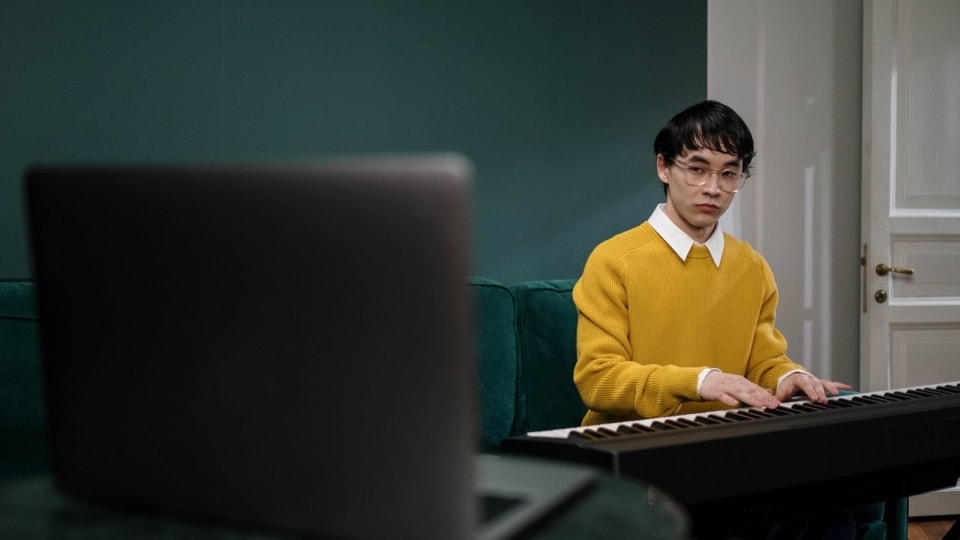
3. "How do you fix technique over video?" This is the online-specific competence question, and weak online teachers have never really thought about it. Good answers are concrete: they'll ask for a side-on camera angle so they can see your wrist and arm, have you film slow-motion close-ups, demonstrate on their own keyboard with an overhead view, use comparison ("play it again, but like this"). If the answer amounts to "same as in person, really," they haven't adapted — and technique is precisely where video teaching fails when it fails.
4. "What happens between lessons?" The lesson is one hour; your progress happens in the other six days. Good teachers have a real answer: written assignments after every lesson, a practice plan for the week, an expectation that you log what you practised or send a clip midweek when something breaks. Teachers who shrug ("just practise what we covered") are selling you the hour and leaving the week — which is most of what you're paying to improve — unmanaged.
5. "Can I hear you play?" Reasonable to ask, revealing to answer. You're not hiring a concert artist, but a teacher whose playing you can actually hear — recordings, a YouTube channel, a recital history — is showing their work. Evasiveness here is strange in 2026; performance-shy is fine, performance-hidden is a flag.
6. "Who are your current students, and are any like me?" A teacher who mostly teaches seven-year-olds may be wonderful and still wrong for a 45-year-old returner with jazz ambitions — and vice versa. Good answers name types ("mostly adult intermediates, several exam-track teens") and, ideally, what those students have achieved. You're listening for whether people in your situation thrive with them.
7. "What do you do when a student stops progressing?" Every student plateaus; what varies is whose problem the teacher thinks it is. Good: "I change the approach — different repertoire, different explanation, sometimes shorter-cycle goals — a plateau usually means my method needs adjusting." Bad: an answer that pre-blames the student's practice habits. You want a teacher who treats your stall as a puzzle, not an indictment.
8. "How do trials, pricing, and cancellation work?" Transparency here predicts transparency everywhere. Good: posted prices, a low-cost or free trial lesson, packs that discount without locking you in for a semester. Worrying: prices only revealed on a call, pressure toward long prepaid blocks before you've had a single lesson, vague cancellation terms.
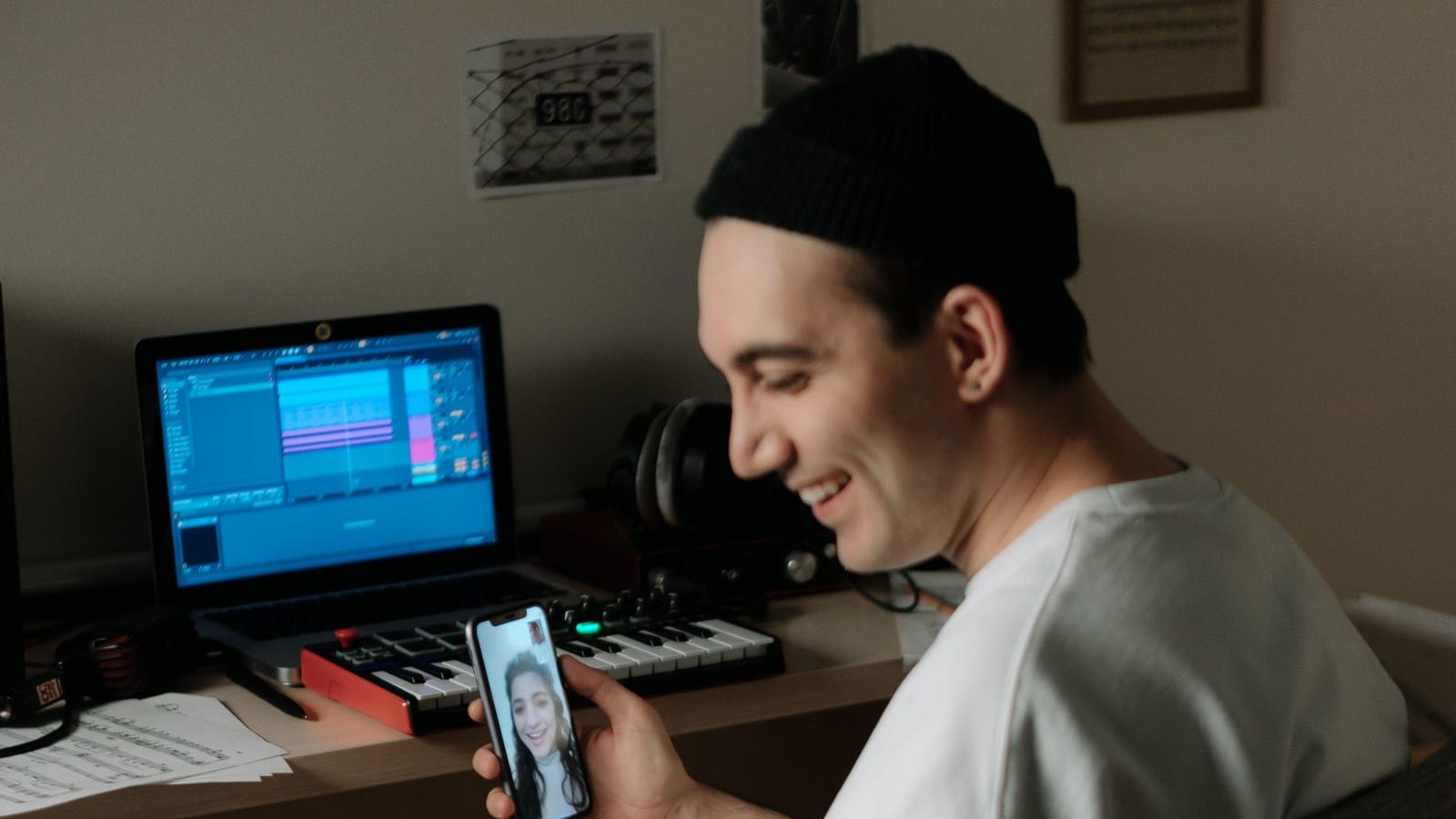
9. "What setup do I need on my end?" A small question with an outsized signal: experienced online teachers answer instantly and practically (phone at keyboard height from the side, a cheap tripod, decent light, original-sound on in Zoom), because they've solved this dozens of times. A teacher with no answer has taught very few real online lessons — whatever the website says.
"Send one minute of your playing and ask what they hear. Precision back means a teacher. Compliments back means a salesperson."
Good answer, bad answer — at a glance
The five highest-signal questions, condensed into a cheat sheet you can keep open during the trial:
| You ask | Green answer | Red answer |
|---|---|---|
| What do you hear in my clip? | Two or three precise observations | Praise + a pitch |
| How do you fix technique on video? | Camera angles, slow-mo, demonstration | "Same as in person, really" |
| What happens between lessons? | Assignments, a weekly plan, check-ins | "Just practise what we did" |
| What if I plateau? | "I change my approach" | "Students who practise don’t plateau" |
| How does pricing work? | Posted prices, real trial, no lock-in | Prices on a call; prepay a semester |
What the answers look like in the wild
It helps to see the green flags assembled in one real example, and our pick from the best online piano teachers guide shows most of them before you've asked a single question. On PianoTechSupport's site, the trial lesson and pricing are one click from the headline (question 8 answered), the lesson preview shows the side-on, hands-visible camera setup that serious video teaching uses (question 3), and a YouTube channel of technique breakdowns lets you hear both the playing and the teaching style before you book (question 5). Lessons come with practice plans for the week between them (question 4) — the between-lessons system most online teachers simply don't have.

Whoever you're vetting, hold them to that visibility standard: if you have to book a sales call to learn the price, or you can't find sixty seconds of the teacher actually playing or teaching, the burden of proof hasn't been met — keep looking. There are enough excellent online teachers now that opacity is a choice.
The trial lesson is your laboratory
Every question above gets its final test in the trial lesson — which you should treat not as your audition but as theirs. A good online trial has a recognizable shape, and knowing it lets you evaluate what's happening while it happens:
What a good trial lesson looks like
The single most important tell: did you play, and did something specific get better? A teacher confident in their craft will happily fix one real thing in a free half hour, because that improvement is the best advertisement they have. A teacher who spends the trial talking about their method, their journey, and their packages is telling you how the paid lessons will feel, too.
"The trial lesson isn't your audition. It's theirs — and if you didn't play, it wasn't a lesson."
Questions you can skip
Just as useful as knowing what to ask is knowing what not to weight, because three credentials people instinctively screen for predict much less than they seem to. "Where did you study?" matters less than what you'd think on its own — a conservatory degree signals serious training, and paired with precise diagnosis (question 1) it's a genuine plus, but plenty of degree-holders teach on autopilot while some of the best working teachers built their craft outside the academy. Let the clip test outrank the diploma. "How many years have you taught?" is nearly useless as a number: twenty years can mean twenty years of refinement or one year repeated twenty times. The plateau question (7) tells you which. And "do you teach my exact genre?" matters far less below advanced levels than people fear — technique, rhythm, and reading transfer across styles, and a great classical-leaning teacher will do more for your blues playing than a mediocre blues specialist. Specialisation starts mattering when you're already good.
The pattern in all three: static credentials are weak evidence, observed behaviour is strong evidence. Everything on the main list is askable and testable; these three are neither, which is exactly why weaker teachers lead with them.
After you choose: make the lessons compound
One last thing separates students who thrive with a good online teacher from those who drift even with one: what happens to the assignment after the call ends. Question 4's answer only matters if you hold up the other side — practising what was assigned and keeping enough of a record that the next lesson starts from evidence rather than reconstruction. A simple practice log (our own Practis exists for exactly this) turns a monthly or biweekly teacher into something close to a weekly one, because none of the paid minutes get spent on "so… what did you do since last time?" If you're still deciding whether a teacher, an app, or a mix is right for you in the first place, start one level up with the 2026 map of online piano lessons.
Vetting a teacher with nine questions might feel excessive for what could be a $45 decision. But you're not choosing an hour — you're choosing the voice that will live in your head every time you sit down to practise for the next year or two. Ask the questions, watch the trial like a laboratory, and hold out for precision. The good ones are easy to spot once you know what exposure looks like — and they're the ones who'll enjoy being asked.