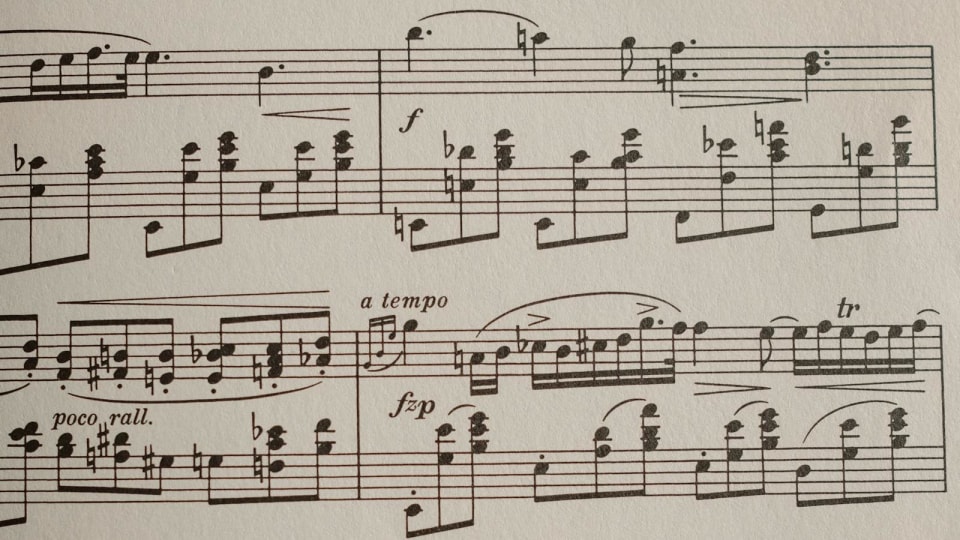
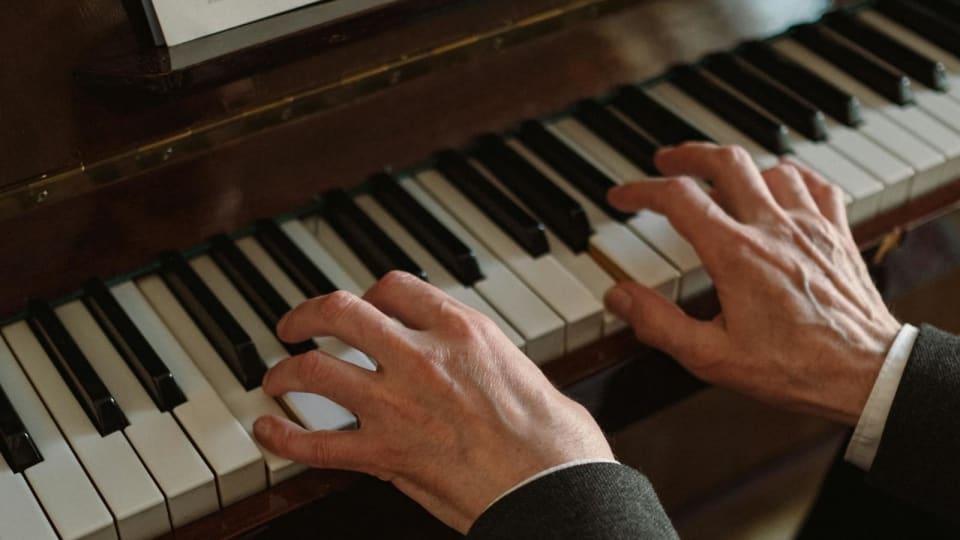
You arrive at bar 23, look at the fingering printed in your edition, try it five times, and discover that your hand does not fit it. The thumb is on the wrong note for what comes next. The fifth finger is being asked to reach a span it cannot reach comfortably. So you use a different fingering, the one your hand finds naturally — and now you wonder whether you have just compromised the piece, defied the composer, or quietly made the right call. This question, in some form, is one of the most under-discussed parts of adult piano study.
Editorial fingerings are inherited. Many of them come from late-Romantic editors with assumptions about hand size and technique that may not match yours. Some are excellent. Some are stubbornly impractical. Some are excellent for the pianist who edited the score and indifferent to anyone else. The honest position is that fingering is a decision the player has to make consciously, with the edition as a strong suggestion rather than a command. This article gives a framework for making that decision well — the four principles of good fingering, the systematic testing protocol, and the discipline of committing once a choice is made.
Why editions disagree with themselves and with you
Open three editions of the same Chopin etude. The fingerings often disagree, sometimes dramatically. The Henle Urtext might suggest one set of thumb crossings; Schirmer's edition, edited by a nineteenth-century pianist, might propose another; the Cortot edition adds his own pedagogical ideas. None of them are wrong; they are different solutions to the same problem, optimised for different hands, different schools, different acoustic priorities. The Pract.is article on apps for classical musicians covers the score-reader side of working with multiple editions; the fingering side is the most important reason to consult more than one.
Your hand is also unique. The relative length of your fingers, the width of your span, the flexibility of your thumb's webbing, the strength of your fourth finger — all of these vary between pianists, and they all matter for fingering. A fingering that works for a 9-inch hand may be physically impossible on an 8.5-inch hand. A fingering that flows for someone with a long fifth finger may strain someone whose fifth is shorter than average. Editorial choices that assume an average hand will be wrong for hands that are not average. There is no shame in adapting; there is only the work of doing so well.
"Editorial fingerings are strong suggestions, not commands. They are solutions to the problem written by someone with a different hand than yours."
The four principles of good fingering
A well-chosen fingering meets four criteria. Each is independent, and a choice that is good on one criterion can fail on another. The most common fingering mistakes happen when the player optimises one criterion (usually convenience) and ignores the others.
Principle 1
Anatomical efficiency
The fingering uses your hand's natural geometry — span, finger length, thumb mobility — rather than forcing the hand into an unnatural shape.
Principle 2
Musical phrasing
The fingering supports the phrase shape. Thumb crossings happen at natural breath points, not at the apex of a long line. Strong fingers carry phrase peaks.
Principle 3
Predictability under stress
The fingering works the same way at slow tempo, at performance tempo, fresh, tired, calm, and nervous. Brittle fingerings break in the worst moments.
Principle 4
Consistency across patterns
If the same pattern appears five times in a piece, the fingering should be the same each time — or differ for a clear reason. Inconsistent fingerings on identical patterns multiply errors.
Principle 1 — Anatomical efficiency
The first principle is the most physical and the most personal. Your hand is the only one playing this piece, and the fingering has to match it. The relevant variables are your span (the comfortable reach from thumb to fifth finger), the relative length of your fingers (some have a fifth finger nearly as long as the fourth, others have a noticeably shorter fifth), and the flexibility of your thumb's web (the webbing between thumb and index finger determines how cleanly the thumb can cross under).
An anatomically efficient fingering keeps the hand in a natural posture more of the time. It avoids stretches that exceed your comfortable span, even briefly. It puts strong fingers on important notes and short fingers on positions that do not need power. It minimises consecutive thumb crossings that strain the wrist. A fingering that "works on paper" but requires your hand to be in tension for the next half-bar is not anatomically efficient — and it will fail under fatigue.

This is also where the Pract.is article on how to build octaves that don't burn out connects directly. Octave fingerings — when to alternate between 1-5 and 1-4, when to use 1-3 for black keys, when to bring 2 in for repeated octaves — are anatomical choices that determine how the hand fatigues. Adult learners with smaller hands often need to depart from edition defaults to make octave passages playable at all.
Principle 2 — Musical phrasing
The second principle is the one most often skipped in self-directed practice. A fingering does not just produce notes; it shapes phrases. A thumb crossing in the middle of a long legato line interrupts the line unless handled with extraordinary care. A pinky landing on the climax of a phrase produces a different sound from a third finger landing there — the pinky is weaker, the sound less projecting. A fingering that requires a leap on a note that should be a smooth continuation of the previous line will sound exactly like that — a leap where there should be continuity.
The implication is that fingering decisions should be made with the phrase shape in mind, not just the notes. Identify where the phrase peaks; place a strong finger there. Identify where the phrase breathes; let thumb crossings happen at those moments, not at musical apexes. Identify legato sections; minimise crossings within them. The Pract.is article on why your slow movements sound empty covers phrase shape as one of five exposed layers in slow music; fingering is the technical means by which good shape becomes possible.
Principle 3 — Predictability under stress
The third principle is what separates intermediate fingering from advanced fingering. A fingering that works in calm practice may not work when you are nervous, tired, performing, or distracted. Stress narrows attention and degrades fine motor control; a brittle fingering — one that requires precise placement of a thumb at exactly the right moment — will break under those conditions even if it is fine in the practice room. A robust fingering tolerates small motor errors. The hand can be slightly off-position and still execute it; the next note can be slightly late and still feel right.
The test for predictability is to play the passage in deliberately unusual conditions — fast, tired, while distracted, after waiting an hour, immediately after a stressful task — and see whether the fingering still works. If it breaks reliably under those conditions, it is brittle, no matter how efficient it seems when fresh. The Pract.is article on why you sound fine in practice but fall apart in performance covers the broader principle; fingering robustness is the technical underpinning that makes performance transfer possible.
Principle 4 — Consistency across similar patterns
The fourth principle is more about long-term reliability than immediate musicality. Many pieces contain the same pattern multiple times, with small variations. The same scale fragment appearing in five different bars. The same chord shape with one inner voice changed. The same arpeggio in a transposed key. The brain encodes these as a single schema with variations — and if the fingering for the schema is consistent, the schema executes reliably. If the fingering varies for no good musical reason, the brain has to retrieve the correct version from interference, and errors multiply.
This is why the Pract.is article on why you keep mixing up two passages that look almost identical matters here. Inconsistent fingering on near-identical patterns is one of the most common causes of stubborn passage errors. The fix is to choose one fingering and apply it everywhere — unless there is a specific musical or anatomical reason to differ — and to write the chosen fingering in at every occurrence so the brain encodes it as one motor program with one execution.
The systematic testing protocol
Choosing fingerings is not improvisation. It is a small research project. The protocol below is the systematic way to test alternatives for a passage where the edition's choice is not working, and it produces a defensible answer in twenty minutes.
Step one: identify the failing passage. Mark it. Be specific about what is breaking — is it a thumb crossing that doesn't flow? A fifth-finger landing that feels weak? A stretch that exceeds your comfort?
Step two: list three candidate fingerings. The edition's printed fingering. Whatever your hand wants to do naturally. A third option drawn from a different edition or your own invention. Three candidates is the right number — fewer leaves room for "what about" doubts; more produces analysis paralysis.
Step three: play the passage with each candidate, slowly, three times. Listen for which feels most natural, which produces the cleanest sound, which supports the phrase. Make notes on each.
Step four: play each candidate at performance tempo, three times. The candidate that survives speed without losing its musical shape is the strongest. Some "natural-feeling" fingerings collapse at tempo; some "awkward-on-paper" fingerings flow surprisingly well at speed.
Step five: come back to the passage the next day and re-test. Memory interference can make yesterday's "best" feel different today. The fingering that wins on both days is the one to commit to. The Pract.is article on how to record yourself practising piano covers recording-as-feedback; using a recording for the three candidate runs reveals differences your ears at the bench cannot detect.
When to override the edition
The decision to override an editorial fingering is not a small one, and adult learners are often hesitant about it. The framework below distinguishes the cases where overriding is clearly correct from the cases where the edition probably knows something you do not.
| Situation | Override the edition | Keep the edition |
|---|---|---|
| Edition fingering does not fit your hand size | Yes — almost always | — |
| Edition fingering requires a stretch you cannot make | Yes | — |
| Edition fingering keeps failing under stress despite practice | Yes, after the testing protocol | — |
| Edition fingering supports phrasing you would otherwise lose | — | Yes, even if awkward |
| Edition fingering is the historical standard you have not yet tried | — | Yes, give it a fair trial first |
| You "just prefer" the alternative | — | Probably not — apply the protocol |
The historical context: Czerny and the systematic fingering tradition
Modern piano fingering principles were largely codified in the early nineteenth century, with Carl Czerny among the most influential figures. Czerny — a student of Beethoven and teacher of Liszt — produced a vast body of exercises and method books that systematised which fingers belong on which notes in scales, arpeggios, and standard chord progressions. The fingerings most editions still print today trace back, sometimes directly, to Czerny's choices and the broader Viennese pedagogical tradition.

The reason this matters is that Czerny's defaults were optimised for a particular kind of hand and a particular conception of clarity, and they remain useful starting points. The standard scale fingerings — the patterns most pianists learn first — survive because they work for most hands. Departing from them entirely is rarely the right move; refining them for your hand and your music is almost always the right move. The Czerny exercises, played with Czerny's printed fingerings, are still one of the best ways to internalise the conventional patterns that the rest of the repertoire builds on.
"Standard scale fingerings survive because they work for most hands. Departing from them entirely is rarely the right move; refining them for your hand and your music is almost always the right move."
Committing — and writing it in
Once a fingering decision is made, it must be written down. This is the step adult learners most often skip, and it is the difference between fingerings that stick and fingerings that quietly degrade. The brain rewrites the fingering each session if there is no external commitment; small variations creep in; the consistent execution required by Principle 4 is lost. The fingering on paper is the contract with yourself.
The conventions are simple. Write your chosen finger numbers above the relevant notes in pencil, large enough to read at performance tempo. Where you are departing from the edition's printed fingering, you can either erase the edition's number and write yours, or circle yours and leave theirs visible — the latter preserves the option to revisit. Either way, every note where your fingering choice differs from your reflex should have its number written. The Pract.is article on how to start a new piece without wasting the first week covers the broader case for committing decisions early; fingering is the highest-leverage early decision.
Common fingering mistakes
A few specific patterns recur across adult learners. The first is using whatever fingering "feels natural" without testing alternatives. The reflexive fingering is often anatomically efficient (Principle 1) but ignores phrasing (Principle 2) and robustness (Principle 3). The fix is the testing protocol — three candidates, two sessions of comparison.
The second is varying the fingering on consecutive practice days. Tuesday you use 1-2-3-5; Wednesday you use 2-3-4-5. Neither becomes secure because the brain has not committed. The fix is to write the choice down on day one and stick to it for a full week before re-evaluating.
The third is refusing to override an obviously wrong editorial fingering out of deference. Editions are not infallible; they are working documents from a tradition. If your hand does not fit a printed fingering after honest effort, override it. The published fingering is one solution; your hand needs a different one.
The fourth is using inconsistent fingerings on near-identical patterns across the piece. This is the cause of the most stubborn passage errors. The fix is to identify all occurrences of a pattern, choose one fingering, and apply it everywhere — or document the specific musical reason for varying it.
What changes when fingering becomes deliberate
Pianists who take fingering seriously — applying the four principles, running the testing protocol, writing decisions in — report a specific change inside a few weeks. Passages that resisted them yield. The brittleness that broke under performance pressure disappears. The same piece, with deliberate fingering, sounds more shaped and feels more secure. The work is genuinely a one-time investment per piece, and it scales across every piece for the rest of your playing life.
The deeper shift is in the relationship to the score itself. The edition stops being an authority you obey or defy and becomes a starting point you collaborate with. Some fingerings you accept gratefully; some you study and reject; some you invent. The piece becomes more yours, because the technical solution underneath it is one you chose rather than inherited. That is what advanced players have done — quietly, slowly, with attention — for as long as printed editions have existed. The bar 23 you started this article with is now solved, defensibly, in a way that will hold up when it matters.