
How to Practice Transitions Between Sections Instead of Hoping They Work
Sections often sound stable on their own but fail at the join. This guide shows musicians how to practice pickups, landings, overlap windows, and section handoffs on purpose.
Pract.is Editorial
Research-based practice guidance for musicians from the Pract.is editorial team.
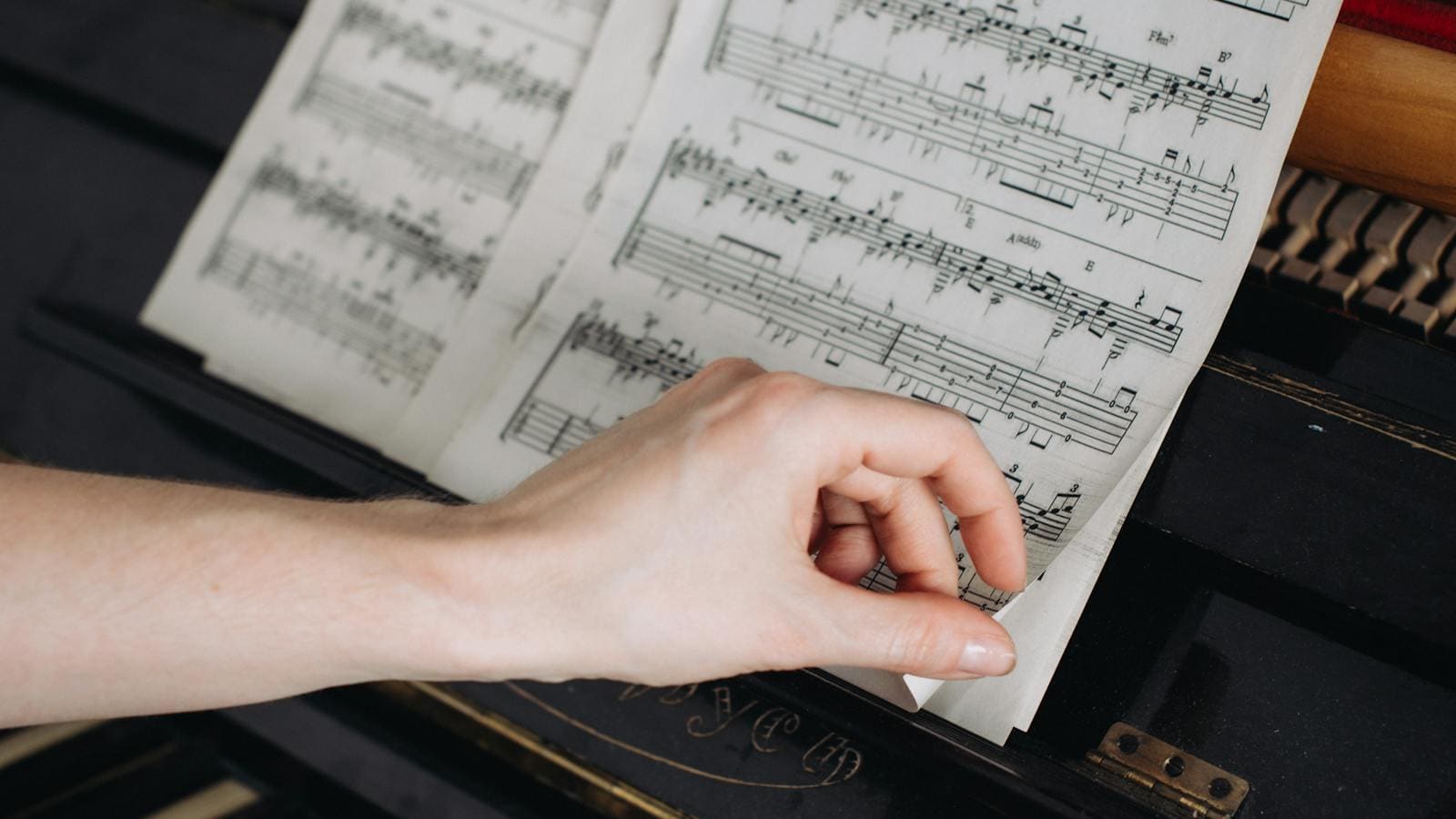
A piece can sound surprisingly secure inside each section and still fall apart exactly where the sections connect. That is because many musicians practice the material inside the room, not the doorway between rooms. The opening of section B gets some attention. The ending of section A gets some attention. The handoff between them gets tested in run-throughs and trusted to sort itself out.
It usually does not. Joins are where tempo shifts, memory cues reset, movement patterns reconfigure, and attention has to decide what comes next. If the piece keeps unraveling at those points, the answer is not to hope the transition will clean itself up later. The transition itself needs repetitions, just like any other difficult passage.
This is one of the more hidden reasons pieces feel less stable than they seem. The bars are learned. The handoff is not. Once you start practicing the join as its own target, a lot of “mysterious” instability stops being mysterious.
Why section joins fail even when the sections feel fine
Transitions are vulnerable because they sit at chunk boundaries. Musicians rarely execute long passages as one continuous unbroken chain. We organize them into manageable units, and those units have seams. Lars Hestermann and colleagues found in Task-set control, chunking, and hierarchical timing in rhythm production that predicted chunk boundaries showed more sequence errors, interval lengthening before the switch, and greater variability after the switch. In plain language: the handoff between chunks is a known weak point.
Floris van Vugt, Hans-Christian Jabusch, and Eckart Altenmüller found something closely related in their piano-scale study on motor chunking. Timing became less even around likely chunk boundaries. That matters because it tells us the instability is not imagined. The join itself creates extra coordination and timing demands, even when the material before and after is already familiar.
Practice habits often make this worse. If section A is always rehearsed from its beginning to its ending, and section B is always rehearsed from its own beginning onward, the transition exists mostly as a once-per-run gamble. It gets fewer accurate reps than the bars surrounding it. That is one reason a piece can seem solid until the exact moment it needs to turn a corner.
| What feels like the problem | What is often actually happening | What the join needs |
|---|---|---|
| “Section B never settles.” | The pickup into B was never stabilized. | Drill the last beat or two of A plus the first beat of B. |
| “I rush there every time.” | The chunk switch is compressing the pulse. | Isolate the join rhythmically and test the landing separately. |
| “It only breaks in full runs.” | The join has not been trained in context. | Practice overlap windows instead of only clean section blocks. |
| “I know both sections.” | You know each room, not the doorway. | Start from multiple entry points around the boundary. |
This is also why transitions can create the feeling that you are somehow still plateauing on the same passage even when the individual bars are improving. The problem is not always inside the chunk. Sometimes it lives in the switch between chunks.
Define the transition window, not just the two sections
A useful transition is rarely just “the last bar of A plus the first bar of B.” It is usually a small overlap window with four jobs in it: the pickup, the pivot, the landing, and the exit. The pickup is what launches the join. The pivot is the exact moment the old material gives way to the new. The landing is where the new section must feel secure, not merely reached. The exit is the next beat or two that proves the landing was real and not lucky.
If you do not define those roles, the transition stays vague. And vague work is exactly what makes a join feel cursed. A guitarist working on chord changes may think the problem is the new chord, when the real issue is that the hand never prepared during the last strum of the previous shape. Yamaha's beginner guitar guidance on teaching chord transitions is practical here: think about common finger placement, minimize motion, and create transition time before shrinking that time again. That logic applies far beyond guitar.
The same is true for pianists, singers, string players, and wind players. A singer may have the new text and pitch, but not the breath pacing that gets there. A violinist may know the shift but not the bow distribution that makes the landing clean. A pianist may know the harmony but not the left-hand preparation that prevents a rushed entry. The transition window makes you ask the right question: what has to be ready before the new section can arrive convincingly?
Transition window
Pickup
What prepares the move
Pivot
The exact switch point
Landing
Where the new section must feel secure
Exit
The next beat that proves it held
If you only practice the landing and ignore the pickup or exit, the join may still fail in full context.
Once this window is defined, the transition becomes easier to diagnose and far easier to repeat accurately. It stops being “that annoying place between sections” and becomes a short, concrete event with identifiable parts.
Use overlap, not just isolation
Isolation is necessary, but it is not enough if the problem lives in the join. Isabelle Héroux's study Creative Processes in the Shaping of a Musical Interpretation found that expert musicians spent a striking amount of practice time in very short passages. That is not surprising anymore. What matters here is how those short units are used. A transition often needs overlap practice: not just a section in isolation, but a deliberately small bridge that includes a little before and a little after the seam.
A simple model works well. Take one or two beats before the switch, the switch itself, and one or two beats after. If that still feels too broad, shrink it further. If it feels too easy, widen it until the join remains vulnerable but intelligible. The size should be big enough that the transition is real, but small enough that the failure mechanism is still visible.
This is the exact correction to the “I practiced both sections” excuse. Both sections may indeed be fine. The join has still not received enough clean, context-rich reps. That is why work like isolating instead of defaulting to whole-run practice matters so much here. The only difference is that the target is not one bad bar in the middle. It is the bridge between two otherwise playable chunks.
Too narrow
Only the first note of section B. You arrive there but still do not know how the join launches or settles.
Usually right
A small overlap: pickup, pivot, landing, and a beat or two of proof that the new section actually took hold.
Too wide
An entire page on either side of the seam. The join hides again inside too much material.

Photo: Anastasia Kolchina via Pexels
Change the entry point until the handoff stops depending on luck
If you always approach the transition from the same runway, you may think the join is secure when it is actually context-dependent. Christine Carter's explanation of interleaved and random practice in Bulletproof Musician is useful here because she emphasizes that beginnings are the hardest part. Every time you return to a task, the action plan has to be reconstructed. That is exactly why transitions need varied starting points rather than one familiar lead-in.
So do not always start four beats before the seam. Start two beats before. Start on the pickup. Start on the landing. Start one beat after and see if the landing was real. Reverse the direction and practice backing into the join from the new section. Change the rhythm. Change the accent pattern. Bring in or remove the metronome if pulse is the unstable part. The goal is not novelty for its own sake. The goal is to stop the join from depending on one narrow setup.
This is where transitions begin to resemble recovery work. A secure join is one you can find from more than one direction. If the handoff only works after a full warm-up runway, it is not really a reliable handoff. It is a rehearsed approach path. That is also why transitions and recovery belong close together: if a live slip happens near the seam, the player needs enough cue strength to land somewhere trustworthy, not merely enough habit to repeat the same entry from far away.
| Variation | What it tests | When to use it |
|---|---|---|
| Start closer to the seam | Whether the pickup is doing enough work | When the landing only works with a long runway |
| Start on the landing | Whether section B is truly stable by itself | When the new section feels uncertain after arrival |
| Accent or rhythm variation | Whether timing blur is hiding inside the join | When the transition keeps rushing or smearing |
| Random re-entry around the seam | Whether the join can be reconstructed on demand | When the passage only works in one familiar setup |
If the join is rhythmically unstable, that is the moment to borrow the tools from rhythm-specific practice rather than pretending the notes alone will fix it. A surprising number of bad transitions are really pulse problems wearing a structural disguise.
Put the repaired handoff back under real conditions
A transition is not fixed just because it worked four times in a narrow loop. It has to survive re-entry into the larger phrase and then into the larger section. That means putting it back into context gradually. First restore a little more before and after. Then test it inside a one-take section. Then test it inside a larger run where you do not stop. Only then does the join earn the trust that many players try to give it on day one.
This matters for performance too. A weak transition is one of the fastest ways to trigger the kind of mid-piece wobble covered in recovery after a mistake. If the seam between sections is undertrained, any small slip there has less structure to catch on. A strong join does not just make the piece smoother. It also gives the performance more places to survive itself.
Build the overlap window
Practice a few beats before and after the seam until the pickup and landing both make sense.
Vary the approach
Change the starting point, rhythmic frame, or metronome support so the join does not depend on one runway.
Rebuild context
Expand from the overlap window back into the phrase, then the larger section, then a full no-stop check.
The useful shift is small but important. Stop calling these places “the transition between sections,” as if they are empty space. They are real passages with real jobs. Once you practice them that way, they stop behaving like guesses.
More on practice methods.

A Practice Diary for Pianists: Turning Hours at the Keys Into Results
A piano practice diary can expose plateaus, strengthen memory, and protect sight-reading time. Learn what to record so each session changes the next.
Pract.is Editorial

Reading Your Practice Data: What the Numbers Actually Tell You
Practice statistics reveal coverage, spacing, effort, and trends. Learn to track practice progress without mistaking activity for musical improvement.
Pract.is Editorial

How to Build a Practice Routine You Actually Keep
A practice routine is easier to keep when its order stays fixed and its length can change. Build a schedule for sessions of 10, 25, or 45 minutes.
Pract.is Editorial