A warm-up should prepare the work you are actually about to do, not eat the best twenty minutes of the session. That sounds obvious, but musicians regularly turn warm-ups into something foggier: a comfort ritual, a guilt ritual, or a second unrelated practice block that delays the real target. By the time the “actual” session begins, the best attention is already gone.
The useful way to think about warming up is simple. It should wake up movement, attention, and sound just enough that the first serious repetition is not cold, tense, or unfocused. It is not supposed to prove discipline. It is not supposed to replace technical work. And on many days, it does not need to be long.
That distinction matters because warm-up is not fake work, but it is also not all-purpose work. Once you know what the warm-up is for, it becomes much easier to keep it short, specific, and proportionate to the session in front of you.
A warm-up is for readiness, not for virtue
Musicians often talk about warm-ups as if more is automatically better. The research does not support that kind of blanket thinking. In a systematic review of upper-body warm-ups, J. Matt McCrary and colleagues found good evidence that dynamic warm-up can improve some performance outcomes, but not evidence that warm-up by itself has been shown to prevent upper-body injuries. That matters because it keeps the claim modest and practical: warm-up is mainly about preparing the system for better work, not buying magical protection.
That same reality shows up in music-specific work. In a study of skilled violinists, cardiovascular, core-muscle, and musical warm-ups did not significantly improve judged performance quality, but they did reduce perceived exertion. In other words, a warm-up can make playing feel easier and more ready without automatically turning it into a better performance. That is a useful result. Feeling less stiff or less effortful is valuable. It is just not a reason to let a preparatory phase expand indefinitely.
BAPAM's guidance in Don’t Cramp Your Style puts the same idea into plain language: warm up to increase blood flow, free motion, and prepare the body for healthy activity, but do not confuse that with aggressive stretching or random extra work. Hospital for Special Surgery makes a similarly practical point in its musician health guidance: a brief physical warm-up can improve blood flow and reduce pain and fatigue. That is a preparation argument, not a morality argument.
The clean rule is this: if the warm-up improves the quality of the first serious rep, keep it. If it mainly delays the session while making you feel temporarily virtuous, cut it down. A lot of musicians who think they need a longer warm-up actually need a clearer first task.
Warm-up selector
What are you about to do?
Light review
Known material, low demand
Detail work
Technique, rhythm, or slow repair
Heavy session
Run-throughs, loud playing, comeback day
3 minutes
Enough for low-load days
7 minutes
Best default for most sessions
12 minutes
Only when load truly demands it
Choose warm-up length from the session's demands, not from habit.
The right warm-up depends on the session, not your identity
One reason warm-ups drift upward in length is that musicians treat them as a personality trait. “I am someone who does a full warm-up” is not the right standard. The real question is what this session needs. If today is a short maintenance session, a quick physical wake-up, a few easy sound checks, and one simple coordination pattern may be enough. If today is detail work on a stubborn rhythm problem, the warm-up should get you organized and then get out of the way so the actual repair begins sooner.
This is where many players confuse comfort with necessity. A long warm-up feels safe because it delays judgment. You are not yet confronting the ugly passage, the unstable shift, or the exposed opening. But that does not mean the added minutes are helping. In practice, the best warm-up is often the shortest one that gets you into the first honest task without feeling physically or mentally cold.
The session type should also change the kind of material you use. A performance-style run or a loud rehearsal day needs a bigger ramp than a quiet score study session. A return after illness, travel, or a few missed days needs a gentler start than an ordinary midweek practice block. BAPAM's return-to-play guidance for musicians is useful here because it emphasizes that sudden increases in playing load are a known risk factor. The answer, however, is not automatically “more warm-up forever.” The answer is matching both warm-up and total session load to current capacity.
This is also why tired-day practice needs different expectations. If you are running on low concentration, the smarter move may be a shorter warm-up and a narrower session target, which is exactly the logic behind adjusting practice when you are too tired for deep work. A long elaborate warm-up on a low-energy day usually creates the illusion of seriousness while spending the limited attention you actually had.
Low-load review
Keep it minimal
Wake up posture, breath, and touch. Then move directly into easy known material and the first real assignment.
Technique or repair
Prepare the exact mechanism
If the session is about scales, articulation, rhythm, or coordination, the warm-up should lightly preview those demands rather than detour elsewhere.
Heavy or comeback day
Give yourself a ramp
Use more time only because the body, lungs, voice, or hands need a gradual increase before bigger dynamic or endurance demands.
Your instrument changes the content, not the point
The job of a warm-up stays the same across instruments, but the pathway changes. Pianists and guitarists may need hands, wrists, shoulders, and coordination to feel available before detail work begins. Wind players need breath, airflow, embouchure response, and the first stable tone. Singers need the same basic voice-care logic: breath support, easy onset, and gradual sound rather than jumping straight into demanding volume or range. NIDCD's voice care guidance is plain on this point: avoid singing when the voice is hoarse or tired, support the voice with good breathing, and do not live at the extremes of loudness or range.
That means “do scales for ten minutes” is not a universal warm-up instruction. For some players, scales are a good bridge into touch, tone, and pattern recall. For others, they become autopilot content that never reaches the actual issue. A singer may get more from a few minutes of easy semi-occluded or resonance-focused work plus moderate-range phrases than from immediately belting repertoire. A string player may need bow contact and left-hand ease sooner than raw finger speed. A drummer may need timing, rebound, and relaxed motion more than a long catalog of rudiments before the real session even starts.
There is also evidence that blended warm-up content can matter. In a study of choral warm-up procedures, choirs tended to sing more resonantly and more in tune after a physical-plus-vocal warm-up than after narrower options. That fits ordinary experience: singers often do better when the body and the sound are prepared together rather than treating voice as separate from the rest of the instrument. The broader principle is useful even outside singing. If your instrument depends on posture, breath, and coordinated movement, the warm-up should touch those layers instead of only running notes.
The practical payoff is that you stop copying someone else's ritual. Warm-up should be instrument-aware, but it should also be demand-aware. The best model is not “what do musicians do?” It is “what does this instrument need before this specific task?” Universal principles still matter, but the details change with the physical and musical demands in front of you.

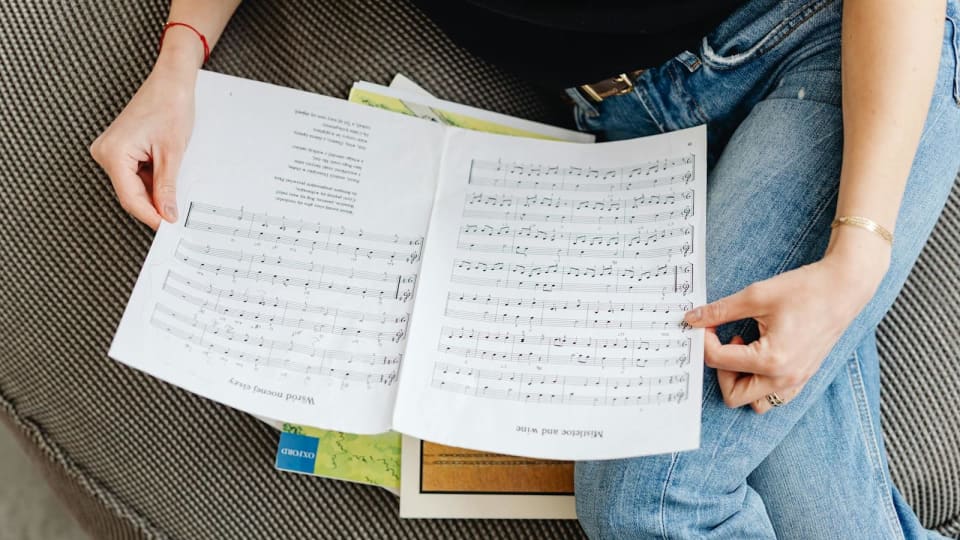
Photo: cottonbro studio via Pexels
Keys and fretted strings
Wake up shoulders, forearms, and touch. Then use a very easy pattern that tells you whether coordination is available yet.
Strings and winds
Prioritize setup and sound first: bow contact, air, embouchure, attack, and easy intonation before speed or endurance.
Voice
Build from breath and easy phonation toward fuller sound. If the voice feels tired, treat that as information, not something to overpower.
Most “warm-up problems” are really avoidance problems
The easiest way to know a warm-up is getting out of hand is to check whether it has stopped pointing toward the session. If the practice target is a difficult rhythmic transition and you spend fifteen minutes in unrelated patterns that never touch pulse or coordination, the warm-up has become a detour. If the target is memorization, but the first quarter of the session is spent on familiar technical comfort food, same problem. A useful warm-up reduces the distance to the real work. A wasteful one increases it.
That is why long warm-ups often show up alongside stagnant progress. They create a strong sensation of diligence without necessarily producing better repetitions where improvement is actually earned. The dynamic is similar to the problem in “just play it more” practice advice: effort gets counted, but diagnosis gets blurred. The answer is not to abolish warm-up. The answer is to stop giving warm-up credit for work it never did.
There is also a physical version of the same mistake. If you feel pain, heavy stiffness, or unusual fatigue, the fix is not to keep extending the warm-up in the hope that the body will eventually give permission. HSS and BAPAM both stress paying attention to pain and load, and that is worth taking seriously. A warm-up can help you read the day. It cannot negotiate away warning signs. If discomfort keeps climbing, that is a reason to change the session, not to keep padding the prelude. That is also why injury-oriented posts like what to do when your hands hurt after practicing matter: pain is not a cue to become more stubborn.
| Warm-up job | What wastes time | What actually works |
|---|---|---|
| Wake up the body | Long passive stretching before anything feels warm | A short dynamic reset, light movement, posture check, and easy breathing |
| Wake up sound | Jumping straight into full intensity or skipping sound checks entirely | Easy tone, easy attack, easy onset, then gradual increase |
| Prepare attention | Running familiar material until it feels emotionally safe | One or two simple patterns that lead directly into today's first target |
| Protect load management | Using extra warm-up minutes as permission for an overlong session | Keeping total session demand proportionate to current energy and tolerance |
A good warm-up leaves you more ready and more available. A bad one leaves you slightly relieved that you have not started the scary part yet. That emotional difference is easy to recognize once you look for it.
Use the shortest model that gets you to honest work
Most musicians do not need one universal routine. They need two or three versions that fit different days. A short model for maintenance or low-load sessions is often enough. A medium model should cover most ordinary practice days. A longer model only earns its place when the demands are genuinely higher: louder repertoire, more endurance, performance simulation, or a return after time away. If you are heading into rhythm work, this is also the moment to use a targeted first task like the ones in metronome practice that stays musical, rather than spending those minutes on unrelated comfort exercises.
The time brackets below are not sacred, but they enforce a useful discipline. They keep the warm-up from expanding until it becomes the session. They also make you answer the question that many musicians avoid: what exactly am I preparing for right now?
Maintenance or low-load session
Do one minute of physical reset, one minute of easy sound or touch, and one minute that previews the first real task. Then start. This is enough for review sessions, reading, or calm technical maintenance.
Default practice day
Use one to two minutes of dynamic prep, two minutes of easy sound production, two minutes of basic technical coordination, and one to two minutes that lean directly toward the first serious assignment.
High-demand or comeback day
Only use this when the day really needs a ramp: louder work, heavier endurance, public playing, or a return after time off. Expand gradually, but keep every minute tied to the demands ahead.
The best test is brutally simple. After the warm-up, the first serious repetition should feel more organized, less effortful, and more honest. If that is happening, the warm-up is doing its job. If the warm-up just keeps growing because starting the real work feels unpleasant, that is not preparation anymore. That is avoidance with better branding.