

Nagging is usually what happens after the practice system has already failed. The assignment was vague, the student did not know where to start, nobody could see the week until the next lesson, and pressure rushed in to fill the gap.
Most teachers do not want to nag. Most students do not want to disappoint their teacher. The better fix is to make practice easier to start, easier to see, and easier to discuss without turning every lesson into a small interrogation.
Nagging turns a structure problem into a character problem
When a student does not practice, it is tempting to treat the issue as attitude. Sometimes attitude is part of it. But much of the time, the student left the lesson with an assignment that was too broad, too long, too hard to remember, or too disconnected from the week ahead. "Practice your scales and work on the piece" sounds obvious inside the lesson. At home on Wednesday, it can feel like a fog.
The problem with nagging is that it tries to repair that fog through pressure. It can produce short-term compliance, especially with conscientious students, but it also teaches students to practice because someone is disappointed, not because practice has a clear purpose. Research from self-determination theory is useful here. In a 2015 overview in Psychology of Music, Evans connects motivation in music learning to autonomy, competence, and relatedness. In plain studio language: students are more likely to keep practicing when they feel some ownership, know what success looks like, and experience the teacher as a guide rather than a prosecutor.
That does not mean teachers should become passive. Students still need expectations. They need specific assignments, a weekly rhythm, and honest follow-up. The difference is that pressure asks, "Why didn't you do it?" Structure asks, "What exactly were you supposed to do, what happened, and what should we change next week?"
| What teachers often say | What the student may hear | Better replacement |
|---|---|---|
| You need to practice more. | I failed again. | Let's choose three short sessions that fit your week. |
| Did you practice? | I am on trial. | Show me what happened with the assignment. |
| You should know this by now. | I am bad at this. | This section needs a smaller practice plan. |
| Your parents need to remind you. | Practice is someone else's job. | Let's make the first step visible enough to start alone. |
Make the assignment too clear to misremember
The fastest way to reduce nagging is to make the assignment more concrete before the student leaves. A weak assignment tells the student what category to work on. A strong assignment tells the student what to do first, how long to spend, how to know whether it worked, and what to record if it did not. That kind of clarity is not micromanagement. It is scaffolding.
The National Association for Music Education has a useful reminder in its piece on organized learning processes in practice: effective practice is organized, purposeful, and reflective, not just a matter of time spent. For a teacher, that means the assignment should contain a small target. "Bars 17-24, hands separately, three clean reps at 60 bpm, note where the rhythm slips" will produce more useful practice than "work on page two." It also gives the next lesson a cleaner starting point.
Specificity matters because many students avoid practicing when the first step is ambiguous. They may want to do well, but the task feels too large. Adults postpone it because work was exhausting. Teenagers avoid it because the practice room feels like another place to fail. Younger students wait for a parent because the assignment is not self-starting. A clear first step lowers the emotional cost of beginning.
A no-nag assignment card
Give students choice, but not a blank page
Choice helps when it is bounded. "Practice whatever you want" is not autonomy; it is abandonment with nicer language. Students need a real choice between useful options: start with rhythm or fingering, do three 10-minute sessions or two 15-minute sessions, record the hard section or write a short reflection, review scales before the piece or after. The teacher still defines the lane. The student gets a say in the route.
This is where autonomy-supportive teaching becomes practical. A teacher can explain the reason behind an assignment, offer two reasonable paths, and invite the student to choose the one that fits the week. That keeps standards intact while reducing the feeling of being controlled. The 2024 Psychology of Music study by Bonneville-Roussy and Evans looks directly at autonomy-supportive teaching, competence, and relatedness in music students. The point for a private studio is straightforward: the relationship and the student's sense of competence are not soft extras. They shape whether practice survives outside the lesson.
The easiest format is a two-option assignment. Option A is the minimum viable week: short sessions, narrow target, no recording required. Option B is the stronger week: one extra review, a recording, or a reflection. Both options move the student forward. Neither option requires the teacher to beg.
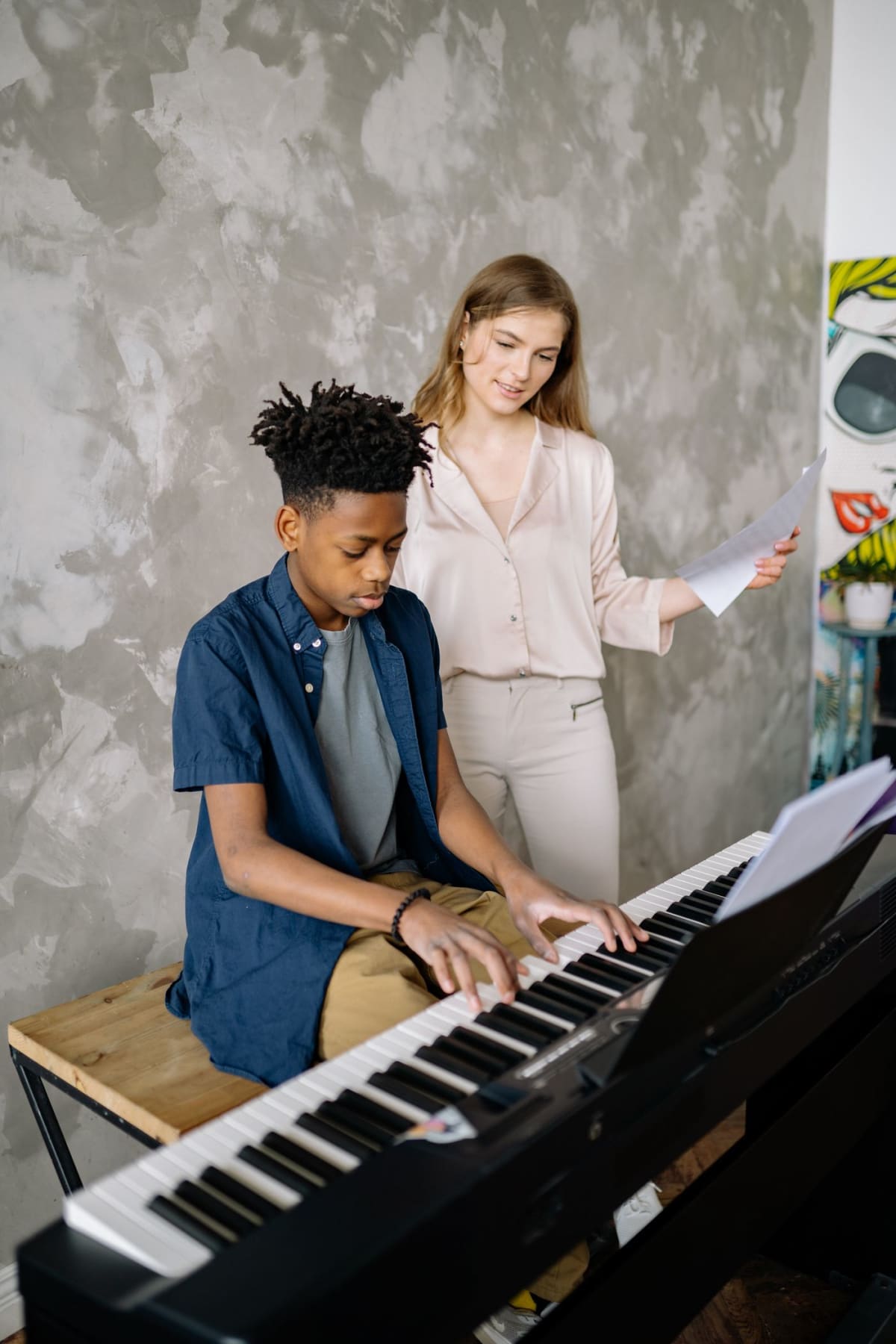
Make practice visible before the lesson starts
Teachers often nag because they have no visibility. The only moment they can discover what happened is the lesson itself, so the first five minutes become a practice audit. That is bad for the relationship and bad for the lesson. The student walks in defensive. The teacher loses context. The work that should have started immediately gets delayed by reconstruction.
A better setup makes the week visible before the student sits down. That can be as simple as a student practice log, a short weekly reflection, a tempo note, or a recording of one assigned section. It does not need to be surveillance. It needs to be context. If the teacher can see that the student practiced three times but avoided the assigned rhythm spot, the lesson can start with the rhythm spot instead of a moral speech.
Matherne and Blackwell's 2023 article in the Music Educators Journal describes visible learning as a way to make learning goals, evidence, and feedback more explicit in the music classroom. Private lessons are different from classrooms, but the same idea works beautifully between lessons. If the student can see the assignment and the teacher can see the practice evidence, accountability becomes a shared record instead of a memory contest.
The no-nag practice handoff
The teacher sets the line, the student has a route, and the next lesson starts from evidence.
Replace the practice interrogation with a better first question
The first question of the lesson sets the emotional temperature. "Did you practice?" is understandable, but it is a weak question. It invites a yes/no answer, and the student knows the correct answer before they speak. If the answer is no, the room tightens. If the answer is yes, the teacher still does not know what kind of practice happened.
A better opening asks about evidence. "Show me the part you practiced most." "Where did the assignment get stuck?" "Which session was easiest to start?" "What should we fix first?" These questions move the conversation from obedience to diagnosis. They also make it harder for the student to fake progress, but without making the student feel trapped.
This is why practice tracking matters for teachers. Our post on music practice tracking for teachers covers the app side in more detail, but the teaching principle is simple: when practice is visible, the lesson can begin with better information. Teachers can stop asking broad accountability questions and start teaching the actual week the student had.
| Instead of asking... | Ask... | Why it works better |
|---|---|---|
| Did you practice? | Which assignment got the most attention? | It starts with behavior, not confession. |
| Why didn't you do more? | Where did the week break down? | It treats the barrier as solvable. |
| Are you ready? | Which spot should we test first? | It makes readiness concrete. |
| Will you practice this week? | Which three days are realistic? | It turns intention into a plan. |
Use parents as setup support, not daily police
Parents can help enormously, especially with younger students. They can protect a practice time, keep the instrument accessible, notice effort, and help the child start. But if the parent's only role is to remind, scold, or negotiate, practice becomes a family conflict. The student learns that practice belongs to the parent, not to them.
A better parent role is environmental. The parent helps make practice possible: instrument ready, assignment visible, short session scheduled, no phone at the piano, a simple check-in afterward. They do not need to become the teacher at home. They do not need to correct every rhythm. They need to help the child begin and then let the teacher handle the musical feedback.
Ryan, Boucher, and Ryan's 2023 article in Psychology of Music looks at family-based interpersonal interactions around musical learning. One practical lesson is that the emotional climate around practice matters. If the home routine becomes mostly conflict, the teacher may technically get more minutes, but the student can become less willing to identify as someone who plays music.
Parent role reset
Set the time, keep the assignment visible, ask what the first task is, praise effort and follow-through.
Daily scolding, correcting every mistake, comparing siblings, turning practice into a debt owed to adults.
Build one week that does not require nagging
The practical test is not whether the student promises to do better. The test is whether the next week is easier to start than the last one. A good one-week plan should be small enough to survive school, work, sports, tiredness, and normal family chaos. If it only works for a highly motivated student with a calm schedule, it is not a real plan.
Start with three short sessions. Give each one a first task. Let the student choose the order of two tasks. Ask for one piece of evidence: a short note, a tempo number, a recording, or a checked-off assignment. Then begin the next lesson from that evidence. If the student did the work, you can teach from it. If they did not, you can adjust the plan instead of delivering another speech.
For the broader system around this, our post on increasing student practice between lessons covers the habit layer, while our guide to apps for assigning music homework and practice tasks compares the tools teachers use to keep assignments from getting lost. The common thread is the same: students practice more when the work is clear, visible, and realistically sized.
A no-nag practice week
Start the assigned bar slowly. Leave one sentence about the problem.
Repeat the same bar, then connect two bars before and after.
Record 30 seconds or log the tempo that stayed clean.
Open with the evidence, not a lecture about effort.
That is the shift. Less nagging does not mean lower standards. It means the teacher stops trying to manage practice through guilt and starts designing practice that students can actually carry into the week.


