
How to Increase Student Practice Between Music Lessons
A teacher-focused guide to increasing student practice between music lessons without relying on nagging, guilt, or vague motivation talks.
Pract.is Editorial
Research-based practice guidance for musicians from the Pract.is editorial team.
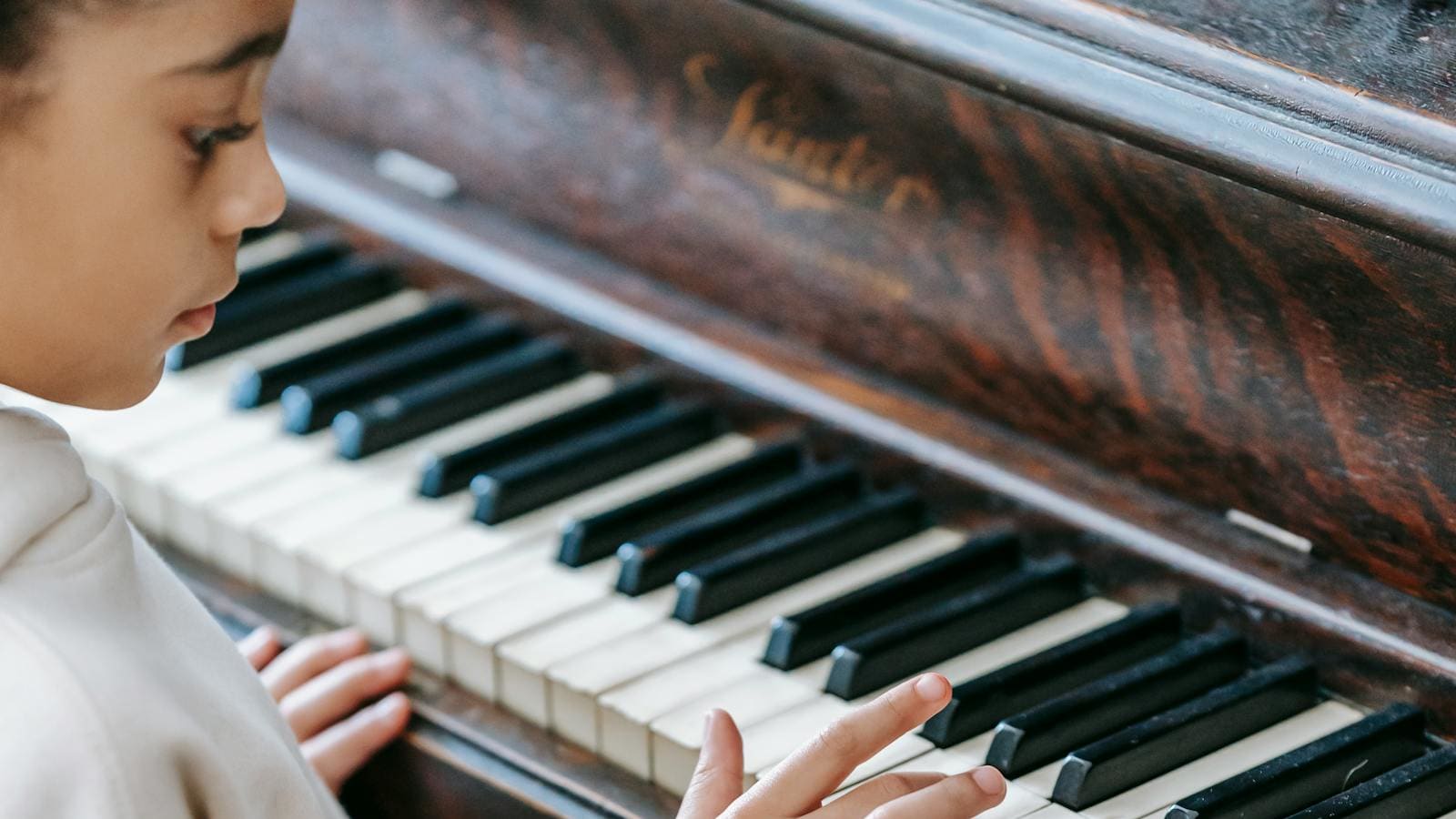
Students usually practice more between music lessons when the week is easier to start, easier to understand, and easier to see. The problem is rarely solved by one more speech about discipline. Most missed practice comes from unclear assignments, weak routines, low confidence, poor feedback, or accountability that feels like surveillance.
The teacher's job is not to become the practice police. It is to build a between-lesson system that makes the next useful action obvious.
Before adding motivation, diagnose friction
Stop treating every missed week as a motivation problem
"They just need to practice more" is true, but not useful enough. A student can want to improve and still avoid the instrument because the assignment feels too big, the first step is unclear, or the home environment keeps pushing practice to later. Motivation matters, but it is not a single switch a teacher can flip with a better pep talk.
Music practice research points toward a more practical explanation. Ritchie and Williamon's 2013 study, Measuring musical self-regulation, examined 174 higher-education music students and found that self-regulated learning behaviors connected with students' musical skills, beliefs, and self-efficacy. The least-used behaviors included keeping records and reviewing records of past events or performances. That finding is useful for teachers because many students do not naturally build the feedback loop that makes practice improve from week to week.
Teachers can respond by replacing blame with diagnosis. If a student does not practice, ask what failed first: the task, the routine, the confidence, the accountability, or the reason for doing it. Each failure needs a different fix. A student who misunderstood the assignment does not need more guilt. A student with no practice cue does not need a longer repertoire list. A student who feels incompetent does not need a harder challenge.
| What it looks like | Likely cause | Better teacher move |
|---|---|---|
| Student says they practiced, but nothing changed. | Vague or low-quality practice | Assign a smaller method, not more minutes. |
| Student forgot until the night before. | No stable cue | Attach practice to an existing daily routine. |
| Student avoids one section every week. | Low competence or unclear repair strategy | Teach the repair inside the lesson, then assign the same action. |
| Student practices only when parents push. | External pressure without ownership | Give controlled choice and a visible short-term target. |
Make the assignment too clear to misunderstand
Most students do not fail at home because the teacher assigned the wrong piece. They fail because the assignment is written at the wrong level of detail. "Practice page two" is a location. "Work on rhythm" is an intention. Neither tells the student how to begin when the teacher is not there.
A stronger assignment names the target, the start and stop point, the method, and the success test. For a young pianist, that might be "Bars 5-8, left hand alone, count out loud, three correct starts in a row." For a violin student, it might be "Open-string bow path first, then add the first two notes, stop before the shift." This changes the assignment from a demand into a procedure.
This connects directly to the workflow in music lesson planning for private teachers. The home assignment is the real output of the lesson. If the student leaves with a clear action, the odds of follow-through improve before motivation is even discussed.
Translate vague tasks into practice actions

Attach practice to a real cue, not a promise
Students often promise to practice because they mean it in the lesson room. Then the week starts. Homework, meals, sports, fatigue, siblings, phones, and parent schedules all compete with the instrument. A promise made on Tuesday afternoon is weak if it has no cue waiting at home.
Habit research is useful here because music practice is a repeated behavior in a changing home environment. Lally and colleagues' habit-formation work is often summarized too neatly, but the practical point is solid: repeated behavior in a consistent context becomes easier to start because the context itself begins to cue the action. For teachers, the useful question is not "How many minutes should they practice?" It is "What will tell the student to begin?"
Implementation-intention research points in the same direction. Achtziger, Gollwitzer, and Sheeran's 2008 paper on if-then planning and goal striving reports that forming if-then plans helped people start and protect goal-directed behavior in field experiments. Music teachers can use the same idea without making it academic: "If dinner is finished, then the violin comes out before the phone." The cue must be concrete enough that the student does not have to renegotiate practice every day.
"A practice routine starts working when the student no longer has to decide from scratch."
Build a cue that can survive home life
Use accountability as visibility, not punishment
Accountability helps when it makes the week visible enough to respond to. It backfires when students experience it as a courtroom. A teacher does need to know whether practice happened, but the reason matters: to adjust the next lesson, shrink the assignment, change the cue, involve a parent, or catch a pattern early.
The 2025 Sage study on string teachers and self-regulation in online lessons is useful here because it names the basic problem of music learning: students spend most of their learning time practicing at home without teacher supervision. In the study, five string teachers and seven students were observed through interviews and lesson recordings. Teachers used practices that could indirectly support self-regulation, including digital tools for planning practice and requiring recordings to motivate practice, but direct reflection remained weak.
That is the accountability lesson. Logs, recordings, streaks, and parent visibility are not enough by themselves. They work when the teacher uses them to ask better questions: What did the student avoid? Which assignment was too big? Did the student know how to practice, or only what to practice? This is why a good practice log should not turn into homework. It should be a short signal that helps the next lesson start closer to the truth.
Good accountability vs weak accountability
| Weak version | Better version | Why it works |
|---|---|---|
| "Did you practice?" | "Which assigned target did you touch first?" | It checks the quality of the attempt, not only the existence of one. |
| Minutes as a grade | Pattern as context | The teacher can tell whether the assignment fits the student's week. |
| Parent policing | Parent visibility | Families can support the cue without taking over the lesson. |
| End-of-week confession | Small entries during the week | The record is closer to what actually happened. |
This is where Practis fits naturally for teachers and studios. It gives the teacher practice logs, notes, repertoire progress, and weekly patterns without asking them to chase every student manually. The point is not to monitor students harder. The point is to see enough between lessons that the next conversation becomes specific.
Give students ownership without leaving them alone
Motivation improves when students feel competent, connected, and involved in the work. Ryan and Deci's self-determination theory frames these as the needs for competence, relatedness, and autonomy. Their 2000 American Psychologist article argues that social conditions can support or undermine self-motivation, with those three needs sitting at the center.
Music-specific research points the same way. Bonneville-Roussy and Evans' 2025 study on autonomy, motivation, and music practice found that autonomous motivation was associated with practice time and practice quality in university music students. The authors also reported that perceived teacher autonomy support had a positive association with students' motivation for practice, while controlled forms of motivation were not significantly associated with practice behavior in the same way.
For a private teacher, this does not mean giving students full control over everything. It means controlled choice. Let the student choose between two practice targets, choose the recording day, choose the order of warm-up and repertoire, or choose the piece that carries a technical goal. The teacher still sets the musical direction. The student gets enough ownership to feel that practice is something they are doing, not something being done to them.

Review the pattern before changing the plan
If a student still does not practice, the next move is not automatically a stricter rule. Review the pattern first. Did the student start but stop quickly? Did they avoid one section? Did they practice only the day before the lesson? Did the parent not know what the assignment was? Did the student log time but show no change in the lesson?
Each pattern points to a different adjustment. If the student starts but stops, the first task may be too frustrating. If they delay until the last day, the cue is weak. If they log time but do not improve, the practice method needs teaching. If parents are confused, the home assignment needs clearer language. This is the practical reason to use practice data. It replaces a vague complaint with a specific teaching response.
The wider guide to music practice tracking for teachers covers tool selection, but the core principle is the same with or without software: records only matter when they change next week's teaching. A teacher does not need perfect data. They need enough pattern visibility to choose a better next step.
Structural visual
The between-lesson practice loop
Increasing student practice between lessons is less about finding the perfect motivational phrase and more about building a week the student can actually execute. Make the task clear. Make the start easy. Make the pattern visible. Give students enough ownership to care, and enough structure to know what to do.
The student who practices more is usually not the student who was nagged harder. It is the student whose next step became impossible to miss.
More on teaching.
Tonara Alternatives for Teachers and Studios After the Shutdown
Tonara alternatives for teachers and studios, compared by assignments, practice logs, recordings, messaging, admin tools, pricing, and migration friction.
Pract.is Editorial
What to Charge for Piano Lessons in 2026 (Data + a Calculator Mindset)
Set sustainable piano lesson rates for 2026 using current benchmarks, real workload, collected hours, payment fees, and a practical rate-floor formula.
Pract.is Editorial
How to Start Teaching Piano Online in 2026 (From First Student to Full Studio)
Start teaching piano online with a clear offer, first-student plan, studio policy, lesson workflow, and growth system that stays manageable.
Pract.is Editorial