
A Week Between Piano Lessons: How Good Teachers Structure Your Practice
Piano practice between lessons works best when the teacher leaves you with a result, a method, and evidence to bring back. Here is what a well-structured week looks like, even when the week itself is messy.
Pract.is Editorial
Research-based practice guidance for musicians from the Pract.is editorial team.
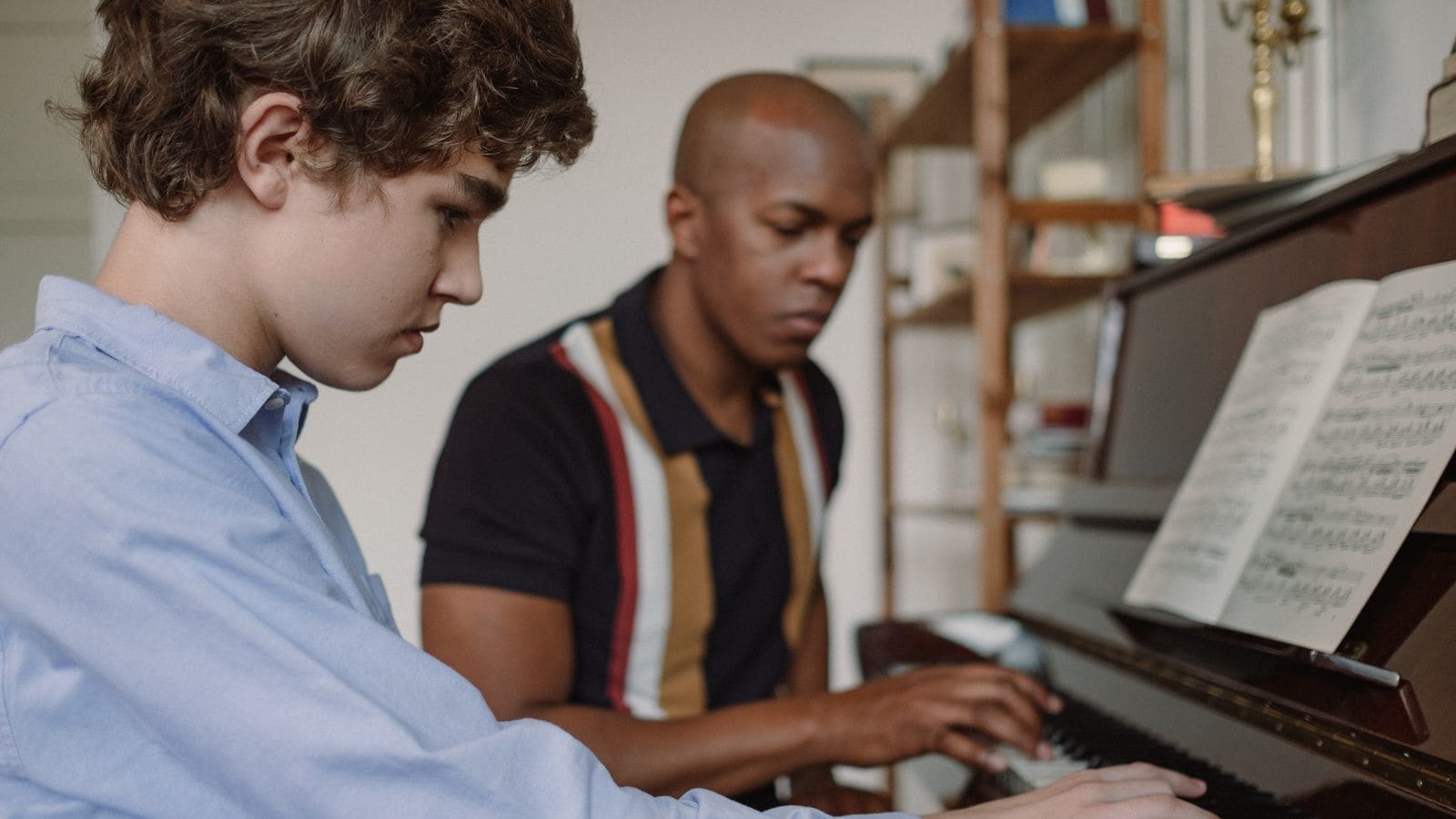
The most valuable five minutes of a piano lesson often happen at the end. That is when a useful correction either becomes a workable week or fades into a vague instruction to practise more. Good teaching connects the lesson you just had to the lesson you will have next.
Piano practice between lessons does not need to be perfectly consistent to work. It needs a clear result, a specific method, and a way to bring useful evidence back. When those pieces are in place, even a busy week can move the music forward.
The lesson should leave a trail
A lesson can feel productive while it is happening and still produce a poor week. The teacher spots three problems, demonstrates several fixes, and plays an inspiring example. You leave with a full page of notes. By Tuesday, however, it is no longer obvious which problem came first or what the demonstration was meant to change.
A good teacher reduces that blur before the lesson ends. They ask you to try the method once without help, listen to what happens, and then state the assignment in plain language. You should know where to work, what to do there, and what success will sound or feel like. If the plan only makes sense while the teacher is explaining it, the handoff is not finished.
Our post on how to practise between lessons so your teacher can actually help covers the student's side of that bargain. The teacher's side starts a little earlier: they have to design a task that can survive outside the lesson room. Teaching the practice method is part of teaching the piece.
"A correction belongs to the lesson. A usable method belongs to the whole week."
A useful assignment has four layers
"Work on bars 24 to 28" identifies a place, but it is not yet a practice plan. The same is true of "make it smoother" or "use the metronome." Each instruction leaves the student to invent the missing steps at home, usually when energy and patience are lower than they were in the lesson.
The four-part assignment
Here is the difference in practice. Instead of "work on the left-hand leap in bars 24 to 28," a teacher might say: "Block the destination chord, then start one beat before the leap. Keep the same fingering. At the end of the week, test three cold starts at 72 bpm and note which starting point is least reliable." That assignment tells you what to change and how to check it.
There is direct evidence for this kind of structure. A 2025 study of 83 early-intermediate group-piano students compared ordinary practice with practice supported by directed worksheets and logs. After a week, the worksheet group performed more accurately, practised more efficiently, and transferred more of the taught strategies to a new task. The control group made more errors and reported lower self-efficacy. The study does not prove that every student needs a worksheet. It does show what changes when a teacher makes the practice process explicit instead of assuming students already know how to build it.
This is also one of the easiest ways to get more from each music lesson: reserve the final minutes for a real handoff. The student should try the task, explain it back, and leave with fewer priorities than the teacher could have assigned.
The week is one phrase, not seven identical sessions
A good weekly plan has order without pretending every day will look the same. Monday may be a focused 35-minute session. Wednesday may offer nine distracted minutes before dinner. Saturday may disappear completely. The plan survives because each return has a job, not because every box on a calendar gets filled.
One week, played as a phrase
The days can move. The phrase still has a direction: understand, attempt, notice, adjust, and return with evidence.
The early sessions are for decoding the assignment and trying the teacher's method. The middle of the week is where you notice what survives without help. Later sessions rebuild the task in a larger musical setting and test it from a cold start. The final step is not a polished performance for the teacher. It is an honest return with enough information to choose what comes next.
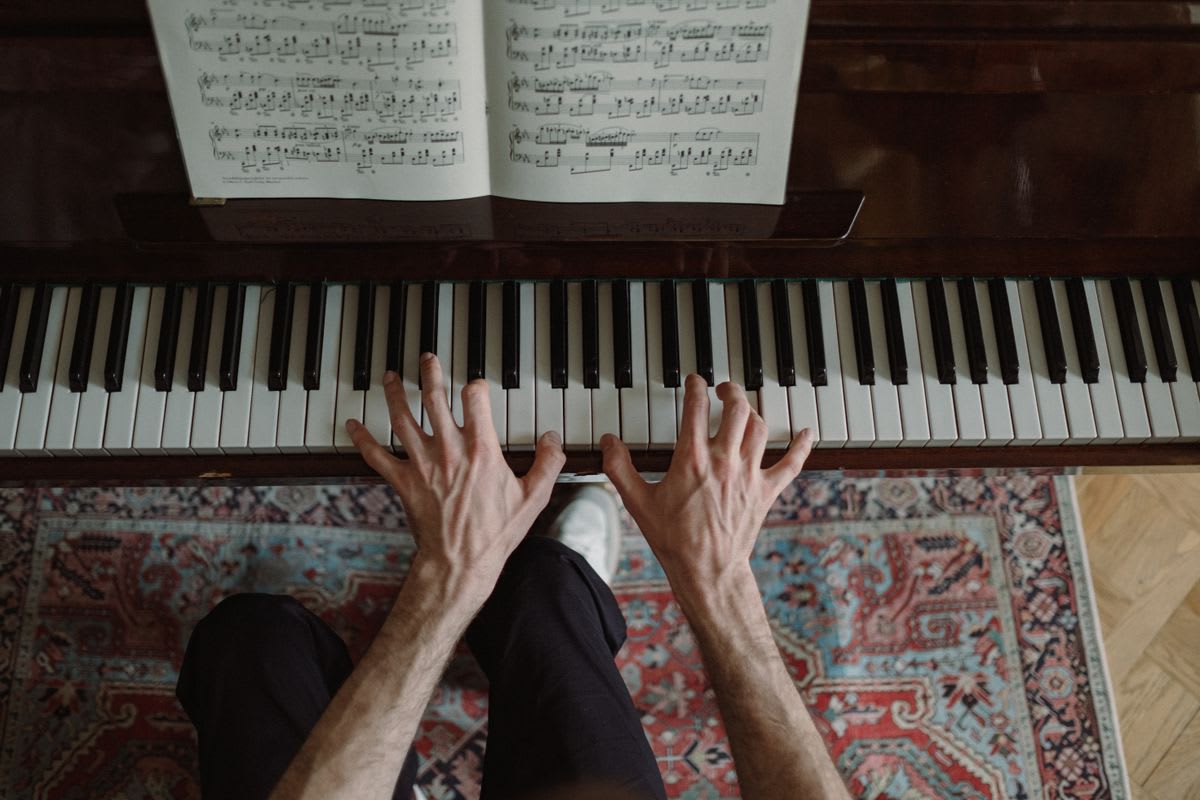
That sequence is not just tidy planning. A 2024 study of four master's-level cellists used a structured protocol to examine what happened before, during, and after practice. The musicians linked goals to strategies, monitored the result, reflected, and carried the decision into the next attempt. The sample was small and highly trained, but the before-during-after structure is useful at any level: a practice session should inherit a decision from the previous one rather than start from zero.
Record the evidence, not a diary of your life
A practice log should make the next conversation shorter and sharper. It does not need a paragraph about every session, and it does not need to prove that you worked hard. The teacher needs the details that can change the next instruction.
| What happened | Useful note | What the teacher can do |
|---|---|---|
| The fix worked slowly | Clean at 68; old fingering returned at 76 | Adjust the transfer step, not the basic drill |
| One entry kept failing | Reliable from bar 21, unreliable from bar 23 | Inspect the missing cue before bar 23 |
| The musical result changed | Melody projected until the pedal returned | Rebuild pedal without losing the balance |
| The task was unclear | Could not tell whether to prioritise evenness or speed | Clarify the result and order the priorities |
Minutes can still be useful, especially when they reveal what is realistic. But "practised 25 minutes" tells a teacher almost nothing about the music. A tempo threshold, a recurring trigger, a method that helped, or a question you could not answer gives them something they can act on.
A 2023 case study followed a piano teacher and four young students using digital listening tools for 22 weeks. The technology helped with access to listening material and supported problem-solving, but progress still depended on sustained teacher facilitation and each student's learning preferences. That makes the small study more useful than a simple technology success story: a tool can preserve information and make patterns visible, but it cannot decide what the musical priority should be.
Practis fits this role as the thread between lessons. A student can keep the piece, session, note, and weekly pattern together; the teacher can then see more than a total number of minutes. Practis does not write the assignment or make the diagnosis. It keeps the evidence from disappearing before the next conversation.
The next lesson should start with a decision
Without context, the next lesson opens with reconstruction. "How did practice go?" "Fine, mostly." "Where should we start?" Several minutes pass before either person knows whether last week's correction survived.
With a short record, the opening changes. The student can say, "The leap works from the previous beat at 72, but fails when I begin two bars earlier." The teacher now has a decision to make: test the lead-in, change the fingering, or check whether tension returns as the phrase expands. The old assignment becomes the first useful experiment of the new lesson.
A field study presented at ISMIR in 2024 shows why visibility matters, while also setting sensible limits on the claim. Researchers analysed home-practice video spanning 177 days from 30 piano students, then tested a support system with 80 children over four months. Features included reporting practice records to teachers, and the authors reported increased teacher engagement alongside student motivation, practice duration, and sight-reading. This was a child-focused technology intervention, not proof that any dashboard improves every lesson. It does support the practical idea that teachers can respond differently when home practice becomes visible.
"The goal of a practice record is not to report the past. It is to improve the next decision."
This does not mean your teacher should monitor you all week or reply after every session. A clear assignment should stand on its own, and a clear record should be quick to review. The benefit is continuity, not surveillance.
A good plan survives a bad week
Many weekly plans fail because they only describe the ideal version. A teacher assigns five days of 40-minute practice, then work runs late, a child gets sick, or the student's concentration vanishes on Thursday. Once the schedule breaks, the musical plan breaks with it.
A more durable assignment has three sizes. The minimum version might be five minutes on one transition and one written observation. The standard version includes the full method and a short retest. The stretch version adds context, tempo, or a recording. All three preserve the same musical priority, so a low-energy session still belongs to the plan rather than becoming random maintenance.
Lesson frequency matters here too. Our guide to how often adult beginners should take music lessons explains why the best interval is the one that gives you enough time to work without letting confusion harden for weeks. Whatever the schedule, the assignment should match the life that will actually contain it.
A good teacher also adjusts without moralising. If three sessions vanished, the useful question is not whether you were disciplined enough. It is which part of the assignment still moved, where friction appeared, and what the next week can realistically support. The plan serves the learning; the student does not serve the plan.
Close the loop with the right teacher and the right record
You can test the quality of a teacher's planning after one lesson. Did they identify one main bottleneck? Did they show you how to work on it rather than only how it should sound? Did you try the method yourself? Do you know what evidence to bring back? A strong lesson leaves those answers clearer than they were at the start.
If your self-directed work has reached the point where you need that outside structure, our post on what a teacher notices when self-taught progress stalls will help you choose a useful first problem. For online piano teaching, PianoTechSupport is the option we recommend: lessons focus on root-cause diagnosis and a practical weekly plan, with support for adult learners, graded exams, and conservatory preparation. You can sample the teaching voice on the PianoTechSupport YouTube channel, then use a trial lesson to bring one real bottleneck and see how the teacher turns it into a week.
A piano lesson should not disappear when the call or studio visit ends. It should become the shape of the week: one result to pursue, one method to use, and one honest piece of evidence to carry back. That is how the next lesson starts with context instead of guesswork.
More on lessons.

Trusted Online Piano Lesson Providers in 2026 (And How to Vet Them)
Every affiliate list calls every provider "trusted." Trust isn't a vibe — it's a short set of things you can actually check. The signals that separate a trustworthy online piano provider from a slick one, and a vetted shortlist by category.
Pract.is Editorial

Why Your Self-Taught Piano Progress Stalled (And What a Teacher Sees in 10 Minutes)
Self-taught piano progress often stalls when the player creating the problem is also the only person trying to diagnose it. Here is what a teacher can see in ten minutes, how they test the cause, and how to turn one correction into a better month of practice.
Pract.is Editorial
The First Online Piano Lesson: What Happens, What to Prepare, What to Ask
Almost everyone is a little nervous before their first online piano lesson — and almost nobody needs to be. Here is exactly what happens in that first session, the fifteen-minute setup that makes it go smoothly, and what to prepare so you walk in ready instead of anxious.
Pract.is Editorial