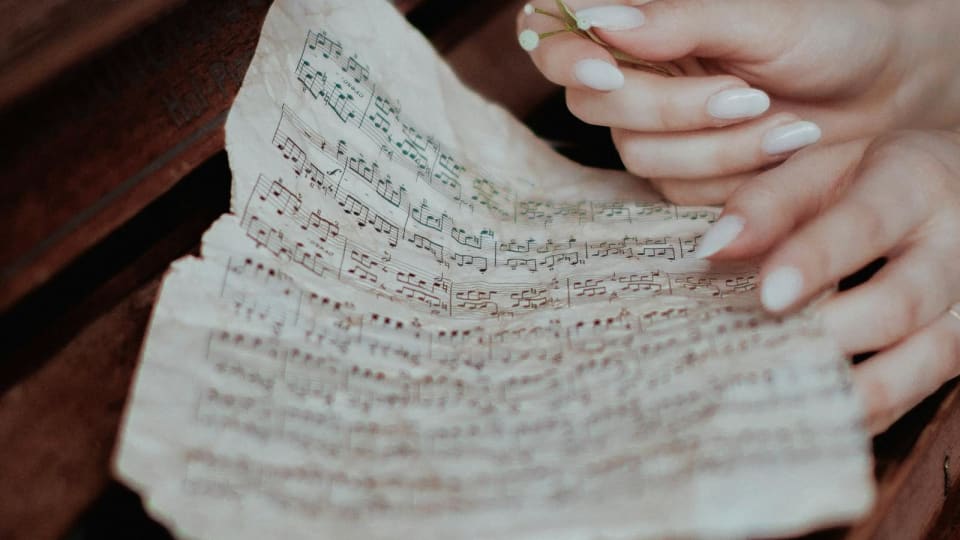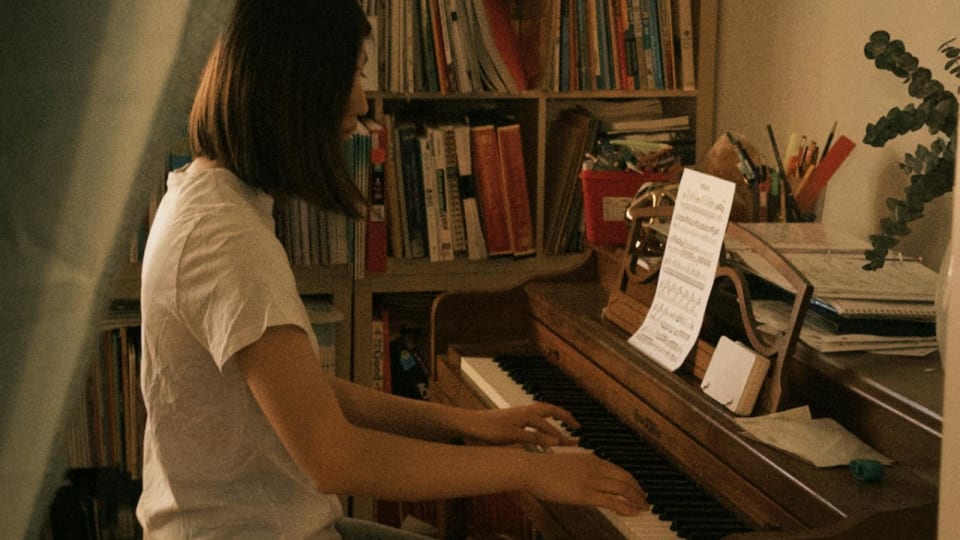
Conductors read entire orchestral scores in their heads before they touch a podium. Pianists almost never do this, even for music they know. The skill is the same; the training is missing. Most pianists were taught that the piano is the instrument you "learn the piece on" — open the score, sit down, work it out at the keyboard. The idea that you might do meaningful musical work with the score alone, away from any instrument, is treated as something only the unusually gifted attempt.
It is not. Score reading away from the piano is a trainable skill, built in graded stages, with specific exercises that any motivated adult learner can do. It is also one of the highest-leverage skills available — pianists who develop it learn pieces faster, memorise them more securely, understand structure more deeply, and form interpretations that are more independent. This article gives a practical method for building the skill: four stages, what to do at each, what to listen for internally, and how the skill compounds across the rest of your playing.
Why this is treated as a "gift"
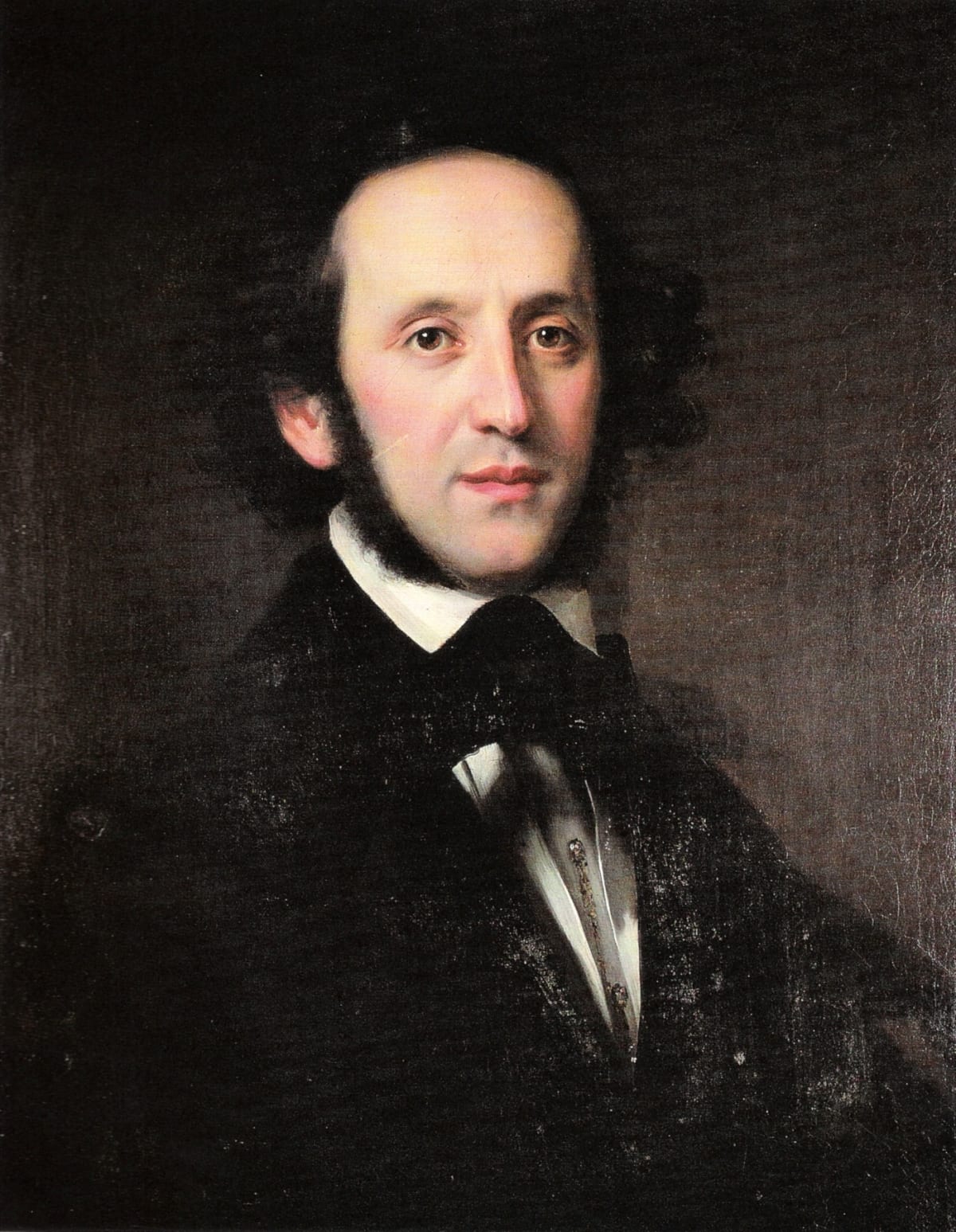
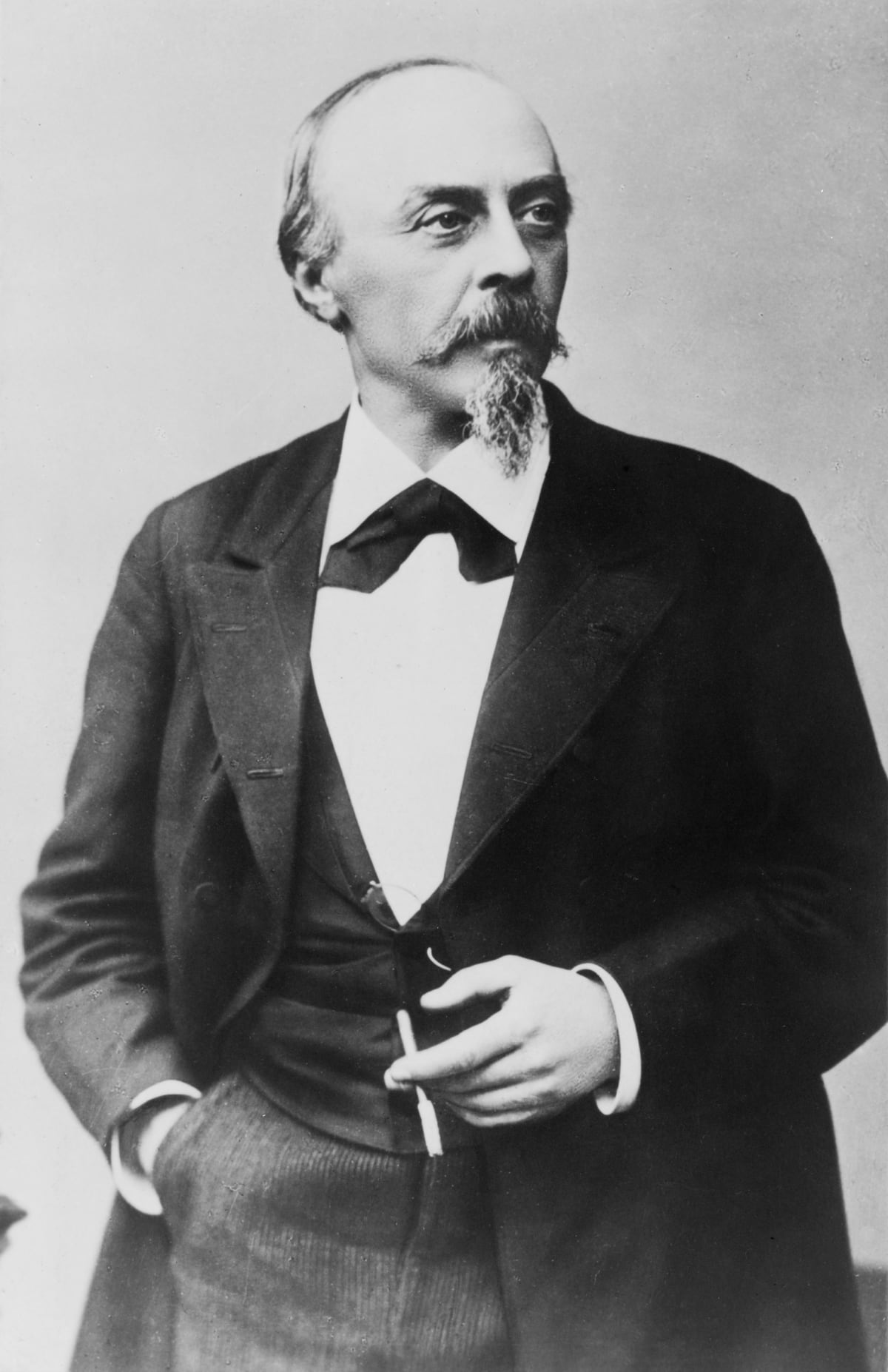
The historical figures most associated with silent score reading — Mendelssohn, who conducted the 1829 revival of Bach's St. Matthew Passion from memory; Hans von Bülow, who could dictate orchestral scores from his head; Mozart, who reportedly transcribed Allegri's Miserere after a single hearing — get treated as inhuman exceptions. The implication is that ordinary musicians cannot do anything like this. The implication is wrong. Those pianists did extraordinary things with the skill; the underlying ability — hearing music internally from notation — is in fact a normal skill that simply requires the normal kind of practice almost nobody does.
The reason most pianists never develop the skill is structural. Piano lessons happen at the piano. Practice happens at the piano. Sight-reading happens at the piano. Memorisation happens at the piano. There is no point in the standard training where a student is asked to do extended musical work without the instrument under their hands — so the underlying audiation skill (the technical term for "hearing music in your head from notation") never gets exercised systematically. It atrophies, or never develops in the first place.
"There is no point in standard piano training where a student is asked to do extended musical work without the instrument under their hands."
What "reading a score" without playing actually means
The skill is internal rendering. When you read a score silently, you are producing — in your head — the rhythm, pitch, harmony, texture, and (with more practice) the timbre and phrasing of the music on the page. At its most basic, you hear a single melodic line as the notes move. At its most developed, you hear a full orchestral score in something close to real time, with all its layered voices, with a felt sense of dynamics and timing, and with an emerging interpretation taking shape as you read.
This is not a binary skill. It exists on a continuous spectrum. A beginner can audiate a simple two-voice texture; an advanced amateur can audiate a Mozart piano sonata; a professional conductor audiates Mahler. The right starting point is genuinely modest — most adult pianists can already audiate a simple melodic line and just have never been asked to formalise it. The four-stage approach below builds outward from that starting point, deliberately, with clear targets at each stage.
Stage 1 — Easy keyboard works you already know
The first stage uses pieces you can already play. The principle is to leverage your existing internal model of the piece — the sound, the feel, the shape — and connect it explicitly to the score as a reading skill. Take a Bach two-voice invention or a short Mozart sonata movement you have played and learned. Sit somewhere away from the piano with the score in your lap. Read it from the top, slowly, audiating each note. Where you cannot hear the next note clearly in your head, slow further. The goal is not speed; it is to render the music internally, line by line, without doubt about what comes next.
The first thirty minutes of this exercise will be uncomfortable. The internal audio will be patchy. You will lose the thread, jump ahead, lose tempo. That is normal. Stop, return to a known landmark, continue. After a week of fifteen-minute daily sessions on the same piece, you will be able to audiate it from start to finish with the score open. After a second week, you will be able to do it with the score closed. The Pract.is article on how to practice memorization instead of just hoping it sticks covers the broader memorisation case; silent reading is one of the most effective memorisation tools available.
Once one piece works, take a second piece you also know well. The skill transfers — easier with each new piece — because the underlying audiation muscle is now in use. By the end of stage 1, you should be able to silently audiate three or four pieces from your existing repertoire, end to end, with reasonable accuracy.
Stage 2 — Easy keyboard works you do not yet know
The second stage is where the skill starts to be genuinely useful. Choose a short keyboard piece you have never heard or played — a Bach prelude you have not encountered, a Scarlatti sonata, a Schubert moment musical. Read it silently, away from any instrument, with no recording reference. Render it in your head as best you can. Then go to the piano and play it slowly. Compare your internal version with what your hands produce.
The first few times, the gap will be wide — sometimes embarrassing. You imagined the rhythm differently; the melody at bar 7 went somewhere unexpected; the chord at bar 15 was a different colour than you predicted. The gap is informative. Each surprise is a place where your reading missed something, and the comparison teaches you what to attend to next time. The Pract.is essay on how to listen more critically while you practice covers the listening side; the audiation case is the mirror image — listening to a sound that does not yet exist outside your head.
Over a month of stage 2 work — three to four short pieces, with comparison — the gap narrows. Your audiation gets more accurate. By the end of the stage, you can read a previously-unknown keyboard piece silently and produce a mental version that approximately matches what the piano will deliver. This is the threshold where the skill becomes practical: you can preview a piece before deciding to learn it, you can read a piece on a flight, you can study a score in a coffee shop and know what it sounds like.
Stage 3 — Chamber music
Stage 3 expands the skill outward. Reading chamber music — a string quartet, a piano trio, a violin sonata — exercises the audiation muscle in ways solo keyboard music does not. You are now tracking multiple voices in different ranges, often in different clefs, with the timbres of different instruments to imagine. The brain has to do more work, and the skill grows accordingly.
The natural starting point is Haydn or Mozart string quartets, where the textures are clear and the parts are relatively transparent. Read one movement at a time. Use a score with all parts visible (a full pocket score) rather than a piano reduction. Begin by tracking only the first violin, then add the second violin, then the viola, then the cello. The four parts will rarely render simultaneously in the early weeks; you will keep losing one or more. Each round of practice expands the bandwidth.
Chamber-music reading also begins to develop your sense of texture — the feeling of how voices sit relative to one another, who carries the melody at any moment, how the harmony emerges from the combination of lines. The Pract.is article on why your slow movements sound empty covers texture as one of five exposed layers in slow music; the audiation version of the same skill is the ability to hear those layers from notation alone.
Stage 4 — Orchestral scores
Stage 4 is where conductors live and most amateur pianists never visit. Reading orchestral scores is the natural extension of stage 3 to larger ensembles, with the added challenges of transposing instruments (the clarinet in B♭ sounding a tone lower than written), C-clef voice readings, and many more simultaneous parts. The skill is genuinely advanced, but it builds in the same way: start small, choose familiar music, audiate one section at a time.
A good entry point is a Haydn or Mozart symphony in pocket score, with a movement you have already heard. Read with a recording at first — listen and follow the score, line by line — and gradually rely on the recording less. Then read a movement you do not know without a recording, and check your audiation against a recording afterwards. Then read a movement of Schubert or Mendelssohn. The same gap-narrowing process happens at this level, just with more layers to track.
Most adult amateur pianists will not reach professional-level orchestral score reading, but they do not need to. Even partial stage-4 ability — being able to follow an orchestral score while listening, with comprehension of who is playing what and how the texture moves — is a significant skill, transferable to deeper listening, better-informed playing, and a richer sense of what music actually is.
What to listen for at each stage
The internal listening priorities shift as the stages progress. At each level, certain dimensions of the score deserve more attention than others.
| Stage | What to audiate first | What to add next |
|---|---|---|
| Stage 1 (known keyboard) | Melodic line, then bass | Inner voices, dynamic shape, phrasing |
| Stage 2 (unknown keyboard) | Rhythm, then pitch outline | Harmonic colour, voice leading, pedal sense |
| Stage 3 (chamber) | Each part individually | How parts combine; who has the melody at each moment |
| Stage 4 (orchestral) | String parts (closest to keyboard reading) | Wind colour, brass entrances, percussion timing |
The early-stage emphasis on rhythm before pitch is deliberate. Most adult learners over-focus on melodic notes when reading and under-focus on rhythm. Reading rhythm correctly — feeling the metric structure, the durational relationships, the moment of arrival — is what makes the audiation feel like music rather than like a slideshow of disconnected pitches.
How this skill compounds
The most under-discussed benefit of silent score reading is what it does to the rest of your playing. Three specific effects show up reliably for pianists who develop the skill.
First, memorisation accelerates. A piece you have audiated silently is already partly memorised — the brain has stored the score's content as auditory and structural information, not just as a motor sequence. The Pract.is article on how to memorize music without making your playing fragile describes the importance of having multiple memory channels; silent score reading directly builds the auditory and analytical channels that motor memory alone cannot sustain.
Second, structural understanding deepens. Reading away from the piano forces you to attend to the architecture of the piece — sections, modulations, returns, key landmarks — because the hands are not available to carry you through bar by bar. The structural understanding produced is more durable, more articulable, and more useful for interpretation. The Pract.is article on developing your own interpretation covers this directly; interpretive independence is most reachable when you understand the piece structurally, and structural understanding is what silent reading produces.
"A piece you have audiated silently is already partly memorised — the brain has stored its content as auditory and structural information, not just as a motor sequence."
Third, repertoire choice improves. A pianist who can audiate previews a new piece silently before committing to learn it. The fifteen minutes of silent reading saves the six weeks of "this turned out not to be my piece." Adult learners with limited time benefit disproportionately from this — the wrong piece costs months, and the audiation preview is a cheap insurance policy.
The practice schedule
A workable schedule for developing the skill is fifteen minutes a day, four days a week, for three months. Less than that and the skill does not consolidate; more than that produces diminishing returns inside any single session. Distribute the work across the stages — early on, focus on stage 1 alone; gradually mix in stage 2 once stage 1 feels secure; introduce stage 3 in month two; touch stage 4 in month three.
The Pract.is article on how to build a practice routine you can sustain long term covers the broader case for distributed practice; the audiation case fits the same model — short, daily, consistent, with progress measured in weeks not days.
One specific habit accelerates the work disproportionately: silent reading on commutes. A score in your bag, fifteen minutes on a train or a bus, no instrument anywhere nearby, becomes one of the most productive practice windows you have. The skill grows in environments where playing is not an option, which is part of why it is so valuable for working adults with limited piano time.
Common obstacles
A few specific patterns slow the development of silent reading. The first is quietly humming or whispering to track the pitch. This is not silent reading; it is sub-vocalised singing. The brain is producing the audio through your throat rather than through internal audiation, and the skill of true silent audiation does not grow. The fix is to deliberately keep the throat still and force the rendering to be internal.
The second is using a recording as a crutch too early. Recording-assisted reading is useful at stage 4 and at the beginning of stage 3, but at stages 1 and 2 it short-circuits the audiation muscle. The brain plays back the heard version rather than producing one from the notation. Stages 1 and 2 should generally be done without recordings.
The third is stopping at the first failure. The first weeks of audiation work are uncomfortable in a specific way — the music in your head is not as vivid as the music your hands can produce. That gap is the work. Sitting with it for thirty minutes a day, three or four times a week, is what closes it. The Pract.is article on what to do in practice when you're too tired covers the related principle of accepting low-quality work as part of long-term progress; the silent-reading version is the same — stay with it past the discomfort, and the skill arrives.
What changes after six months
Pianists who do this work consistently for six months report a specific change. They start picking up scores casually — at a concert, in a shop, on a flight — and rendering the music internally as they read. They preview pieces they are considering for the next month's work. They study sections of pieces they are learning while away from the piano, returning to the keyboard with the section already shaped. They follow chamber music in scores at concerts. Their memorisation gets more secure. Their interpretations have more architecture.
The piano stops being the only place musical thinking happens. The score itself becomes an instrument the mind can play — slowly, partially, but really. That is the skill conductors live by, that Mendelssohn used to revive Bach, that Bülow used to memorise the entire Beethoven cycle. None of them were doing something inhuman. They were doing something most pianists are simply never asked to learn — and that almost any adult pianist can begin to develop, in fifteen minutes a day, starting today.