

Most memorization goes wrong long before the stage. It goes wrong in the practice room, when a musician repeats a piece until it feels familiar and then quietly assumes that familiarity will turn into durable memory by itself. Sometimes it does, for a while. Just as often, the memory only works from the beginning, only works on a good day, or only works until one interruption breaks the chain.
Memorization is more reliable when it is practiced directly. That means building a map of the piece, storing it in more than one form, and testing recall before pressure is the thing that discovers the holes for you.
Stop treating repetition as a memorization method
Repetition matters, but repetition by itself is not a full memory strategy. It mainly builds familiarity and procedural flow. That is useful, but it does not guarantee that the piece is retrievable from the middle, explainable in sections, or recoverable after a lapse. A musician can play through something many times and still have only one way into it: start at the top and hope the chain keeps running.
Susan Hallam's study of memorisation strategies in musicians is helpful here because it found that professionals did not rely on one memory type alone. They deliberately combined aural, kinaesthetic, visual, and structural strategies, and they used analysis to prevent confusion when passages were similar. That is the opposite of “I played it enough times and it sort of stuck.” It is memorization as a constructed system.
The same pattern shows up in expert-memory research. Roger Chaffin, Tania Lisboa, and colleagues showed in their work on performance cues that memorized performance is supported by deliberate landmarks tied to structure, technique, interpretation, and sound. That research matters because it gives the practical answer to a common confusion: memory does not become secure merely because the fingers have been busy. It becomes secure when the musician knows what is happening and where they are.
| If you "memorize" by repetition alone | If you practice memorization directly | What changes later |
|---|---|---|
| The piece feels strongest from the beginning | The piece has named entry points all over it | Recovery gets easier in rehearsal and performance |
| Familiarity hides weak sections | Recall tests expose weak sections early | You find memory holes before the stage does |
| One long chain carries the whole piece | Several layers can cue the next phrase | Interruptions stop being catastrophic |
| Memory collapses when conditions change | Memory has been tested under different conditions | Performance transfer improves |
Build the map before you take away the score
Good memorization starts earlier than many musicians think. Before the score disappears, the map should already be visible. That means identifying sections, cadences, pattern repeats, harmonic turns, phrase starts, tricky transitions, and places that are easily confused with each other. If the only map is “this comes after that,” the memory is already more fragile than it needs to be.
This is one place where score study pays off immediately. Yamaha's practice guide argues that initial score study helps students develop the inner ear and analytical skills before they begin trying to execute everything physically. That matters for memorization because a piece that has been studied on paper is easier to organize in memory than a piece that only exists as a blur of movement. It also reduces the temptation to learn hands separately for too long without understanding how the full texture works together.
The map does not need to be music-theory-heavy in an academic sense. It does need to be specific. Where does the phrase sequence repeat with different harmony? Which bars are nearly identical but not quite? Where does the left-hand pattern invert, the text setting change, or the bowing logic reset? The goal is not analysis for its own sake. The goal is to stop the piece from becoming one undifferentiated memory fog.
Memorization workflow
Map sections
Form, phrases, turns
Label cues
Harmony, text, shape
Recall cold
No long runway
Stress test
Random starts, pressure
If the piece cannot be described, it is harder to retrieve when the fingers hesitate.
Store the piece in layers, not one blur
Once the map exists, memorization gets stronger when the piece is stored in multiple layers. Structural memory answers where you are. Harmonic memory answers what the music is doing. Auditory memory answers what should sound next. Visual memory helps with score image or layout cues. Kinaesthetic memory handles the movement feel. None of these layers has to be perfect by itself. The point is that one layer can rescue another when one of them becomes unreliable.
That layered model is not just a teaching slogan. Hallam's work found that strategy use varied, but effective memorization typically drew on combinations of aural, kinaesthetic, visual, and structural processes. More recently, Brown and Palmer's work on auditory and motor imagery showed that imagery abilities influence how musicians encode and retrieve musical sequences. And in a 2022 study on mental practice and music memorization, combining mental and physical practice improved follow-up memory outcomes compared with physical practice alone in classical guitarists. The practical message is clear: if memory only exists under the hands, it is carrying too much alone.
This is also where hands-separate work needs some discipline. Hands-separate practice can reveal uncertainty and sharpen detail, but it is not the whole memorization process. Yamaha's guide makes that nuance well: hands-separate practice is useful, yet learning too much in separated channels can weaken conception of the full piece as a whole. So use separated work to clarify layers, then reconnect them before the memory becomes compartmentalized in a way that the actual performance will not support.
Layer
Structure
Know the sections, phrase boundaries, repeats, and where similar material diverges.
Layer
Harmony
Label the progression, function, or tonal pull so the next event has logic behind it.
Layer
Sound
Hear the next phrase inwardly before playing it, especially at key entry points.
Layer
Touch
Keep the physical pattern, but do not let it be the only path through the passage.
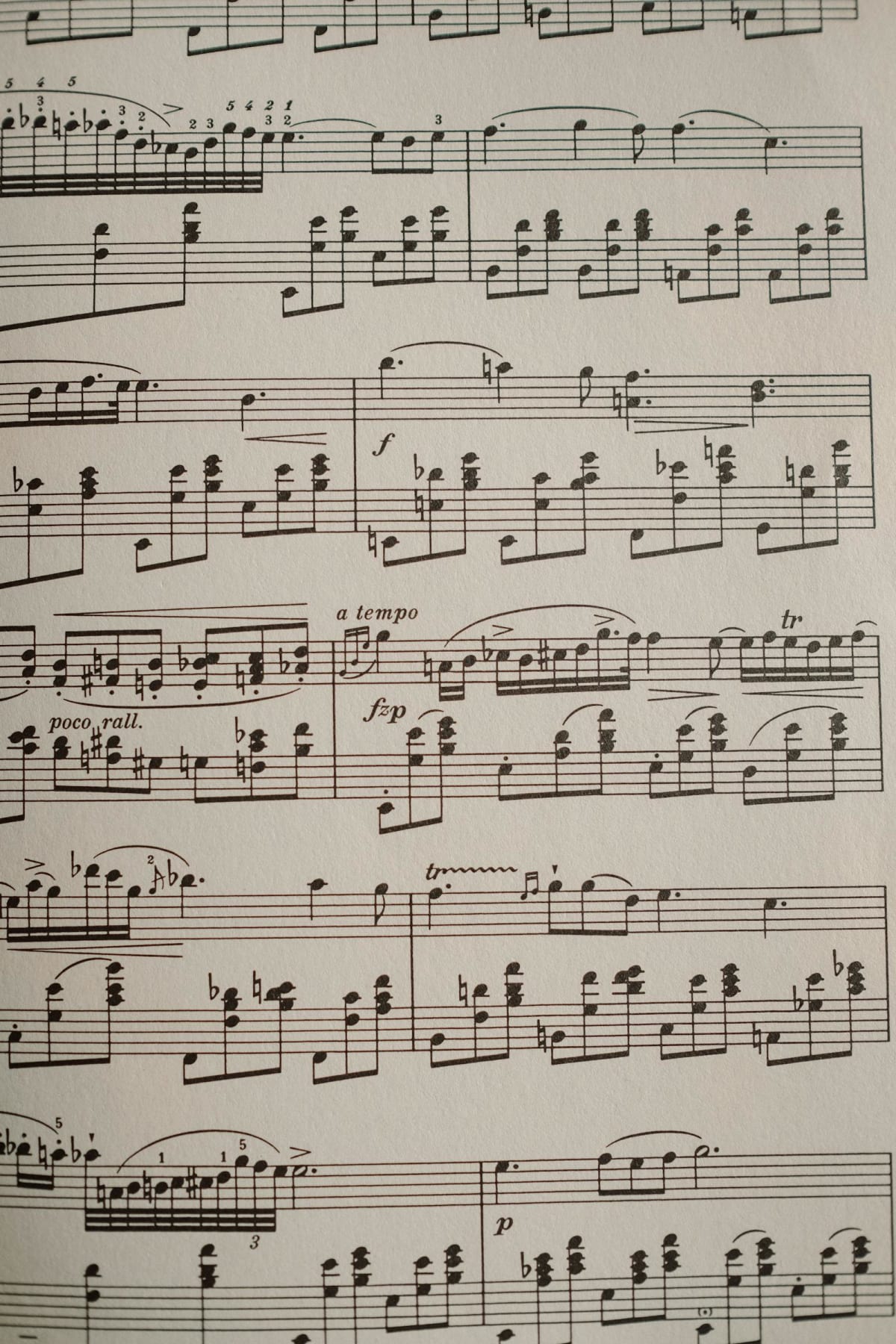
Photo: cottonbro studio via Pexels
If this sounds close to building less fragile memory, it is. The difference is emphasis. That earlier piece is about what durable memory needs under pressure. This step is about how to build those layers during the actual memorization process instead of hoping they appear by accident.
Shift from replay to retrieval as early as possible
Replay is comfortable because it lets the previous bar cue the next bar. Retrieval is harder because it asks whether the passage is actually available without that runway. Memorization improves when retrieval enters early and often. That means stopping at named points, starting cold from the middle, writing or saying the next cue before playing, and spacing those recalls apart instead of only letting the piece flow forward from the top.
The psychology literature is clear enough on this point to be useful outside the lab. In Karpicke and Roediger's retrieval-practice study, repeated recall improved retention, and the spacing of recalls mattered for longer-term retention. Douglas Larsen and colleagues found in their randomized controlled trial that repeated testing improved long-term retention relative to repeated study. The domain there is not music, but the practical implication carries over cleanly: memory gets stronger when you practice bringing it back, not only when you keep it in view.
This is also where performance cues become concrete. In Recovery from memory failure when recalling a memorized performance, recovery tended to happen at structural beats where there were performance cues. That is exactly what musicians need in practice: named places that can call the passage back when serial flow breaks. If you only ever rehearse the piece as one continuous path, those cue points may never fully form.
Name the point
Do not start from “somewhere in the middle.” Start from a cue with a specific identity.
Recall before touching
Hear, label, or describe the next event for a second before the hands or voice take over.
Space the next attempt
Leave the passage, do other work, then come back so the memory has to be rebuilt rather than merely continued.
Record the weak entries
If one cue keeps failing, log it and repair it like any other recurring technical problem.
That last step matters because memory failures are usually local before they become dramatic. If one cue repeatedly collapses, treat it as a passage to rebuild, just as you would in repairing a mistake you have overlearned. The problem is not that your memory is “bad.” The problem is that one doorway is still weak.
Test the memory before performance is the test
A piece is not securely memorized just because it ran once at home. It needs to survive different entry points, small interruptions, changing attention, and mild pressure. That is the moment when many musicians discover that their memory only works in one friendly context. The answer is to make those contexts less friendly on purpose before performance does it for you.
Useful tests are simple: start from five random points, pause before a key entry and resume, play after a distraction, speak the structural outline out loud, or run a section after ten minutes of unrelated work. None of that is theatrical. It is just a way of checking whether the memory is portable. This is also where posts like how to tell if a piece is ready to perform in public and how to get back into the piece after a mistake connect directly to memorization. If the memory cannot survive interruption, it is not yet stage-ready, no matter how familiar it feels from the top.
Bottom line
Memorization gets stronger when you practice memory directly: map the piece, build layered cues, retrieve from cold starts, and test the recall before pressure does.
The simplest standard is also the most honest one: can you enter from several named points without needing a long runway, and can you explain why the next event is what it is? If yes, the memory is becoming usable. If no, more replay is probably not the answer by itself.


