

The first problem adult beginners have with singing is usually not laziness. It is exposure. You are not hiding behind piano keys, drum pads, or a guitar neck. The instrument is your own body, which means the early phase can feel personal in a way other instruments do not. That is why so many adults do not need motivational speeches about following their dreams. They need permission to begin in a way that is private, safe, and ordinary.
That ordinary version matters. A lot of beginner singing advice still sounds like it was written for teenagers in rehearsal rooms or aspiring performers trying to "find their voice." Most adults are dealing with something more boring and more real: thin walls, inconsistent energy, self-consciousness, and a strong suspicion that the sound coming out of them is worse than it actually is. The good news is that singing can be started much more quietly and pragmatically than people think.
If you want the short answer, here it is: start with short sessions, stay in an easy range, keep the volume moderate, and treat the first month as a coordination phase, not a performance phase. If your bigger issue is fitting music around real life, the same low-friction logic shows up in how to learn an instrument when you have a full-time job and in our guide to building a practice routine you can actually sustain.
Month-one goal
Build repeatable contact with your voice, not dramatic range or volume.
Best session length
Ten to fifteen minutes is enough when you are learning coordination and staying fresh.
Best volume
Conversational to moderately projected. Not whispering, not belting.
Best mindset
You are calibrating an unfamiliar instrument, not auditioning for anyone.
Why singing feels more embarrassing than starting most instruments
Singing exposes two things at once: your sound and your identity. A wrong piano note feels like a mistake on an object. A strained sung note feels like you are the mistake. That is one reason adult beginners often feel more ridiculous starting voice than starting guitar or piano, even when they are equally new. The learning curve is not only musical. It is emotional.
There is also a simple acoustic reason hearing yourself can feel disorienting. Scientific American's explanation of why your recorded voice sounds different is still the cleanest short version: when you speak or sing, you hear a mix of air-conducted sound and bone-conducted vibration. A recording strips out that internal pathway, so the voice on playback feels thinner, stranger, and less like "you." That unpleasant jolt is normal. It is not proof that you have no voice.
This is also why singing is one of the clearest examples of a skill you can begin without heavy notation. You can work on pitch matching, vowel shape, phrasing, rhythm, and song memory long before reading becomes urgent, which is part of the case we made in our guide to learning music before sheet music fluency. In the beginning, your job is not to look sophisticated. Your job is to make the act of singing feel usable enough that you come back tomorrow.
What the first two weeks should actually look like
The first two weeks should be conservative on purpose. The National Institute on Deafness and Other Communication Disorders says in its voice-care guidance to avoid speaking or singing when your voice is hoarse or tired, stay hydrated, use good breath support, and avoid both screaming and whispering because each can stress the voice. That is a better beginner frame than the usual internet chaos of "just sing louder" or "push through the awkwardness." Beginners do not need bravery first. They need control.
A practical starting pattern is ten to fifteen minutes, four or five days per week. Begin with a minute of relaxed breathing, then gentle humming, lip trills, or easy slides in a comfortable middle range. After that, sing a very small amount of actual song material: one verse, one chorus, or even four lines. Finish before the voice feels cooked. Adults with jobs usually do better stopping early and repeating tomorrow than having one intense twenty-five minute session and then avoiding the whole thing for three days.
Pick material that lets you stay organized. That usually means songs with a modest range, clear melody, and no pressure to imitate a powerhouse singer. Do not start with music that requires breathy intimacy at the bottom and full belt at the top. Choose something you can sing at a moderate volume without reaching. If you are still deciding whether voice is really your lane or whether another first instrument fits better, read this alongside our adult beginner instrument guide.
Two-week starter plan
Week 1
- 10 minutes per session
- Breathing plus easy humming or lip trills
- Sing only short phrases from one easy song
- Stop the moment the voice feels scratchy or effortful
Week 2
- 10 to 15 minutes per session
- Keep the same warm-up pattern
- Sing one full section more than once, not the whole song endlessly
- Make one short recording and listen for only one thing: pitch, breath, or tension
How to practice without blasting your voice
Most adult beginners do not get into trouble because they sang too little. They get into trouble because they confuse emotional effort with useful vocal work. If you feel embarrassed, the temptation is to overcompensate by singing harder, higher, or louder, as if force will make the sound seem more legitimate. That is exactly the wrong direction.
The Voice Foundation's overview of voice-disorder prevention is useful here because it frames vocal hygiene in plain terms: warm up, train proper technique, avoid misuse and overuse, and build endurance gradually. That is the adult beginner blueprint. Your early sessions should feel almost boring. Moderate volume. Comfortable pitch. Clear attention. No heroics.
Cleveland Clinic's vocal-wellness material is equally practical on the lifestyle side: hydration, rest, avoiding whispering, and being careful with throat clearing all matter because the same voice you sing with is the voice you also use all day at work. If you teach, present, manage calls, or talk constantly, your singing practice is not happening on a fresh instrument. It is happening on top of accumulated speaking load. Adults need to account for that the way athletes account for fatigue.
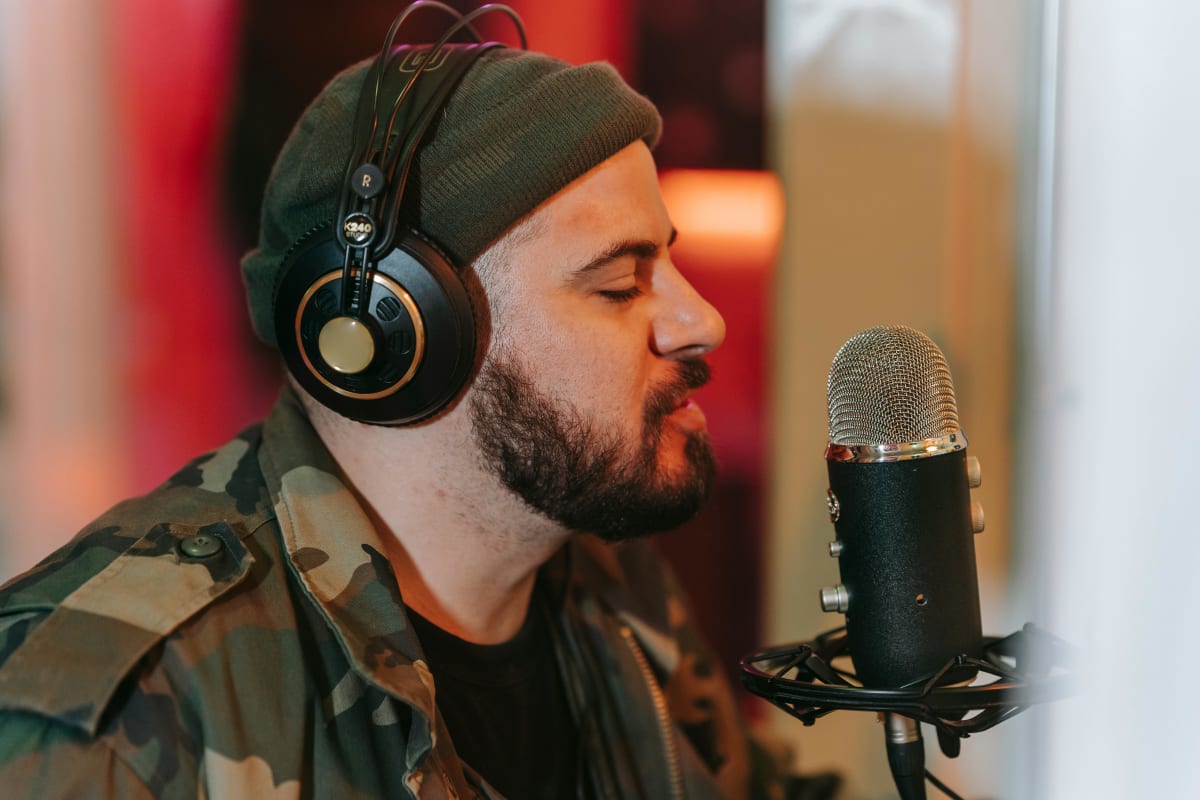
Photo: Anna Pou via Pexels
Green flags
- You can stop and start phrases without panic
- Your throat feels neutral afterward, not scraped
- Your volume stays moderate without collapsing
- You leave practice feeling you could do a little more
Red flags
- Pain, burning, or rawness during singing
- Trying to fix pitch by simply pushing louder
- Repeated throat clearing after each phrase
- Voice quality worsening as the session goes on
If you want one simple rule, use this one: sing at a level where you can still think. The first phase of learning voice is coordination, not catharsis.
Do you need a teacher immediately?
Not always. Plenty of adults can spend a few weeks getting oriented on their own if they stay short, stay easy, and avoid material that makes them strain. If your goal is casual singing, self-accompaniment, choir confidence, or simply not feeling frozen when you open your mouth, you do not need to act as if private lessons are the only legitimate entrance to singing.
But singing is also an instrument where the wrong habits can hide inside the body. A good teacher can hear tension, breath inefficiency, pitch drift, and range mismatches long before a beginner can name them. The best reason to get teacher help early is not prestige. It is diagnostic speed. You spend less time guessing what went wrong.
If you do want help, the National Association of Teachers of Singing directory is one reasonable place to start because it lets you search for voice teachers by location and criteria. You do not need a teacher with glamorous performance credentials if your goal is adult-beginner function. You need someone who can keep you in a workable range, explain what they are hearing, and avoid turning every lesson into abstract encouragement.
| Teacher now makes sense if... | You can probably start alone for a bit if... |
|---|---|
| You keep straining, cracking, or losing comfort quickly | Your voice feels stable in short easy sessions |
| You want musical theatre, classical, auditions, or faster range development | Your goal is basic confidence, karaoke, choir entry, or self-accompaniment |
| You cannot tell whether the problem is pitch, breath, or tension | You can focus on one variable at a time and improve gradually |
| You have a history of hoarseness, vocal fatigue, or previous voice trouble | You are healthy, conservative, and willing to keep the first month simple |
How to get over the embarrassment without waiting to feel confident
The mistake is assuming confidence has to arrive before repetition. In practice, repetition is what makes singing feel less charged. Adult beginners often wait for a magical feeling of permission, then treat every awkward session as evidence that the permission has not arrived. That loop never ends. The only clean way through it is to make the sessions so manageable that embarrassment does not get to dominate them.
That means singing privately at first if you need to. It means choosing songs that sit lower than your ego wants. It means recording twenty or thirty seconds and listening back for one variable only, instead of deciding whether your entire voice is "good." The weirdness you hear on playback is partly normal acoustics, not just talent. So use recordings as data, not judgment.
It also helps to redefine what counts as progress. Progress is not "I now sound like a singer." Progress is "I sang four times this week without pushing," or "the same phrase stayed in tune more often," or "my shoulders did not rise every time I inhaled." Those are adult-useful wins. The same realism is why our posts on learning with a full-time job and sustaining a practice routine long term matter so much: consistency grows faster when the bar is concrete and survivable.
Best anti-cringe rule: do not perform your beginner stage for yourself. Treat it like calibration work, the same way you would if you were learning where notes sit on a keyboard or where chords sit on a fretboard.
When to stop experimenting and get actual help
Some awkwardness is normal. Pain is not. NIDCD's voice-care page, Cleveland Clinic's 2025 guidance on hoarseness, and ENT Health's summary of the voice-care team and persistent voice changes all point in the same direction: if your voice stays hoarse, effortful, or unstable for more than a couple of weeks, or if it keeps happening repeatedly, stop treating it as ordinary beginner soreness and get assessed. That is especially true if you are losing range, feeling pain, or finding that everyday speaking is also getting worse.
The point is not to make singing feel medically scary. The point is to stop romanticizing strain. A normal adult-beginner path may feel awkward, unfamiliar, and emotionally exposed. It should not feel like you are damaging yourself in order to earn the right to sing.
Starting singing as an adult is allowed to be quiet, unglamorous, and a little weird. In fact, that is often the version that works. Keep the sessions short enough to repeat, the material easy enough to control, and the standard humane enough to survive real life. That is how the voice stops feeling ridiculous and starts feeling usable.


