For most adults, the best first instrument is digital piano. Not because piano is magically superior, but because it solves more beginner problems at once than almost anything else: clear pitch layout, visible progress, low maintenance, and headphone practice when life is noisy. After that, the best options tend to be ukulele, acoustic guitar, and electronic drums, with violin sitting in the “only if you really mean it” category.
That is the recommendation-first answer. The longer answer is that adults should choose instruments based on ordinary life, not on image. Cost matters. Noise matters. Setup matters. Hand comfort matters. The speed at which the instrument gives you something that actually sounds like music matters. If those variables are wrong, the instrument does not become your new hobby. It becomes an expensive symbol of good intentions.
This article is deliberately different from our deeper framework on how to choose your first instrument as an adult. That piece is about how to think. This one is about what I would actually point most adults toward first. If your main issue is fitting practice around a job and uneven energy, read this together with how to learn an instrument when you have a full-time job.
What makes an instrument beginner-friendly for adults
The adult version of “beginner-friendly” is not “easiest in the abstract.” It is “most likely to survive a real week.” That means the instrument has to clear several tests at once. It needs to sound satisfying enough that you want to come back. It needs to fit your room, your budget, your hands, and your tolerance for maintenance. And it needs to give some visible progress before discouragement takes over.
Daniel Mateos-Moreno and Anders Høglert’s 2024 study on why people choose their main musical instrument is useful because it shows that timbre was the most common stated reason for choosing an instrument. That matters. Adults do not stick with an instrument just because the spreadsheet said it was practical. They stick because they want that sound in their life.
But the practical side matters just as much. Laura Ritchie and Phil Kearney’s work on adult beginner instrumentalists and self-regulation is helpful here because it frames adult progress around behavior, not inspiration. Beginners do better when the system supports regular contact. That is why some instruments are easier first choices for adults even if they are not the most glamorous choices.
| Adult-beginner filter | Why it matters | What strong options do well |
|---|---|---|
| Startup friction | If starting is annoying, practice turns into negotiation | Stay set up, tune quickly, or work in very short sessions |
| Noise control | Adult practice often happens in shared spaces and odd hours | Use headphones, moderate volume, or low-impact sound |
| Progress visibility | Adults trust routines more when improvement is noticeable | Give clear pitch feedback, repeatable shapes, or obvious pattern growth |
| Physical ease | Pain, discomfort, and awkward setup kill early consistency | Respect limited flexibility and short daily practice |
| Cost and upkeep | Beginners rarely budget for accessories and maintenance honestly | Keep the total setup realistic, not just the instrument body price |
That is the lens I am using here. This is not a prestige ranking. It is a real-life ranking.
Quick picks: the best adult-beginner instruments by situation
If you just want the shortlist, start here.
Best overall
Digital piano
Best mix of clarity, quiet practice, low maintenance, and visible progress.
Best low-cost start
Ukulele
Very low friction, soft strings, portable, and quick to turn into actual songs.
Best for songs and versatility
Acoustic guitar
Broad style range, social utility, and strong payoff once chords settle in.
Best for rhythm-first adults
Electronic drums
Excellent if rhythm is your center and you can manage pad and pedal noise.
| Instrument | Cost pressure | Noise control | Physical difficulty | Short-session fit |
|---|---|---|---|---|
| Digital piano | Medium | Excellent | Low to medium | Excellent |
| Ukulele | Low | Good | Low | Excellent |
| Acoustic guitar | Low to medium | Medium | Medium | Strong |
| Electronic drums | Medium to high | Good, not silent | Medium | Strong |
| Violin | Medium | Poor | High | Medium, but daily contact helps |
1. Digital piano is the safest best-for-most-adults recommendation
If an adult asked for one answer and wanted the least risky serious recommendation, I would usually say digital piano. The reasons are not romantic. They are practical. You can practice with headphones. The pitch layout is visible. The instrument stays in tune. The left-to-right geography is easy to understand. And the early progress, while not instant, is legible enough that adults usually trust it faster than they trust progress on more hidden or unstable instruments.
Yamaha’s beginner piano guide and weighted-keys materials make the practical case clearly. Digital pianos are lighter, more affordable, and maintenance-free compared with acoustic pianos, and a realistic key action matters if the goal is actual piano study rather than toy-key familiarity. Roland makes the same kind of adult-lifestyle argument on models like the RP701, emphasizing headphone practice, home-friendly design, and learning support through connected apps.
Digital piano is not the cheapest way into music. It is also not the most portable. But for adults, it solves enough problems at once that it is hard to beat as an overall first recommendation. If this is your lane, the natural follow-up reads are how to start piano as an adult and whether you really need 88 keys.
2. Ukulele is the best low-friction, low-cost entry point
If the goal is to make music quickly without turning the setup into a project, ukulele has an unusually strong case. It is cheap to start, easy to carry, physically less punishing than steel-string guitar, and musically rewarding very early. That combination matters more for adults than people sometimes admit. A beginner instrument does not have to be noble. It has to get touched.
Fender’s beginner ukulele material is blunt on the reason many people start there: soft nylon strings, small size, and basic chord shapes make it much less physically discouraging than many adult beginners expect from guitar-family instruments. That does not make ukulele shallow. It makes it accessible.
The tradeoff is obvious. Ukulele does not satisfy everyone sonically. If you really want the sound of steel-string guitar, it is not a substitute. But if your real constraint is low cost, low pain, and quick musical payoff, ukulele is one of the smartest first bets on the board.
Best use case: you want a cheap, portable instrument that turns ten-minute sessions into actual songs fast.
3. Acoustic guitar is the best choice if songs are the point
For many adults, the dream is not “I want to become an instrumental technician.” It is “I want to play songs.” That is where acoustic guitar remains such a strong beginner draw. It can accompany singing, handle many styles, travel well, and feel socially useful in a way some beginner instruments do not. Once a handful of chords and strumming patterns stabilize, the reward curve is very real.
The catch is that guitar is not quite as low-friction as adults often imagine. Fender’s beginner acoustic buying guide stresses that first-guitar decisions include body comfort, playability, and accessories, not just the instrument itself. Yamaha’s acoustic-guitar maintenance guide adds the less glamorous part: humidity and temperature matter more than beginners think. String changes, tuning, and fingertip discomfort also show up immediately.
So acoustic guitar is a very strong adult choice if songs, portability, and stylistic flexibility matter most to you. It is less ideal if your highest priority is silent practice or the lowest possible physical friction. If guitar is your target, the next useful read is what actually matters when starting guitar in your 30s.
4. Electronic drums are the best adult route into rhythm, with one big caveat
If rhythm is what pulls you in, electronic drums are far more realistic for adult life than acoustic drums. They are compact by drum standards, headphone-capable, and much easier to fit into a home. That is why they keep showing up as the only practical drumming answer for apartments, shared houses, and busy adults who cannot build their life around a rehearsal room.
Roland has been making this argument for years. Even older pages like the HD-1 V-Drums Lite pitch home friendliness, quick setup, compact design, and reduced noise as core selling points, and the same logic continues in its newer quiet-practice drum products. That part is true. Electronic drums are a real adult-life solution.

Photo: Boris Pavlikovsky via Pexels
The caveat is that “headphones” does not mean silent. Pads still produce stick noise. Pedals still transmit impact through floors. So electronic drums are best understood as noise-reduced, not noise-free. If you have downstairs neighbors and very low tolerance in the building, this still matters. But if you can manage that caveat, e-drums are one of the strongest adult-beginner options when the core desire is groove, coordination, and energetic practice.
5. Violin is a beautiful first instrument only if the sound matters enough
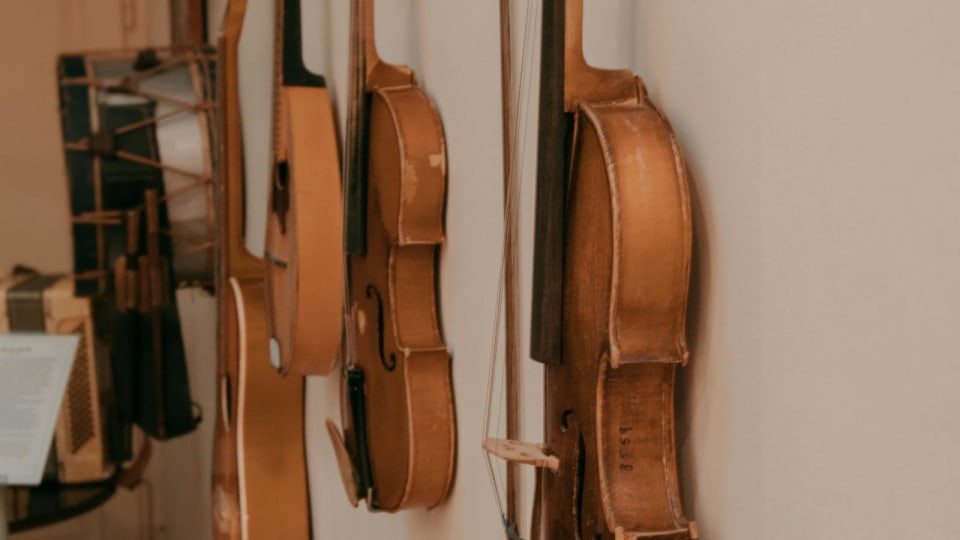
Violin belongs on this list because plenty of adults are drawn to it, but it does not belong near the top for most people. The problem is not that violin is too advanced for adults. The problem is that the opening phase is harder than the internet likes to admit. Pitch is exposed, tone depends on bow control immediately, and even mild tension shows up in the sound in a way that can feel unforgiving.
Yamaha’s violin-maintenance materials do not talk about beginner frustration directly, but they do underline the practical reality that violin asks for more daily care than many adults expect: rosin needs to be wiped off, strings and bow care matter, and the instrument rewards consistent handling. This is not a casual leave-it-in-the-corner instrument.
That said, violin can still be the right adult choice if the sound is overwhelmingly strong for you. Adults will tolerate a difficult beginning if the instrument matches a real musical hunger. They just should not choose violin because it looks elegant and then act surprised when the first months feel rough. If your schedule is thin and your frustration tolerance is low, violin is usually not the safest first bet. If the sound is non-negotiable, then choose it honestly and pair it with good guidance early.
So what should most adults actually choose?
If you want the shortest practical answer, here it is.
- Choose digital piano if you want the safest serious recommendation and you need quiet practice, visible progress, and low maintenance.
- Choose ukulele if you want the cheapest low-friction start and quick access to making actual music.
- Choose acoustic guitar if songs, portability, and broad stylistic use matter more than silent practice.
- Choose electronic drums if rhythm is your center and your space can tolerate pad and pedal noise.
- Choose violin only if you genuinely want violin enough to accept a slower and more exposed beginning.
Five-minute decision rule
- If neighbors are a real constraint, default toward digital piano.
- If budget is the biggest constraint, default toward ukulele.
- If you mainly want to sing songs, default toward acoustic guitar.
- If rhythm is the dream, default toward electronic drums.
- If one sound clearly outweighs every practical objection, choose that sound and build the routine around it honestly.
The wrong instrument usually fails for a boring reason. Not because you were too old, or not talented enough, or insufficiently “serious.” It fails because the daily fit was wrong. Choose the instrument that survives Tuesday, not the one that flatters your fantasy self. That is still the cleanest adult beginner rule I know.