The honest answer to "what should I practice on piano every day" is that it depends on your level — and most generic routines are written as if it does not. A beginner who spends thirty minutes on Hanon every morning is wasting their session. An intermediate player who skips technique because they "play real music" is quietly accumulating problems that will limit them in three years. The components are similar at every level. The proportions, the difficulty, and the questions you are asking inside each section are not.
This guide gives a level-by-level answer that works for adult learners who practice somewhere between twenty minutes and an hour a day. It is intentionally specific. If you have read enough vague pieces about being patient and practicing slowly, this one tells you what to actually open, in what order, for how long, and what to listen for. The level definitions are deliberately loose, because progress at the piano never lines up cleanly with calendar time. The realistic-timeline post on year-by-year piano progress covers that side in more detail.
The five components every daily session needs
Before splitting by level, fix the inventory. A piano practice session, at any level, is built from five components. Not every component appears in every session — but across a week, all five should show up. The proportions shift as you advance, but the categories themselves are stable.
The first is technique — scales, arpeggios, finger work, Hanon-style exercises, etudes, and isolated mechanical patterns. The second is repertoire — the pieces you are actively learning, polishing, or maintaining. The third is sight-reading — reading new music at a level slightly below your comfort zone, daily. The fourth is musicianship — ear training, theory, score study, listening, transposition, harmonic analysis. The fifth is review and reflection — going back to recently learned material, recording yourself, deciding what tomorrow's session needs first.
The five components
scales, finger work, etudes
current pieces, polishing, maintenance
new, slightly easy music daily
ear, theory, listening, analysis
recordings, recent material, planning
Most generic routines flatten these five into "scales then pieces," which is why so many adult learners stop progressing once the obvious technique exercises feel boring. Sight-reading and musicianship are the components most often skipped — and they are the components that quietly separate stalled players from ones who keep improving. A session that touches three or four of these categories with intention beats a session that touches all five mechanically.
Beginner: months 1 to 12
At the beginning, the limiting factor is physical control more than ambition. Hands have not yet learned to move independently, fingers do not yet know the keyboard topology, and the eyes are still translating notation symbol by symbol. The daily session should be short and focused — 20 to 30 minutes is plenty — and weighted heavily toward repertoire and sight-reading. Technique exists in small doses. Musicianship matters but happens through the pieces and through listening, not yet through formal theory work.
A useful beginner session looks like five minutes of warm-up scales (one or two, hands separate, slow, with the metronome), fifteen to twenty minutes on current repertoire — usually one piece in the active learning phase and one easier piece for confidence — and five minutes of sight-reading from a method book or an easy collection at a level just below where you are working. That is enough. Adding Hanon at this stage is the equivalent of an early runner adding sprint training before they can comfortably jog. The body is not ready to make use of it. The beginner-specific advice in how to start piano as an adult without wasting the first six months goes deeper on the underlying mistakes.
What you should listen for: even rhythm, relaxed hands, accurate reading. Not speed, not dynamic range, not interpretation. The goal of beginner practice is to build the most basic feedback loop between eye, ear, and finger. Recording yourself once a week is more useful than recording every day, because the changes from week to week are visible while the changes from day to day are not.
Late beginner to early intermediate: year 1 to 3
This is the stretch where most adult learners either consolidate or drift. The repertoire has expanded enough that decay becomes a real problem. Hanon-style finger exercises start to be useful, not because they build virtuosity in the abstract but because they target the specific weaknesses — left-hand independence, even fingers, thumb mobility — that hold back actual pieces. Sight-reading should now be daily and structured. Musicianship deserves its first formal slot: a few minutes of ear training or simple theory work each session.
A useful daily session at this stage is roughly forty to fifty minutes. Ten minutes of technique (one major and one minor scale with the cycle moving across the week, plus one targeted exercise that addresses a specific repertoire weakness). Twenty-five minutes of repertoire — typically one new piece in the active learning phase, one in polishing, one for maintenance, with the time split unevenly depending on which is the focus this week. Five to ten minutes of sight-reading, ideally a fresh page from a graded sight-reading collection. Five minutes of musicianship: interval recognition, chord identification, or basic transposition. Then a one-minute end-of-session note about what to work on first tomorrow.
| Component | Beginner (mo 1–12) | Late beginner (yr 1–3) | Intermediate | Advanced |
|---|---|---|---|---|
| Technique | ~15% | ~20% | ~20–25% | ~25–30% |
| Repertoire | ~65% | ~55% | ~50% | ~45% |
| Sight-reading | ~15% | ~15% | ~10% | ~10% |
| Musicianship | ~5% | ~10% | ~10–15% | ~10–15% |
| Review | ~5% | ~5% | ~5% | ~5% |
The most common mistake at this stage is treating "I practiced an hour" as the success metric and never asking what changed during that hour. The article on why you are not improving at piano describes how this slow stall happens. The fix is mostly about specifying — for every section of every session — what the target is and how you will know if you hit it.
Intermediate: comfortable inside grade 5 to 8 repertoire
By the time a player can comfortably handle Burgmüller études, easy Mozart sonatas, Schumann's Album for the Young, or the easier Chopin preludes, daily practice should look meaningfully different. The repertoire decay problem is now central. Pieces learned six months ago need active maintenance, and the player carries multiple pieces at different stages of polish at the same time. Technique starts to specialize — the standard exercises matter less than targeted work on the specific demands of the current pieces, plus a structured pass through all twenty-four keys across some longer time window.
A daily session of forty-five to sixty minutes is realistic. Open with ten to twelve minutes of technique: one scale and arpeggio set from a rotating cycle, plus one piece-specific drill — a fast left-hand pattern from the Beethoven you are learning, a trill exercise for the Bach, or a voicing drill for the Schubert. Spend twenty-five to thirty minutes on repertoire, broken across two or three pieces rather than dumping everything onto one. Add ten minutes of sight-reading — at this level, you should be reading something genuinely unfamiliar every day, not the same warhorse pieces. Close with five to ten minutes of musicianship work, which by now should include score study, listening to recordings critically, and at least weekly ear-training that touches on functional harmony rather than just intervals.
The discipline that pays disproportionately at this level is isolation practice — picking the three hardest bars of a piece and spending the bulk of the repertoire block on those instead of running the piece end-to-end. The Pract.is essay on why isolation practice works better than running the whole piece covers why. Intermediate players who run through pieces every day are usually rehearsing their mistakes, not fixing them.
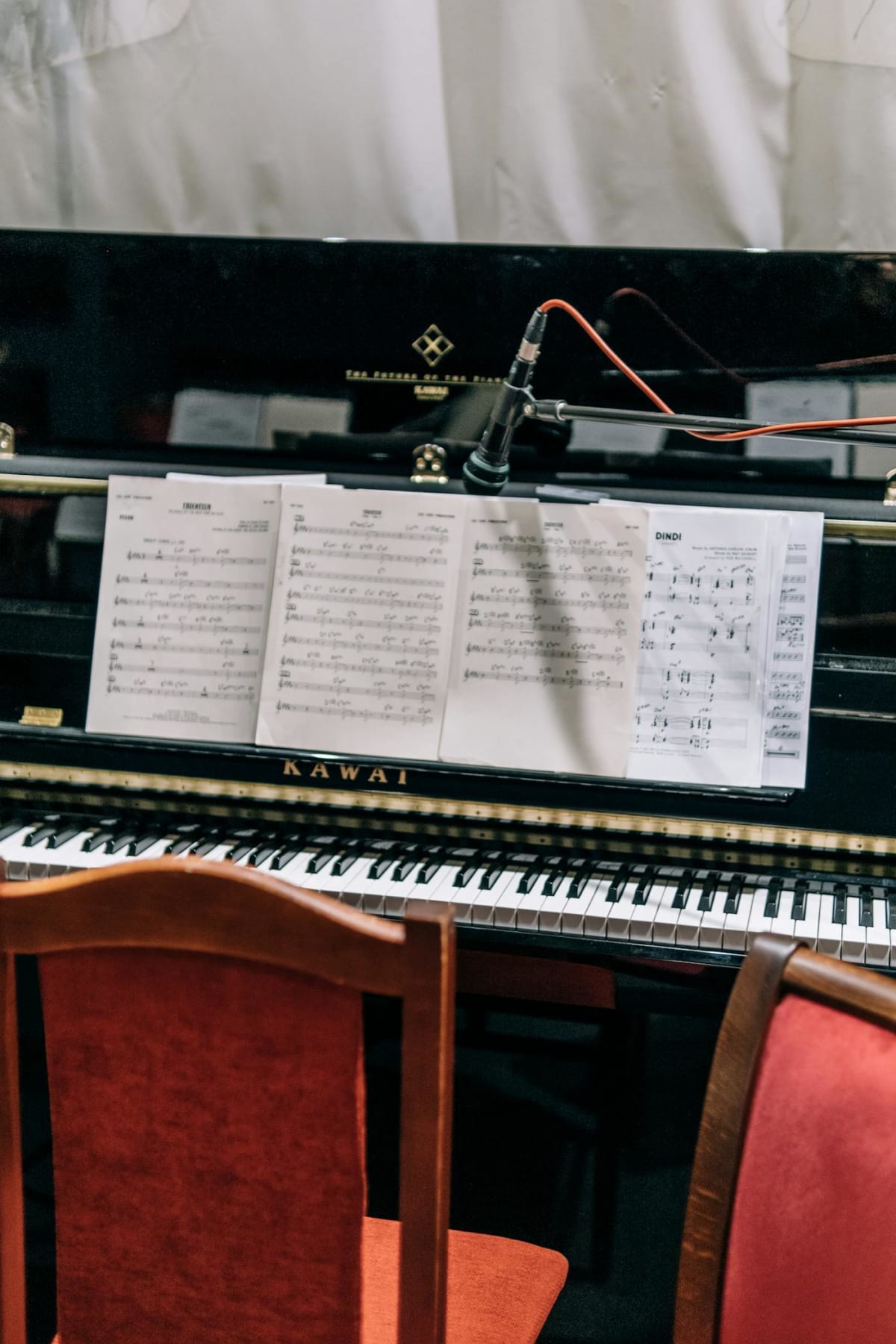
Photo: cottonbro studio via Pexels
Advanced: late-intermediate and beyond
At this stage the distinction between technique and repertoire blurs, because the technical demands of the music itself become the technique work. A daily session is longer — sixty to ninety minutes for serious amateurs, two-plus hours for conservatory-track players — and the structure is more individual. What remains true is that the five components still exist; they have just become finer-grained. Technique might mean a forty-bar passage from the Liszt at four different tempos, not a generic Hanon exercise. Sight-reading might mean an unfamiliar Bach prelude every morning, not a method book. Musicianship probably includes analytical score study of the current repertoire, not separate ear-training drills.
The advanced daily session should generally start with a focused warm-up that targets the day's hardest passage, not with mechanical scales. After warm-up, the main block is repertoire, broken across two or three pieces, with most of the time on the one closest to performance or the one with the most technical danger. Sight-reading and review still need their slots — even at this level, a player who only practices their current concert program will lose breadth fast. The piece on keeping a piece alive after you have learned it describes the maintenance discipline that makes this scale work.
The other shift at this level is that mental practice becomes a real component. Score study away from the keyboard, mental run-throughs from memory, and listening with the score in hand are not optional anymore — they are how serious players hold a large repertoire while still progressing. The research summary in can you actually improve by practicing in your head gives the evidence base.
The same week, three different sessions
It also helps to remember that the day-to-day session does not have to look the same every time. A healthier model is to rotate session types within a week. Most adult learners benefit from three rough archetypes: a deep work day, when the difficult new material gets the heaviest attention; a maintenance day, when older pieces get rotated through and refreshed; and a light day, when energy is low and the goal is simply continuity — slow review, sight-reading, listening, planning.
Three session archetypes
This rotation makes daily practice sustainable in the way that fixed routines almost never are. The Pract.is article on what to do in practice when you are too tired to do deep work argues for the same idea from the other direction: low-energy practice is not failure, it is the third archetype.
Common mistakes that quietly stall every level
Across the levels, the same handful of failure patterns recur. Running pieces start-to-finish instead of working on the broken section. Practicing scales the same way every day for two years. Treating sight-reading as something you will start "when you are ready" — the reading muscle never gets built. Practicing too long when fresh, too little when tired, and never asking which trade-off your week is actually making. Treating technique as separate from music, instead of as the mechanics of the music you are currently learning.
The single most important habit is closing every session with a one-sentence written note: what just improved, what is still failing, what should the first ten minutes of tomorrow's session look like. Without that, the next day's practice is whatever you happen to feel like, which gradually converges on the easiest things in your folder.
What this looks like in practice
If you only remember three things from this article, make it these. First, the five components — technique, repertoire, sight-reading, musicianship, review — exist at every level, and skipping any of them for long enough stalls progress. Second, the proportions shift as you advance, and pretending they do not is how adult learners end up with strong fingers but weak musicianship, or beautiful musicality but unreliable technique. Third, the version of "every day" that lasts for years is the one that rotates session types around your real energy, not the one that demands identical sessions seven days a week.
A piano practice habit is not built from a perfect routine. It is built from a routine flexible enough to survive a tired Wednesday. The goal of daily practice is not to do everything every day. It is to leave the bench, on each day, with something measurably better than when you sat down.