
Best Digital Pianos Under $1,000 in 2026: 5 Picks
The best digital piano under $1,000 is the Roland FP-30X for most players. Compare five weighted-key models by action, speakers, features, and setup cost.
Pract.is Editorial
Research-based practice guidance for musicians from the Pract.is editorial team.
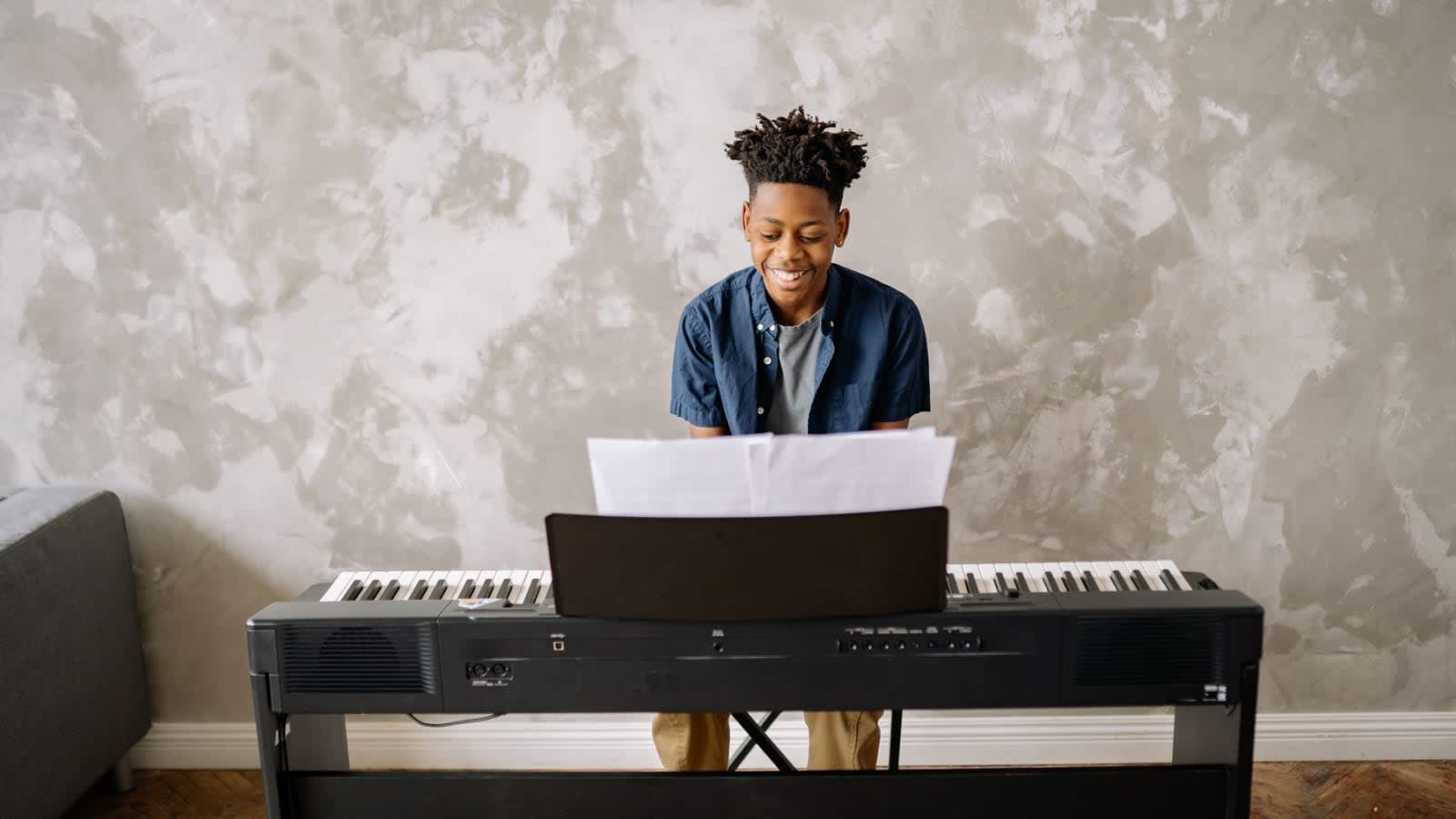
The best digital piano under $1,000 for most players is the Roland FP-30X. At its current non-Amazon price, it combines a capable hammer action, strong onboard speakers, proper line outputs, USB audio and MIDI, and native Bluetooth without pushing the instrument alone close to the budget ceiling.
There is no compromise-free model in this class. The Kawai ES120 is the piano-first alternative, the Yamaha P-225 saves space, the Casio PX-S3100 is built for portable performance, and the Yamaha DGX-670 trades portability for a deep arranger workstation. We did not bench-test these five side by side; our verdict uses current maker specifications, manuals, system completeness, and US non-Amazon prices checked on August 25, 2026.
Affiliate notice: Some links are paid links. As an Amazon Associate, we earn from qualifying purchases.
-
Best overallRoland FP-30X$649.99 price snapshot · 32 lb 11 oz · 22W speakers · 256-note polyphony
-
Best piano-first alternativeKawai ES120$849 price snapshot · 26.5 lb · 20W speakers · 192-note polyphony
-
Best compact home pianoYamaha P-225$769.99 price snapshot · 25 lb 6 oz · 14W two-way speakers · 192-note polyphony
-
Best for portable performanceCasio PX-S3100$999.99 price snapshot · 25.1 lb · 16W speakers · 700 tones and 200 rhythms
-
Best for arranging and songwritingYamaha DGX-670$799.99 price snapshot · 47 lb 3 oz · 12W speakers · 263 accompaniment styles
Prices above are US non-Amazon snapshots checked August 25, 2026 and can change. Each listing is for the black piano itself with its maker-supplied power adapter, music rest, and basic switch pedal. Stand, bench, furniture console, and three-pedal assembly are extra. The Casio also includes its WU-BT10 wireless adapter.
$1,000 for the piano is not $1,000 for the setup
Moving above the under-$500 digital piano class does not buy one universal improvement or a luxury cabinet. Depending on the model, the extra money buys stronger speakers, broader connectivity, a more detailed piano source, greater polyphony, or controls that remain useful after the first method book. Every pick here has 88 hammer-action keys. That phrase establishes the category, but it does not tell us how the action feels or how controllable it is at low volume.
The Roland leaves roughly $350 of a $1,000 instrument budget for a stable stand, adjustable bench, better pedal, and headphones at its checked price. The Kawai and Yamaha P-225 leave less room, while the Casio uses virtually the entire ceiling before accessories. The DGX-670 looks inexpensive beside its feature list, but its 47-pound body calls for a serious stand and a planned home rather than a temporary corner.
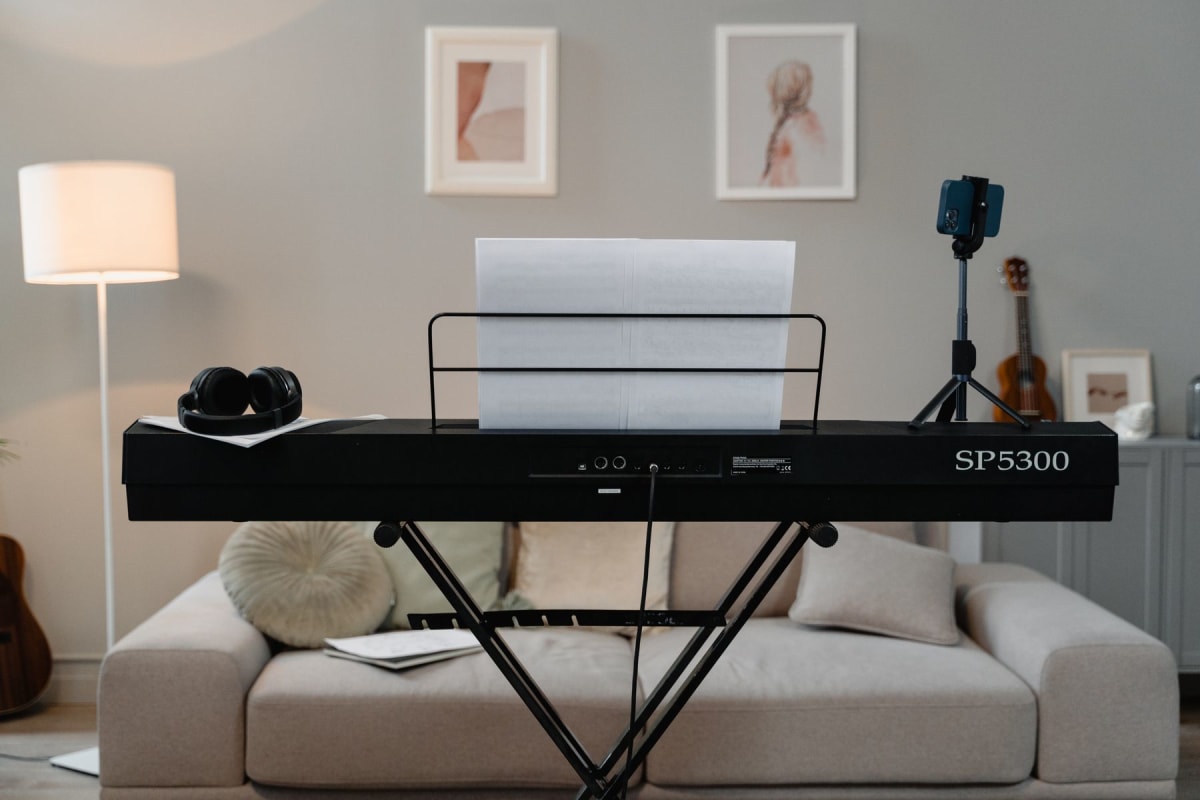
A light X-frame can wobble under an enthusiastic player, and a fixed-height chair can make an excellent action feel awkward. Our keyboard stand comparison explains the stability and knee-clearance tradeoffs. Budget for the whole playing station before treating the remaining dollars as room for a more expensive model.
These are different allocations of the same budget, not five rungs on one quality ladder.
Elimination round one: quiet control and key action
Action names are useful identifiers, not rankings. Roland uses PHA-4 Standard with escapement and an Ivory Feel surface. Kawai calls its mechanism Responsive Hammer Compact. Yamaha uses its newer Graded Hammer Compact action in the P-225 and the longer-established Graded Hammer Standard action in the DGX-670. Casio uses Smart Scaled Hammer Action. Every one grades resistance across the keyboard, but the geometry, return, surface, key pivot, and velocity response differ.
The winning action is the one that lets the player shape a very quiet note, repeat a note cleanly, and play near the back of the keys without fighting the mechanism. A heavier first impression is not proof of better technique, and a short slim cabinet does not reveal the full key geometry. This is the part of the decision no specification table can finish.

For piano-focused practice, start the in-person shortlist with the FP-30X and ES120, then include the P-225 if depth and carry weight matter. The Roland has the highest published polyphony here at 256, tied by the DGX-670, but 192 on the Kawai, P-225, and Casio is already ample for ordinary piano playing with sustain. Polyphony matters more when layers, accompaniment, recording, or dense pedal use consume notes behind the scene.
“A named hammer action puts a piano in the right category. Quiet control decides whether it belongs in your room.”
All five include an on/off switch pedal. That is enough to start, but it is not the same as continuous or half-pedal control. Roland requires a compatible DP-10 or KPD-70 setup, Kawai supports options such as the F-10H and GFP-3, Yamaha has compatible half-pedal hardware, and Casio offers the SP-34 three-pedal unit. Check the exact stand and pedal compatibility before buying furniture around the piano. A common purchasing error is assuming that a pedal-shaped object in the box provides the full acoustic-piano response; our guide to digital piano buying mistakes covers the other expensive assumptions.
Elimination round two: speakers and home use
Speaker wattage tells us about amplifier output, not the complete sound. Cabinet volume, driver placement, processing, and the room all matter. The FP-30X has the largest nominal system among the compact models at 11W per side, followed by the ES120 at 10W per side, the PX-S3100 at 8W per side, and the P-225 at 7W per side. Yamaha gives the P-225 a two-way speaker system, which is a more useful design fact than treating its 14W total as an automatic loss.
The DGX-670 is the odd one out. It is far larger than the compact boards yet its onboard amplification is 6W per side. That can be perfectly adequate at home, but it is not a built-in PA and physical size is not a promise of room-filling level. The FP-30X, ES120, P-225, and PX-S3100 all provide separate left and right line outputs for an amp or monitors. Yamaha's official connector list for the DGX-670 does not include dedicated line outputs, so external audio normally leaves through its headphone/output connection.
Headphone behavior deserves its own audition. Plug in the headphones that will actually be used, set a modest level, and listen for the smallest controllable change between soft notes. Check whether the cable reaches without crossing the pedal area and whether the piano keeps its spatial processing active. Our digital-piano headphone guide separates open-back room listening, closed-back isolation, and budget choices.
Bluetooth audio is convenient for sending a lesson, track, or video from a phone into the piano's speakers. It is not the connection for live virtual-instrument playing because wireless audio delay is audible. Bluetooth MIDI sends performance data instead, and the models do not all handle it the same way. Roland and Kawai provide native Bluetooth audio and MIDI. The P-225 and DGX-670 provide Bluetooth audio but not native Bluetooth MIDI. Casio supplies the WU-BT10 adapter for both, but it uses the USB-A port.
Elimination round three: recording and creative range
The FP-30X is one of the most flexible computer partners in this group. Its USB connection carries both audio and MIDI, native Bluetooth MIDI supports compatible wireless apps, and the separate line outputs can remain connected to monitors or a PA. The P-225 also carries USB audio and MIDI. The ES120 has USB-MIDI and line outputs, but not USB audio, so recording its own sound into a computer requires an audio interface or another audio input path.
Casio's PX-S3100 wins the compact feature count. Its 700 tones, 200 rhythms, pitch-bend wheel, two assignable knobs, line outputs, included Bluetooth adapter, and optional battery operation suit rehearsals and light performance. Six AA alkaline batteries are rated for roughly two hours, which is emergency flexibility rather than an all-day power plan. The adapter also occupies the USB-A port, so wireless functions and a USB flash drive cannot use that port simultaneously. Do not buy it expecting its computer USB connection to act as an audio interface.
The DGX-670 is in another creative category. It has 601 voices plus 29 drum and sound-effects kits, 263 accompaniment styles, a 4.3-inch score and lyric display, microphone input, USB audio, and a 16-track MIDI recorder. It can turn a chord progression into a full arrangement without a computer. The cost is a 47-pound, 17.5-inch-deep instrument that is awkward to move casually. Choose it because those tools will be used every week, not because 601 is a larger number than 24.
“The best feature is not the one that makes the comparison chart longer. It is the one that removes a cable, menu, or extra purchase from practice.”
Choose by the room and the job
A straight piano practice brief narrows this list quickly. The FP-30X is our default because it balances action, speakers, connections, and remaining setup budget. The ES120 is the alternative for a buyer who prioritizes Kawai's piano sampling and a lighter 26.5-pound body, accepts USB-MIDI without USB audio, and is comfortable spending more before accessories. Neither needs hundreds of accompaniment styles to justify itself.
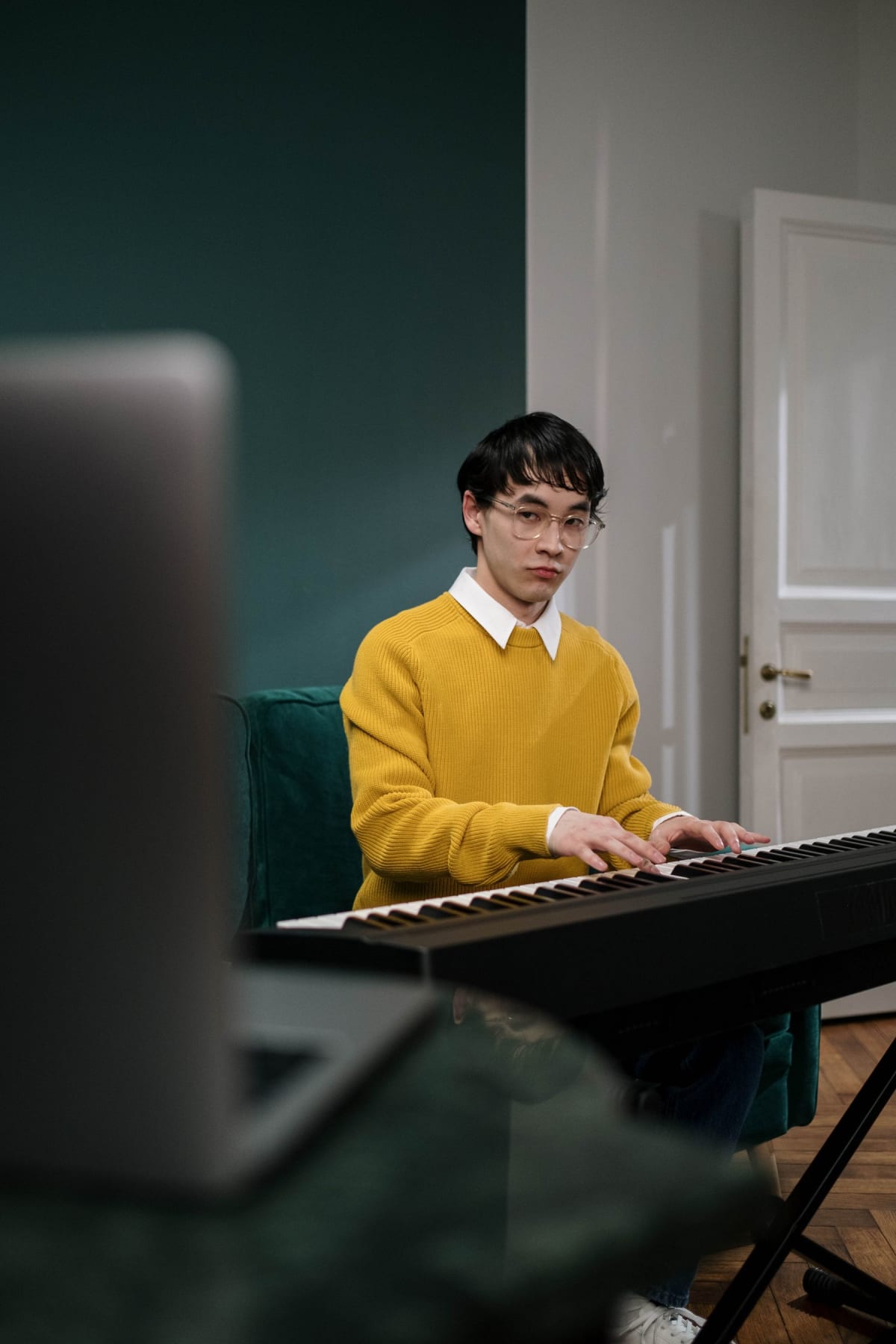
The P-225 is the restrained compact choice. Its CFX source, VRM Lite, two-way speakers, 24 voices, left and right outputs, and USB audio cover piano practice without turning the front panel into a workstation. The PX-S3100 is nearly the same weight but serves the player who changes sounds, uses rhythms, or carries a board to rehearsal. The two occupy similar physical territory and solve different musical problems.
The DGX-670 should be treated as movable furniture rather than a grab-and-go piano. Its depth affects wall clearance, and its weight changes the stand, lifting, and storage plan. Once placed well, it offers far more self-contained writing and accompaniment capability than the others. If those functions will remain untouched, the simpler FP-30X, ES120, or P-225 gives the pianist a cleaner daily instrument.
Run this five-minute test before the return window closes
Bring one familiar piece, one passage with repeated notes, and the headphones you already own. Set every piano to its main acoustic-piano sound with effects at a normal default. Do not begin with a dramatic demo song or the loudest preset. The test is not a recital; it is a controlled way to locate friction.
- Play as softly as possible. Listen for abrupt jumps and notice whether a note can speak without a hard finger attack.
- Repeat notes and chords. Test both the middle and the back of the keys, then check how quickly the mechanism returns.
- Use the included pedal. Confirm its polarity, cable reach, and floor grip, then decide if half-pedaling belongs in the immediate budget.
- Switch tasks without a manual. Change a sound, start the metronome, adjust brilliance or ambience, and connect the app or recorder that matters.
- Measure the real station. Include plugs, music rest, bench, pedal position, stand legs, wall clearance, and a safe cable route.
For an online purchase, repeat the same test immediately and keep every piece of packaging until the decision is settled. Confirm the seller's current return terms before ordering, especially when the instrument must be shipped back. A specification mismatch is easier to spot before furniture is assembled and boxes are discarded.
Our practical next step is simple: shortlist the FP-30X plus the one specialist model that matches the room, then play the same five minutes on both. The right $1,000 piano is not the one with the longest specification sheet. It is the one whose missing features never enter the practice session.
More on setup.
Silent Piano vs Digital: Is a Hybrid Piano Worth It?
Silent piano vs digital piano: compare action, headphone noise, upkeep, prices, and whether a hybrid earns its premium for shared-home practice.
Pract.is Editorial
61 vs 76 vs 88 Keys: Which Keyboard Size Is Right?
61 vs 76 vs 88 keys comes down to range, action, and space. Compare each size by repertoire, portability, and three current keyboard examples.
Pract.is Editorial

Best Keyboard Gig Bags and Cases in 2026: 61- and 88-Key Picks
Compare the best keyboard gig bags and cases for 61- and 88-key boards, with current prices, interior dimensions, case weights, and airline guidance.
Pract.is Editorial