
Best Piano Benches in 2026: Adjustable, Duet, and Budget Picks
Compare six piano benches from $55 to $357 by height range, adjustment type, seat width, storage, and fit for solo players, families, or duets.
Pract.is Editorial
Research-based practice guidance for musicians from the Pract.is editorial team.
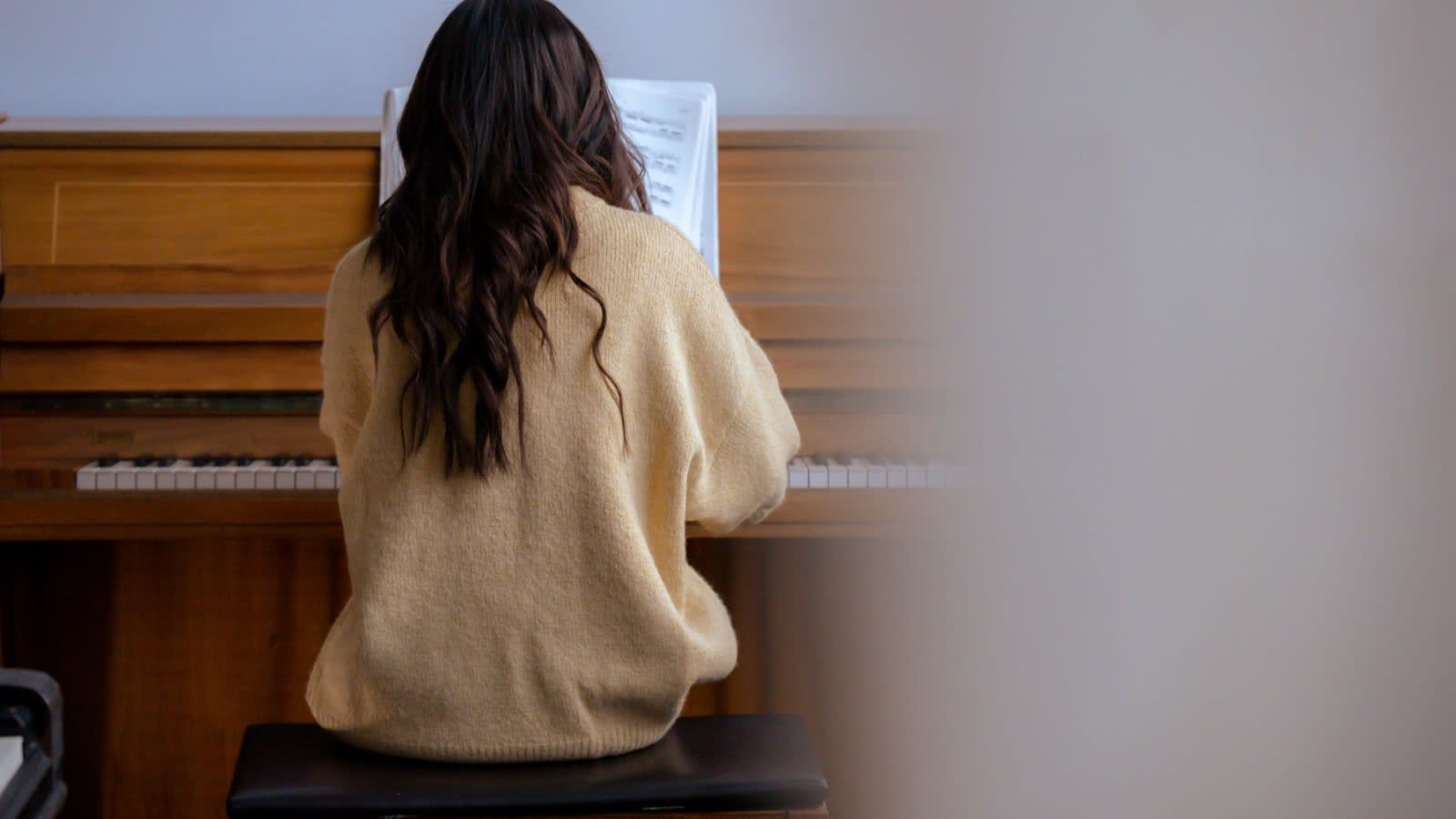
The best piano bench is the one that puts the player at the right height without making the feet unstable. Finish, storage, and cushion stitching come later. A $55 folding bench can be the right answer when one of its height stops fits; a $357 duet bench can still be wrong when two players need different heights.
For most homes that need continuous adjustment below $200, the K&M 13992 is the strongest value. The On-Stage KT7800 is the measured-to-fit budget pick, the KT7800+ is the wider and taller portable choice, the Roland RPB-400BK adds traditional furniture construction and storage, the On-Stage KB9503B makes frequent height changes quick, and the Roland RPB-D400BK is the proper wide duet option.
The bench has to fit the player, not the piano finish
A piano fixes the height of its keys. The bench is the adjustable half of that relationship. Yamaha's posture guide offers a practical starting point: center the bench, sit toward its front half, support both feet, relax the shoulders, and set the seat so the elbows are almost level with the keyboard. That is a fit check, not a universal inch measurement.
The player's proportions, the keyboard's key height, the depth of the keybed, and even cushion compression can change the useful setting. University of the Arts Helsinki's piano ergonomics guidance describes an elbow angle around 90 to 110 degrees and places the elbows in front of the torso. The range is more honest than a single rigid pose. The player should be able to reach the full keyboard without lifting the shoulders or folding the wrists simply to meet the keys.
Feet matter just as much. Raising a child until the forearms line up with the keys often leaves both feet dangling, so the setup also needs a firm footrest that does not slide. Our guide to digital-piano buying mistakes explains why stand height, keybed thickness, bench height, and foot support must be assessed together. A chair without arms can work temporarily if its seat is flat, stable, and correctly sized. The word piano on a product page does not create good geometry.
“A bench price is irrelevant until its height range intersects the player.”
Published height ranges do not overlap evenly
The six benches span nominal seat heights from 17 to 24.5 inches, but only three offer continuous movement through their ranges. The two X-style models use discrete stops. That distinction matters when a player's useful setting falls between notches, and it matters even more when several people share one instrument.
and RPB-D400BK
The chart is a screening tool, not a prescription. Published height usually describes the unloaded seat, and a cushion may settle when occupied. First measure the current setup: floor to the top of the white keys, then floor to the bench seat at the player's useful position. If the present position is wrong, adjust while watching the player's forearms, shoulders, feet, and distance rather than adding or subtracting a guessed number.
Six picks, with the compromises left in
Practis did not bench-test these six models side by side. The shortlist uses manufacturer specifications, current manuals, and US retailer listings checked on August 24, 2026. Prices are non-Amazon snapshots, so the buttons below do not state or imply an Amazon price, stock level, or permanent offer.
| Model | Best use | Published height | Seat and mechanism | Price snapshot |
|---|---|---|---|---|
| On-Stage KT7800 | Measured-to-fit budget setup | 18.75 to 20.5 in. 3 stops | 17 × 12 in. folding X frame | $54.95 |
| On-Stage KT7800+ | Tall player or wider portable seat | 19.5 to 24.5 in. 4 stops | 23.5 × 12.5 in. folding X frame | $65.95 |
| K&M 13992 | Continuous adjustment below $200 | 17.52 to 21.46 in. continuous | 18.31 × 12.01 in. dual-crossbar spindle | $179.99 |
| Roland RPB-400BK | Traditional furniture plus storage | 18.9 to 22.83 in. adjustable | 21.65 × 13.19 in. wood, lift-top storage | $250.99 |
| On-Stage KB9503B | Frequent, fast height changes | 17 to 22 in. continuous | Single padded seat hydraulic levers | $254.95 sale was $314.95 |
| Roland RPB-D400BK | Two players at once | 18.9 to 22.83 in. adjustable | 29.53 × 13.19 in. wood, lift-top storage | $356.99 |
Dimensions are manufacturer figures. For Roland, the published product dimensions are width × depth × adjustable height. The current On-Stage page does not publish a KB9503B seat width. Verify the exact finish and model suffix before ordering.
Affiliate notice: Some links are paid links. As an Amazon Associate, we earn from qualifying purchases.
The two folding benches are cheap for different reasons
On-Stage KT7800: the $54.95 measured-to-fit pick
The KT7800 is the budget answer already used in our complete home setup under $600. On-Stage publishes a 300-pound capacity, an 18.75-to-20.5-inch three-position range, and a 17-by-12-inch seat on a welded metal frame. Its legs fold, so it suits a portable keyboard, a room where the instrument is put away, or a first setup whose measurements are already known.
The catch is the phrase three-position. This is not fine adjustment, and its narrow seat gives less room for lateral movement than every wider model here. If one stop places the player's forearms and shoulders well, the low price is genuine value. If the useful height falls between stops, padding the seat with something soft and unstable is not a repair. Buy the correct range instead.
On-Stage KT7800+: the $65.95 taller, wider portable
The plus sign changes the geometry, not just the cushion. The KT7800+ has a 23.5-by-12.5-inch seat, a 360-pound published capacity, and four specified heights: 19.5, 21.5, 23, and 24.5 inches. Its reinforced locking system and folding base make it the better portable choice for a taller player, a high keyboard setup, or someone who wants more sideways room.
It is not the automatic upgrade from the KT7800. Its lowest setting is three quarters of an inch above the smaller bench's lowest point, and the gaps between stops are large. A 23.5-inch cushion is wide for one person but still six inches narrower than the Roland duet model. Do not treat it as a two-adult bench, and do not assume the taller range is more ergonomic simply because it covers more numbers.
Continuous adjustment is where the extra money goes
K&M 13992: the $179.99 adjustment-value pick
The K&M 13992 is the recommendation for a home that values fit more than furniture styling. Its dual-crossbar spindle moves continuously from 17.52 to 21.46 inches. K&M specifies a steel frame, an 18.31-by-12.01-inch imitation-leather seat, 17.64-pound weight, felt floor pads, and feet that can compensate for a small amount of rocking. It covers more useful low-end territory than either folding bench without making the buyer choose among preset notches.
There are two honest limitations. The compact seat is closer to the KT7800 than to a generous artist bench, and there is no storage compartment. The model is also new enough that it does not have the long field history of older K&M benches. Its current instruction sheet says to unload the cushion before adjusting, retighten screws when needed, and lubricate the spindle periodically. That is ordinary serviceable hardware, but it is not maintenance-free.
Roland RPB-400BK: the $250.99 storage pick
The RPB-400BK is for an acoustic or console piano that stays in the room. Roland lists solid-wood construction, a cushioned lift-top seat, sheet-music storage, a 21.65-by-13.19-inch footprint, 22.05-pound weight, and an adjustable height from 18.9 to 22.83 inches. It offers a wider seat and a furniture profile without giving up height adjustment.
Storage is useful for a current score, pencil, and a small group of accessories. It should not decide the purchase before the height range does. A lift-top bench also carries more hinges and joints than a simple steel frame, and every leg must be assembled squarely on a level floor. Choose the Roland when the traditional format and wider cushion solve real room needs, not because a hidden compartment can absorb years of unsorted music.
On-Stage KB9503B: the $254.95 quick-change pick
The KB9503B replaces repeated knob turning with hydraulic-assisted levers accessible from either side. Its published 17-to-22-inch range is the broadest continuous window in this shortlist, and On-Stage rates it for 330 pounds. That makes it particularly useful in a teaching studio, rehearsal room, or family where players change often and nobody wants to count turns between sessions.
The tradeoff is complexity and price. It has a gloss-black base, no storage, and more moving parts than the K&M spindle model. The current manufacturer page does not publish the seat width, an omission worth noticing when width is part of the buying decision. At the August 24 sale price, it costs only four dollars more than the Roland storage bench, so the choice is direct: rapid height changes or traditional storage furniture.
“Pay for the adjustment mechanism you will use, not the feature list you can admire.”
What a duet bench does, and what it cannot do
A duet bench creates enough width for two people to sit side by side. The Roland RPB-D400BK expands the single RPB-400 format to 29.53 inches, keeps the same published 18.9-to-22.83-inch height range, and adds a wider lift-top storage compartment. At $356.99, it is the logical pick for four-hands repertoire, teacher demonstrations beside a student, or a parent and child who regularly share the keyboard.
It still has one seat at one height. Two adults of similar proportions may fit comfortably at the same setting. A tall teacher and small child may not. Raising the common seat for the child can put the adult too high; lowering it for the adult can put the child below the keys. A footrest restores the child's lower-body support, but it cannot give the two halves of one cushion independent heights.
The published width also deserves arithmetic. Divided evenly, 29.53 inches provides roughly 14.75 inches per player before allowing any space between them. That is enough for the use Roland specifies, but it is not the same personal space as two separate benches. If independent fit matters more than one-piece furniture, two compact adjustable benches can be the better teaching solution even when they look less formal.
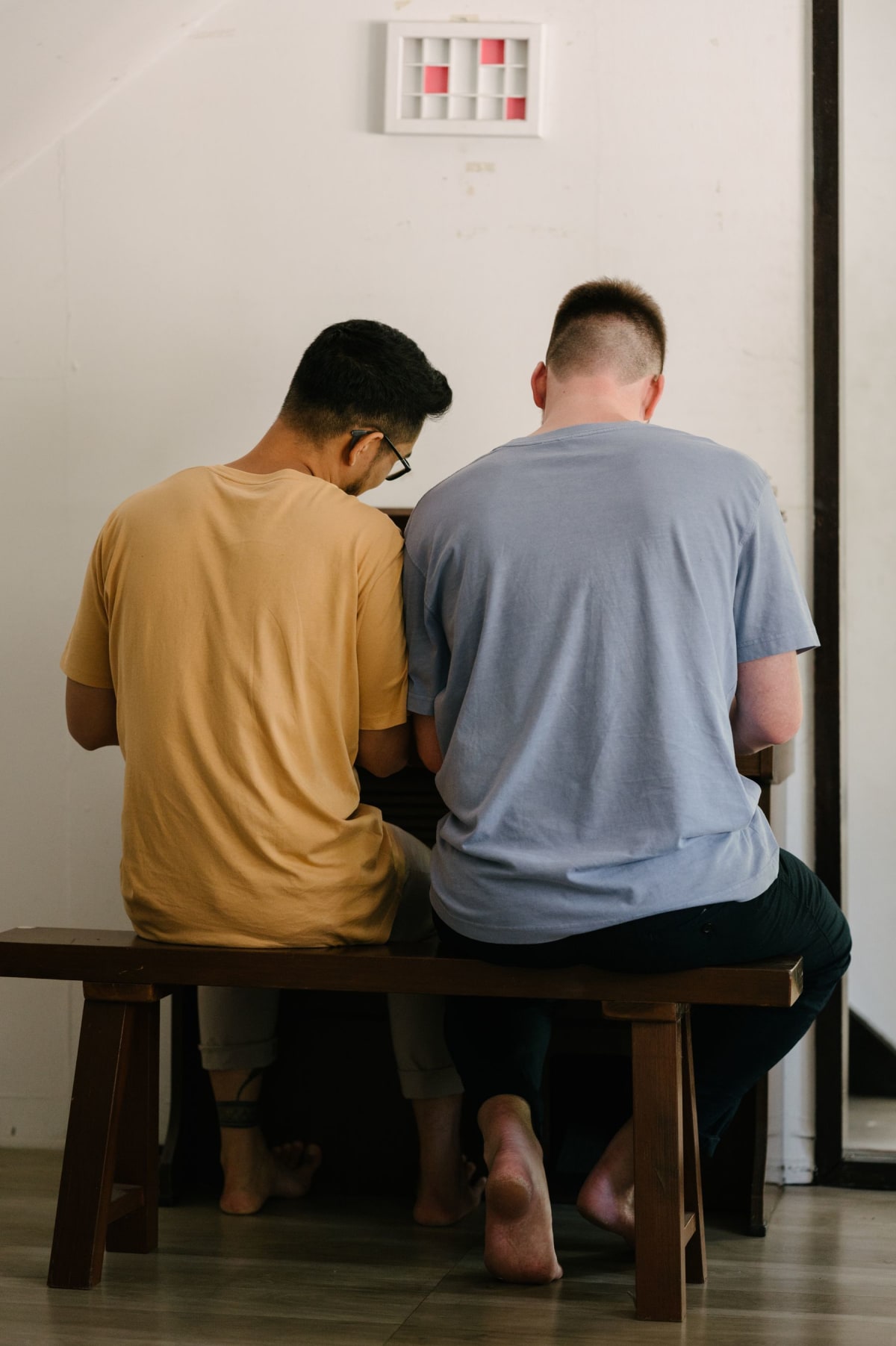
For occasional duet playing, moving two existing seats into place may be more sensible than dedicating 29.5 inches of floor space to one bench. For daily teacher-student use, the wide Roland earns its place through convenience. The key is to buy duet for simultaneous seating, not as a synonym for premium.
Inspect the mechanism before judging the cushion
A thick cushion can feel impressive for thirty seconds while hiding a loose base. Stability comes first. Assemble the bench on a firm, level surface, tighten each leg in the sequence the manufacturer specifies, and press opposite corners before sitting. Any rocking should be corrected through levelling hardware or square assembly, not a folded scrap of paper under one foot.
Recheck hardware after the first week and periodically afterward. Folding joints collect wear, spindle mechanisms need appropriate lubrication, hydraulic systems add seals and linkages, and wooden legs can loosen after assembly. Follow the manual for the exact model. Never exceed the published load rating, and stop using a bench that bends, collapses at a lock, or develops unexplained lateral movement.
Discomfort is not a product-review metric to ignore. If hand, wrist, shoulder, or back pain continues after the setup is corrected, stop treating seat changes as medical care. Our guide to what to do when hands hurt after practice separates immediate practice adjustments from signs that need qualified help, and our overview of common piano injuries and risk reduction adds the broader context.
The final decision is simple. Buy the KT7800 only after a height stop fits, the KT7800+ for a taller portable setup, the K&M 13992 for continuous value, the RPB-400BK for adjustable storage furniture, the KB9503B for frequent changes, or the RPB-D400BK for two people at once. Then mark the setting, support the feet, and keep the bench centered so every session begins from the same useful position. Once that physical setup is repeatable, Practis plans can make the practice plan just as repeatable.
More on setup.
Silent Piano vs Digital: Is a Hybrid Piano Worth It?
Silent piano vs digital piano: compare action, headphone noise, upkeep, prices, and whether a hybrid earns its premium for shared-home practice.
Pract.is Editorial
61 vs 76 vs 88 Keys: Which Keyboard Size Is Right?
61 vs 76 vs 88 keys comes down to range, action, and space. Compare each size by repertoire, portability, and three current keyboard examples.
Pract.is Editorial

Best Keyboard Gig Bags and Cases in 2026: 61- and 88-Key Picks
Compare the best keyboard gig bags and cases for 61- and 88-key boards, with current prices, interior dimensions, case weights, and airline guidance.
Pract.is Editorial