
Classical Piano Is Going Viral on TikTok. Is That a Good Thing?
Classical piano is reaching new listeners through TikTok, short-form clips, and digital-first artists like Cateen and Yunchan Lim. This piece looks at what that trend gets right, what it distorts, and whether viral attention is actually good for classical music.
Pract.is
Research-based practice guidance from the Pract.is team.

Yes, classical piano is going viral on TikTok. And no, that does not automatically mean classical music is being dumbed down.
Short-form video has changed how people discover music. That includes Chopin, Ravel, Bach, and Liszt. The old assumption was that classical music needed a concert hall, a long attention span, and some degree of cultural permission. TikTok breaks that. A 17-second clip of an unbelievable cadenza, a funny practice-room cut, or a beautifully shot fragment of a nocturne can now reach people who would never have opened a conservatory program note in their lives.
That is why this is worth taking seriously. TikTok and adjacent short-form platforms are not just marketing channels anymore. They are becoming a real entry point into classical listening and piano culture.
Important note: this article was written with official sources checked on March 7, 2026. TikTok’s own newsroom said in September 2025 that posts under #ClassicalMusic were approaching one million and had increased by 60% over the previous 12 months. In other words, this is not a niche anecdote. It is a measurable shift.
The Short Answer
| Question | My answer |
|---|---|
| Is viral classical piano good overall? | Yes, mostly. It lowers the barrier to discovery and makes the genre feel alive. |
| Is there a downside? | Yes. Short-form platforms reward climaxes, speed, novelty, and image more than long-form listening. |
| Can TikTok replace deep listening? | No. It can open the door, but it cannot be the whole house. |
| Should classical musicians use it anyway? | Absolutely, if they understand the tradeoff and do not let the platform define the art. |
Why This Trend Is Real, Not Just Hype
There are a few reasons this is clearly more than random noise.
- TikTok is investing in the category. In September 2025, TikTok and London’s Southbank Centre launched Crescendo, an accelerator for UK-based classical creators. Companies do not build programs like that unless they see traction.
- Digitally native classical artists are breaking through. Hayato Sumino’s official biography says his Cateen channel has passed 1.52 million YouTube subscribers and 240 million views, which is not traditional classical-audience scale anymore.
- Major labels are leaning into artists with digital gravity. Sony Classical released Hayato Sumino’s Chopin Orbit on January 23, 2026. Decca announced Yunchan Lim’s Goldberg Variations: Live at Carnegie Hall for February 6, 2026. These are not fringe releases floating outside the industry.
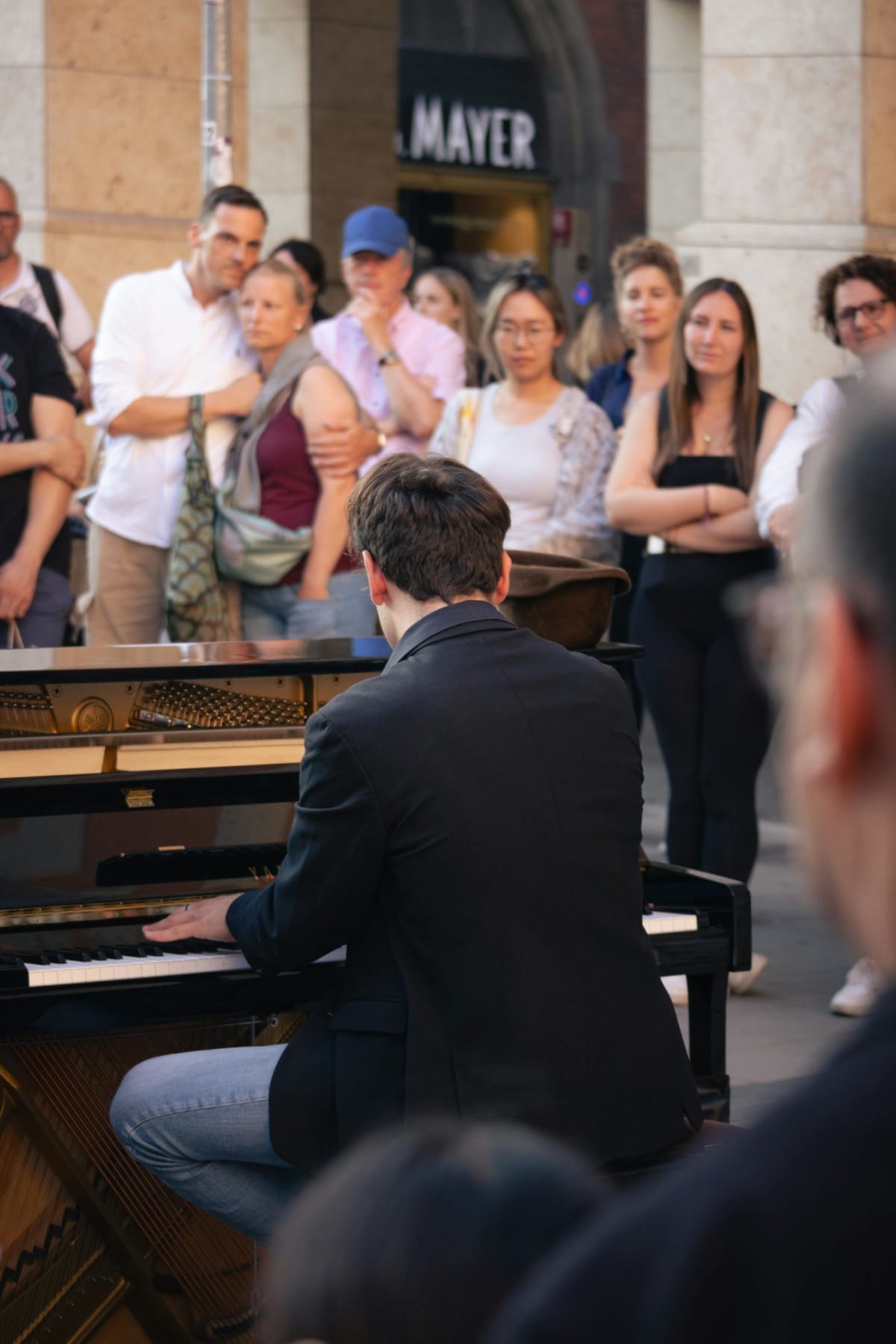
Photo: Niklas Jeromin via Pexels
What TikTok Gets Right About Classical Piano
The strongest argument in favor of the TikTok effect is simple: it removes intimidation.
For decades, classical music has had a packaging problem. Even people who might love the repertoire often assume it is not for them. The concert-hall atmosphere, the dress codes, the etiquette, the reverent language, and the educational gatekeeping can all make the genre feel closed.
Short-form video does the opposite. It says:
- here is one thrilling idea
- here is one beautiful sound
- here is one strange practice moment
- here is one pianist you suddenly care about
That is enough to create curiosity, and curiosity matters more than purity if your goal is to keep the art form alive.
Why Viral Clips Can Be Genuinely Useful
There are several real benefits here.
1. Discovery is broader
People who would never search for “late Chopin mazurka rubato” may still stop for a clip that feels emotionally intense, visually satisfying, or technically absurd. That matters. Discovery does not have to begin in the most sophisticated way to become serious later.
2. Young musicians can see living models
One reason digital artists like Cateen resonate is that they do not look like distant museum pieces. They look like real people making difficult music in the present tense. That is healthy for the field.
3. The platform rewards personality as well as polish
That can be good. A practice-room clip, an arrangement experiment, a failed take, or an informal explanation of a piece can humanize classical playing in a way the older prestige model rarely did.
4. It gives teachers and students better access points
When a student arrives already excited about a piece, a pianist, or a specific sound, that is useful energy. Motivation is not the whole story, but it does matter. If TikTok helps someone care enough to begin, that is already a win.
So What Is the Problem?
The problem is not popularity. The problem is compression.
Short-form platforms compress music into a small unit that must fight for attention instantly. That changes what gets rewarded.
| What the platform rewards | What serious musicianship often requires |
|---|---|
| Immediate impact | Long-form patience |
| Climaxes and flashy excerpts | Architecture, pacing, and context |
| Visual identity | Sound-first listening |
| Frequent output | Slow development and deep preparation |
| Novelty | Repetition, refinement, and craft |
This is where the anxiety from older musicians is partly justified. A platform built around short spikes of attention will naturally favor the most instantly legible parts of the art. Fast endings. Huge leaps. A beautiful opening shot. An outrageous tempo. A “wait for it” moment.
But classical music is not only that. Some of its deepest rewards arrive late.
The Risk: Mistaking the Hook for the Whole Piece
This is the main danger.
A viral clip can work as a gateway. It becomes a problem only when the gateway is mistaken for the destination. If people learn to experience classical piano only as:
- the hardest 12 seconds
- the most cinematic camera angle
- the most meme-able phrase
- the fastest octave burst
then the platform is flattening the art rather than opening it.
This is not unique to classical music, but classical music suffers from it in a specific way because so much of its meaning depends on long-form tension, contrast, memory, and structure.
Why I Still Think It Is Mostly Good
Because the alternative is worse.
A lot of criticism of classical TikTok quietly assumes that people should discover serious music in a more dignified way. But many of those supposedly better pathways were not reaching younger audiences effectively in the first place.
If the choice is between:
- a slightly distorted but alive pipeline into the repertoire
- or a culturally pure pipeline that reaches fewer and fewer people
I would choose the first one every time.
The right response is not to reject the platform. It is to use it intelligently. Let the clip hook people. Then give them somewhere deeper to go.
What Good Classical TikTok Looks Like
The strongest creators do not just chase virality. They use short-form attention to point beyond itself.
That usually means some combination of:
- showing real playing rather than fake theatrics
- linking short clips to full performances
- making the person behind the music legible
- teaching lightly without killing the energy
- using platform language without surrendering musical standards
That balance is hard, but it is possible.
What Students and Teachers Should Do With This
If you are a student, enjoy the clips, but do not confuse inspiration with practice. If something grabs you, turn it into action:
- find the full piece
- listen all the way through
- learn who the composer is
- save it to your repertoire list
- track the work in a system like Pract.is so the interest becomes actual practice
If you are a teacher, do not dismiss the platform too quickly. A student who found a piece through TikTok may still be arriving at something real. Your job is to deepen the encounter, not sneer at the entry point.
The Bottom Line
Classical piano going viral on TikTok is mostly a good thing.
It makes the genre more visible, less intimidating, and more culturally present. It helps young listeners find artists and repertoire they might never have encountered otherwise. It gives classical musicians a language for reaching people where they already are.
The danger is not virality itself. The danger is stopping there.
If short-form platforms become the beginning of deeper listening, they are a gift. If they become a substitute for deeper listening, they are a problem. The platform is not the answer either way. What matters is what musicians, teachers, and listeners do next.
FAQ
Is classical music actually popular on TikTok?
Yes. TikTok said in September 2025 that posts under #ClassicalMusic were nearing one million and had grown 60% year over year. That does not mean every classical post goes viral, but it does show real momentum.
Why are pianists like Cateen and Yunchan Lim getting so much attention online?
Because they combine serious artistry with strong digital visibility. They make difficult music feel immediate, emotionally legible, and current rather than distant or museum-like.
Does TikTok make classical music more shallow?
It can, if people only consume highlights and never go deeper. But it can also work as a gateway to full works, live concerts, recordings, and real study. The effect depends on how the platform is used.
Should classical musicians post on TikTok?
Yes, if they can do it without letting the platform fully dictate their artistic values. The best use of TikTok is not to replace deep work but to attract attention toward it.
More on motivation.
Why Some Piano Prodigies Disappear in Their 20s
The transition from 'wunderkind on YouTube at 12' to 'working pianist at 24' is brutal — and most do not survive it. The structural reasons are specific and the few who navigate the gap share a recognisable pattern.
Pract.is Editorial
The Hidden Economics of Being a Concert Pianist in 2026
Most working concert pianists below the very top tier earn the majority of their income from teaching, adjudicating, and masterclasses — not from concerts. An honest breakdown of how the career math actually works in 2026.
Pract.is Editorial

Why Japanese Piano Education Produces So Many World-Class Pianists
Uchida, Sumino, Fujita, Kobayashi — the list of world-class Japanese pianists is striking and growing. The reasons are structural: Yamaha and Kawai's institutional reach, competition culture, early starts, and a pedagogy that treats music as serious work from age four.
Pract.is Editorial