
Why Japanese Piano Education Produces So Many World-Class Pianists
Uchida, Sumino, Fujita, Kobayashi — the list of world-class Japanese pianists is striking and growing. The reasons are structural: Yamaha and Kawai's institutional reach, competition culture, early starts, and a pedagogy that treats music as serious work from age four.
Pract.is Editorial
Research-based practice guidance for musicians from the Pract.is editorial team.
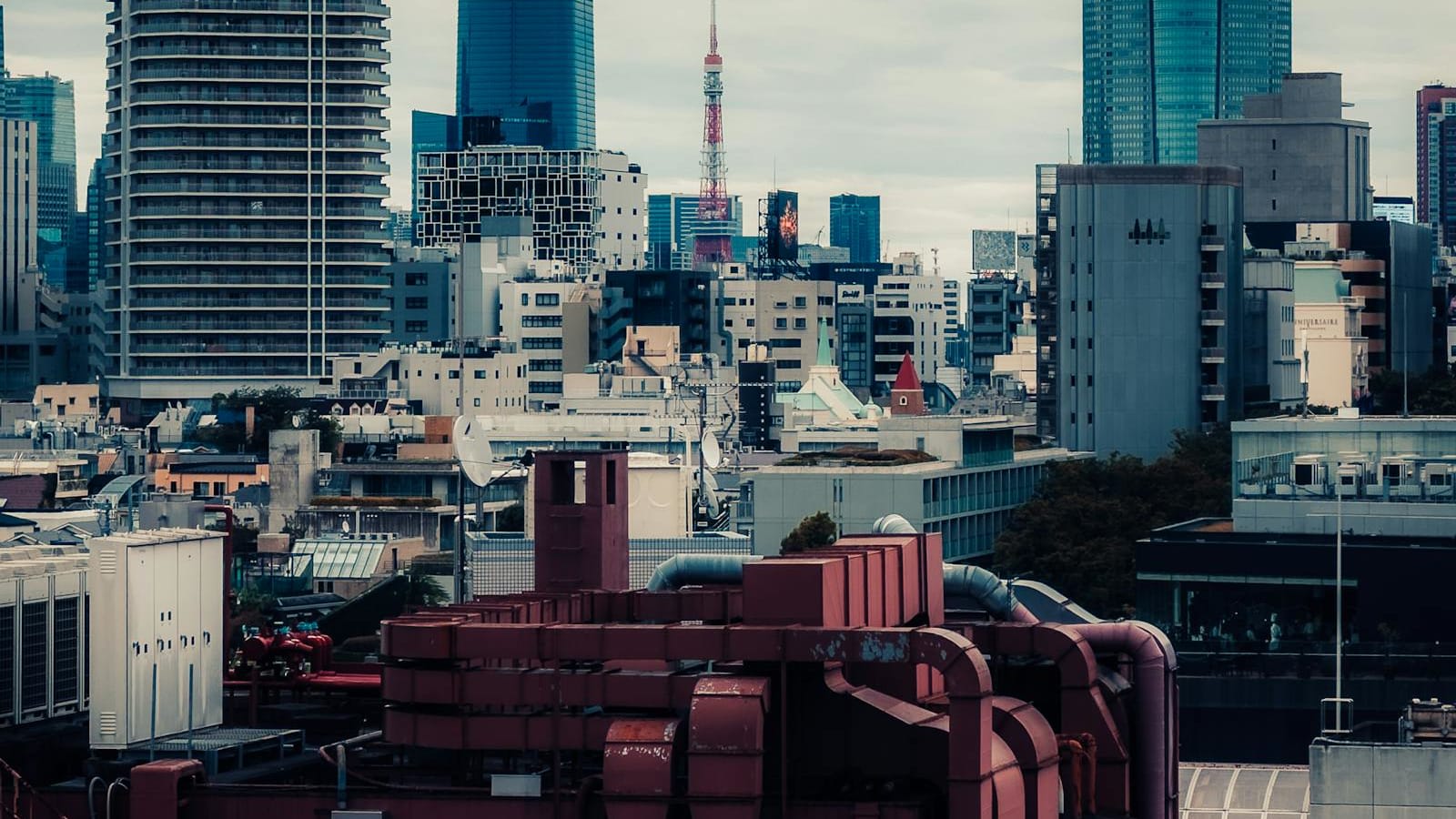
Mitsuko Uchida. Hayato Sumino. Mao Fujita. Aimi Kobayashi. Nobuyuki Tsujii. The list of world-class Japanese pianists active in 2026 is striking — disproportionate to Japan's share of classical-music audiences worldwide, sustained across generations, and growing rather than shrinking. It is also not an accident. Japanese piano education produces this kind of pianist at a rate other national systems do not, and the reasons are structural rather than mysterious.
This article is a sober look at why. There is no innate explanation; there is no shortcut available to other traditions; there is no claim that Japanese training is universally superior. There is, however, a specific combination of institutional infrastructure, competition culture, early-start expectations, and treating-the-instrument-seriously that quietly produces an outsized share of the international competition finalists and concert artists at any given moment. Understanding the components is useful both for what other traditions can learn and for what they probably cannot.
The factual baseline
It helps to start with what is observable. Across the major international piano competitions of the last decade — the Chopin in Warsaw, the Tchaikovsky in Moscow, the Cliburn in Texas, the Leeds in England — Japanese pianists have featured consistently in the finals and prize lists. Mao Fujita took second prize at the 2019 Tchaikovsky Competition. Aimi Kobayashi reached the finals at the 2021 Chopin. Mitsuko Uchida, who took second prize at the 1970 Chopin and won the Leeds in 1975, has been one of the most respected concert artists of the last half-century and remains active. Hayato Sumino — known online as Cateen — has become one of the most-followed classical pianists on the internet, while continuing to perform internationally at a serious level.

That pattern is not new. Japan has been producing major international pianists steadily since at least the 1970s. The Pract.is article on why Sumino matters online covers the contemporary face of this; the structural question this article addresses is what produces such pianists in the first place.
Factor 1 — Yamaha and Kawai as national infrastructure
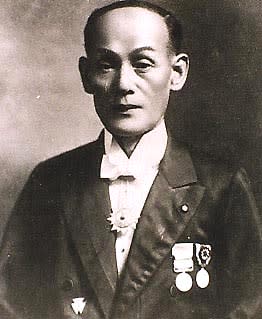
The single most consequential structural factor is that two of the world's largest piano manufacturers are Japanese, and both have operated as deliberate educational institutions, not just instrument makers, for more than half a century. Yamaha was founded by Torakusu Yamaha in 1887; Kawai was founded by Koichi Kawai in 1927. Both companies invested heavily in domestic music education from the postwar period onward, with infrastructure that has no real equivalent in other major countries.
Yamaha Music Schools, established in 1954 and now operating thousands of locations across Japan, offer a standardised national curriculum that begins with group music education for children as young as three or four. The system feeds a steady pipeline of trained ear, basic theory, and early keyboard exposure into a generation of children long before any individual decision to "take piano seriously" is made. Kawai operates a comparable system through Kawai Music Schools. The two networks together mean that a substantial portion of Japanese children encounter structured music education in early childhood through institutions designed to develop musicianship at scale.
The Yamaha Music Foundation also runs the Junior Original Concert (JOC) programme since 1972, which gives Japanese children a venue to perform and compose original works from a young age. The exposure to performance, composition, and audience as part of normal childhood music study is one of the system's distinguishing features. Music is treated, structurally, as an activity that includes producing original work in front of others — not merely as private skill-building toward eventual recital.
"Two of the world's largest piano manufacturers are Japanese, and both have operated as deliberate educational institutions, not just instrument makers, for more than half a century."
Factor 2 — The Suzuki Method and the early-start expectation
The Suzuki Method — founded by Shinichi Suzuki in postwar Japan, formalised in 1948 — has shaped both Japanese and international music education for over seventy years. While Suzuki's method is best known for violin pedagogy, its underlying philosophy applies to piano teaching as well: music as mother-tongue learning, ear training before notation, very early starts (often age three or four), the parent as practice partner, and immersion in recorded performances of the pieces being studied.
The institutional and cultural normalisation of starting piano at age four or five — rather than seven or eight, as remains common in many Western contexts — produces a real developmental advantage. By age twelve, a Japanese child who started at four has had eight years of disciplined study, often with significant parental support, often through a structured school system, and often with regular performance opportunities. Eight years is enough for a child to be technically advanced, fluent in reading, and accustomed to playing under pressure.
This early start is not unique to Japan — Korea, China, and Russia all have similar expectations in serious-music-track families — but Japan was an early mover and remains exemplary in how thoroughly the early-start expectation is institutionally supported. The Pract.is article on is it too late to learn an instrument at 40 covers the contrasting question for adult learners; the early-start advantage is one of the reasons adult-onset playing is structurally different.
Factor 3 — Competition culture, taken seriously
Japan has a developed domestic competition culture for young pianists, with hundreds of regional and national competitions that operate as both training and selection mechanisms. The major ones — the All-Japan Piano Concours, the PTNA (Piano Teachers' National Association) competitions, the regional Yamaha Junior contests — provide a structured ladder from beginner-level events through to internationally competitive tournaments. Japanese students typically participate in multiple competitions through their school years, which means they accumulate genuine performance experience and the specific kind of pressure-tolerance that competition develops.
Japan also hosts the Hamamatsu International Piano Competition, a major event held in the city where Yamaha was founded, which is now one of the more important triennial international piano competitions globally. Hamamatsu has produced or showcased many top pianists since its founding in 1991. The presence of a serious international competition on home soil contributes to a cultural environment where pursuing competition is a normal, plausible career step rather than a niche overseas pursuit.
Competition culture has known downsides, and Japanese pedagogy is not immune to them. The relentless competitive pressure on young players can produce overpractice, burnout, and a polished but emotionally constrained style of playing. The Pract.is article on musician burnout is more common than people think covers the broader burnout pattern; competition-driven systems are particularly susceptible, and serious commentators inside Japan have raised these concerns for years.
Factor 4 — Access to instruments and study environments
The combination of dominant domestic piano manufacturing and a national appetite for music education means that access to good instruments in Japan is unusually broad. Yamaha and Kawai produce hundreds of thousands of pianos a year; the secondary market in Japan keeps used quality instruments affordable; rental and rehearsal-room culture is well developed in dense urban areas where home pianos are impractical. A serious young Japanese pianist is more likely to have early access to a quality instrument than a comparable student in many other countries.
Japan also has a culture of soundproof practice rooms — a feature of the dense urban housing context — that allows serious study at hours and intensities that would not be possible in environments with thinner walls. This is a small structural fact with large practical consequences: the constraint that limits many adult amateurs (and many serious students) in apartment-heavy cities elsewhere is partly solved at the building level in Japan.
Factor 5 — Treating the instrument as serious work
The cultural factor that is hardest to name but most important is the seriousness with which piano is treated as a discipline. In Japanese music education, "music lesson" is closer to "language lesson" or "mathematics lesson" than it is to "extracurricular hobby." The expectation that a piece is to be properly understood, technically clean, musically thought-through, and performed accountable to a teacher is normal. The expectation that practice happens daily, that progress is measurable, and that there is a long arc of improvement to be respected — these are not exotic. They are how children are raised through music.
This is genuinely different from the laissez-faire framing common in much Western private teaching, where the parent-and-student relationship to practice is more negotiable, the role of the teacher more advisory than authoritative, and the long arc more often interrupted by negotiation about whether to continue at all. Both approaches have their costs. The Japanese model produces more technically accomplished players at scale; it also produces a meaningful number of students who quietly hate music by the time they are sixteen. The Pract.is article on why some adult beginners improve faster than others covers the consistency-and-seriousness factor for adults; in Japanese pedagogy, that seriousness is the institutional default for children.
The five factors, side by side
None of these factors alone explains the pattern. The combination is what does.
| Factor | What it provides | How replicable elsewhere |
|---|---|---|
| Yamaha & Kawai infrastructure | National-scale early childhood music education | Hard — requires institutional scale and corporate investment |
| Suzuki Method & early starts | Eight years of training by age twelve, ear-first pedagogy | Possible at family level; harder at scale |
| Competition culture | Performance experience, pressure-tolerance, selection | Possible to expand; depends on community willingness |
| Instrument and space access | Quality pianos broadly available; soundproof practice spaces | Depends on country's housing density and instrument-market structure |
| Music as serious discipline | Cultural default of seriousness, accountability, long arcs | Cultural; cannot be imported wholesale, can be cultivated |
What is honestly worth learning from this
For pianists, teachers, and parents in other traditions, three elements of the Japanese system are genuinely worth learning from — and a fourth is worth being cautious about.
First, the early-start advantage is real. Children who begin serious music study at four or five with structured pedagogy and parental support reach intermediate level by twelve in ways that children who start at eight rarely do. This is not a claim about innate talent; it is a claim about cumulative practice and developmental timing. Families willing to start serious music study early, with appropriate teachers and a focus on ear-training before notation, are operating on the same developmental principles that the Japanese system exploits at scale.
Second, the seriousness of approach is genuinely transferable. Treating piano as a discipline that deserves the same respect and consistency as schoolwork, rather than as a hobby that competes with other distractions, changes outcomes substantially. This does not require institutional scaffolding; it requires household culture. The Pract.is article on what makes a good music teacher for adult beginners covers what serious teaching looks like; the cultural component is what surrounds it.
Third, the performance-as-normal expectation is healthy. Children who perform regularly in low-stakes contexts from a young age — not concerts, not auditions, just student events and family performances — develop a different relationship to playing in public than children who learn entirely in private and then have to "build performance experience" later. The Pract.is article on why you can't play comfortably in front of people you know well covers what happens when this normalisation is missing.
"The Japanese model produces more technically accomplished players at scale. It also produces a meaningful number of students who quietly hate music by the time they are sixteen."
The fourth element — competition culture taken to the level Japan operates it — is worth more caution. Heavy competitive load on young children produces real costs: burnout, narrow technical brilliance without musical depth, identity damage when results disappoint. Importing only the competition culture without the supportive infrastructure around it is unlikely to produce the same outcomes and likely to produce more harm. Some forms of structured performance accountability are good; an arms race of nationwide competitions on a child's calendar is a more complicated trade-off.
What cannot be exported
Several elements of the Japanese system are essentially national-scale, institutional, and not realistically replicable outside Japan. The Yamaha and Kawai national-school networks would take generations to build elsewhere. The cultural normalisation of taking music seriously is the product of decades of institutional investment and social acceptance, not a policy that can be implemented in five years. The instrument-access situation depends on a domestic manufacturing base and secondary market that other countries do not have.
This is worth being honest about. The reasons Japanese piano education produces such pianists are not secret techniques; they are decades of institutional infrastructure layered on top of a cultural willingness to treat music as serious work from very young ages. Individual teachers, families, and students elsewhere can borrow specific elements — early start, seriousness, performance normalisation — and benefit. They cannot replicate the system. The Pract.is article on best instruments for adult beginners covers the access question from the consumer side; in Japan, that question is structurally answered before it is asked.
The honest take for the rest of us
The Japanese pattern is not destiny, and it is not magic. It is the consequence of specific institutional choices made over several decades — choices that compound, generation after generation, into a steady supply of world-class players. Other traditions produce great pianists too, by other paths; the Japanese path is distinctive in its scale and its institutional intentionality.
For pianists, teachers, and parents elsewhere, the lessons worth borrowing are concrete and modest. Start earlier than you might think. Treat the instrument as a real discipline rather than a hobby. Build regular low-stakes performance into normal practice life. Invest in good instruments and good teaching when possible. None of these require Yamaha or Kawai or the Hamamatsu Competition. All of them are available to any household willing to take music seriously, the way the system in Japan takes it seriously by default.
That seriousness — quiet, sustained, generational — is the actual answer. The pianists are the visible result. The infrastructure underneath them is what produced them, and the part that other traditions can choose, deliberately, to do.
More on motivation.
Why Some Piano Prodigies Disappear in Their 20s
The transition from 'wunderkind on YouTube at 12' to 'working pianist at 24' is brutal — and most do not survive it. The structural reasons are specific and the few who navigate the gap share a recognisable pattern.
Pract.is Editorial
The Hidden Economics of Being a Concert Pianist in 2026
Most working concert pianists below the very top tier earn the majority of their income from teaching, adjudicating, and masterclasses — not from concerts. An honest breakdown of how the career math actually works in 2026.
Pract.is Editorial
Why You Can't Play Comfortably in Front of People You Know Well
Most musicians can play for strangers at a recital and freeze in front of family in the living room. The cause is not general performance anxiety — it is something more specific, and it needs a different fix.
Pract.is Editorial