
Most beginners should buy a good 88-key weighted digital piano. A decent acoustic is the better long-term instrument when the room, budget, maintenance, and commitment are already in place. A neglected free upright is not the best of either world.
The real choice is usable piano vs. compromised piano
Digital and acoustic are categories, not quality ratings. A stable digital piano with a convincing weighted action, proper pedal, sturdy stand, and comfortable bench can support years of useful work. A worn acoustic with sticking keys, unstable tuning, and an action that has not been serviced can make dynamics and repetition harder, even though it contains real strings.
The reverse is also true. An entry digital piano cannot reproduce every physical response of a well-regulated upright or grand. When a player begins working seriously on voicing, half-pedaling, repeated notes, and fine control at very soft dynamics, the differences become more noticeable. The useful comparison is therefore not technology against tradition. It is the two actual instruments available at the budget, in the room where practice will happen.
The independent buying guide Piano Buyer makes a sensible distinction: a good digital can support elementary learning, while an acoustic offers more complex touch and tone and can remain useful for decades when it is maintained. That is a more honest starting point than saying every beginner needs an acoustic immediately or that modern digital pianos are now identical to one.
The fast verdict
Choose digital first
Shared walls, irregular practice hours, a budget below the cost of a sound acoustic, an uncertain long-term plan, or a likely move within a few years.
Choose acoustic first
A permanent room, comfortable maintenance budget, serious long-term piano study, and an instrument a technician has confirmed is healthy.
For a digital, the safe beginner baseline is 88 full-size, touch-sensitive, weighted keys, a sustain pedal, built-in speakers, and a headphone output. The finer choice between 61, 76, and 88 keys is covered in our first-keyboard guide, but anyone planning conventional piano lessons should treat 88 weighted keys as the default unless space or access makes that impossible.
What your hands and ears actually experience
On an acoustic piano, the key starts a mechanical chain. The action throws a felt hammer toward strings; the strings send vibration through a bridge into a soundboard; the soundboard moves the air in the room. Yamaha's plain-language mechanism guide shows why the cabinet, action, strings, soundboard, floor, and room all become part of what the player feels and hears.
A digital piano begins with the same visible gesture but takes a different route. Sensors estimate how the key moved, the sound engine chooses or models a response, and speakers or headphones turn that response into sound. Better instruments improve every link: the shape and leverage of the action, the number and placement of sensors, the sound engine, pedal detection, amplification, and speaker placement.
What happens after the key goes down
A 2025 DAFx conference study that compared acoustic and digital piano actions explains one reason the feel remains different: common digital actions infer intent from a small set of sensors, often using key velocity, while the acoustic relationship between key movement and hammer impact contains more physical nuance. This does not make a digital useless for technique. It means the label weighted is only the start of the test, not proof that every action feels equally convincing.
When trying a digital, play repeated notes softly, a slow scale from quiet to loud, and a chord while easing the sustain pedal up gradually. Listen through the built-in speakers, not only expensive headphones. The action may be acceptable while the small speakers flatten every dynamic into the same narrow band. A stable stand matters too: an excellent action on a wobbling X-stand feels less controlled than a modest action in a solid setup.
"Weighted keys are a starting requirement, not a guarantee that the instrument will teach touch well."
Beginners do not need to chase a flagship action. They do need to avoid light, springy keys if the goal is piano rather than general keyboard playing. Our current beginner digital piano shortlist narrows that search by action, portability, speakers, and setup instead of ranking instruments by how many sounds they contain.
The first-year cost is bigger than the sticker
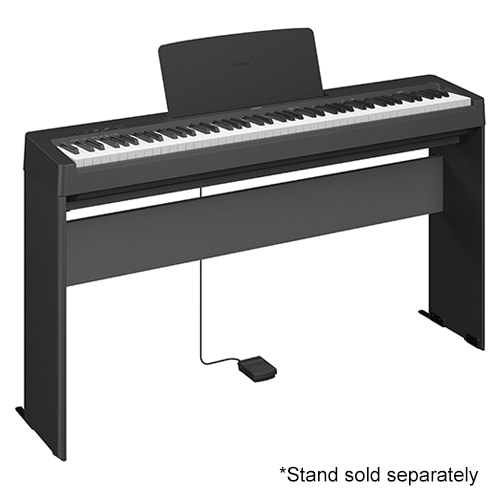
A portable digital often wins on purchase price, but the bare piano price is not the full setup. On July 18, 2026, Yamaha's US store listed the P-145BT at $469.99. It provides 88 weighted GHC keys, speakers, a headphone output, a basic footswitch, a music rest, and an adapter. A stable stand, adjustable bench, better pedal, and headphones can still add materially to the real cost.
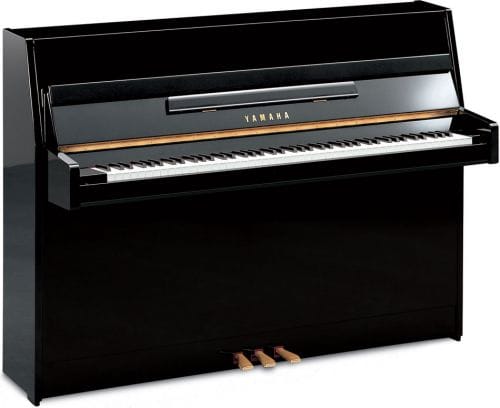
A new acoustic begins much higher. Piano Buyer's current Yamaha listing places the entry b1 upright at $5,699, while Yamaha lists that piano at 384 pounds. The price gap is not universal, and used acoustics cover an enormous range, but it shows why a beginner should compare complete ownership rather than a $470 digital with a mysterious "free" piano from a local listing.
These two current Yamaha models make the physical difference easier to see. They are representative entry points rather than a claim that Yamaha is the only brand worth considering, and the images are not shown to scale.
Build the first-year total
Portable digital
Piano + rigid stand + adjustable bench + useful pedal + headphones, if needed.
New acoustic
Piano + delivery terms + post-delivery tuning + ongoing technician visits + climate care.
Private used acoustic
Independent inspection + professional move + tuning + any immediate action, pedal, or structural repair.
Acoustic maintenance is not a reason to reject the instrument; it is part of owning one. Tuning frequency depends on the piano, climate, age, and use. The Piano Technicians Guild recommends setting a schedule with a technician rather than assuming one universal interval. A good acoustic can remain a serious instrument for decades, while a digital avoids tuning but will age like an electronic product and usually loses value faster.
At the low end, a used digital with a healthy action can be the least risky entry. Anyone holding a hard $500 ceiling can compare current compromises in our under-$500 guide. Buying used still requires testing every key, speaker, jack, pedal input, and control, but moving a 25-pound slab out of a bad deal is very different from discovering problems after a 400-pound upright reaches the second floor.
Choose for the room you actually live in
The best-feeling instrument is not helpful if it makes practice socially impossible. A digital's headphone output lets an apartment player work early, late, or through repetitive drills without asking everyone nearby to hear the same two measures. Volume control also helps families separate "the student needs to practice" from "the whole house must listen right now."
Headphones do not make every digital silent. The keys still produce mechanical thumps that can travel through a floor, especially on a hollow stand. A rug, isolation pads, sensible hours, and a solid furniture-style stand can reduce that problem. Even so, the practical difference from an acoustic is large: an ordinary upright has no volume dial, and putting soft furnishings in the room changes reflection more than it changes the sound transmitted through walls.
Measure the setup, not just the piano body. Yamaha's P-145BT, for example, is about 52 inches wide and 10.5 inches deep, but the stand, pedals, bench, player's knees, and space to sit down all extend that footprint. An acoustic upright is not necessarily much wider; its depth, weight, access route, and inability to fold away are the real differences.
"The instrument that permits five ordinary practice days will beat the better instrument that permits two tense ones."
A digital is also easier to position badly. A portable slab left on a desk may put the keys too high, leave no room for the knees, and push the screen or music far from the eyes. Budget for an adjustable bench and a stand that puts the keyboard at a comfortable height. Those unglamorous pieces affect posture every day.
A used acoustic needs an inspection, not optimism
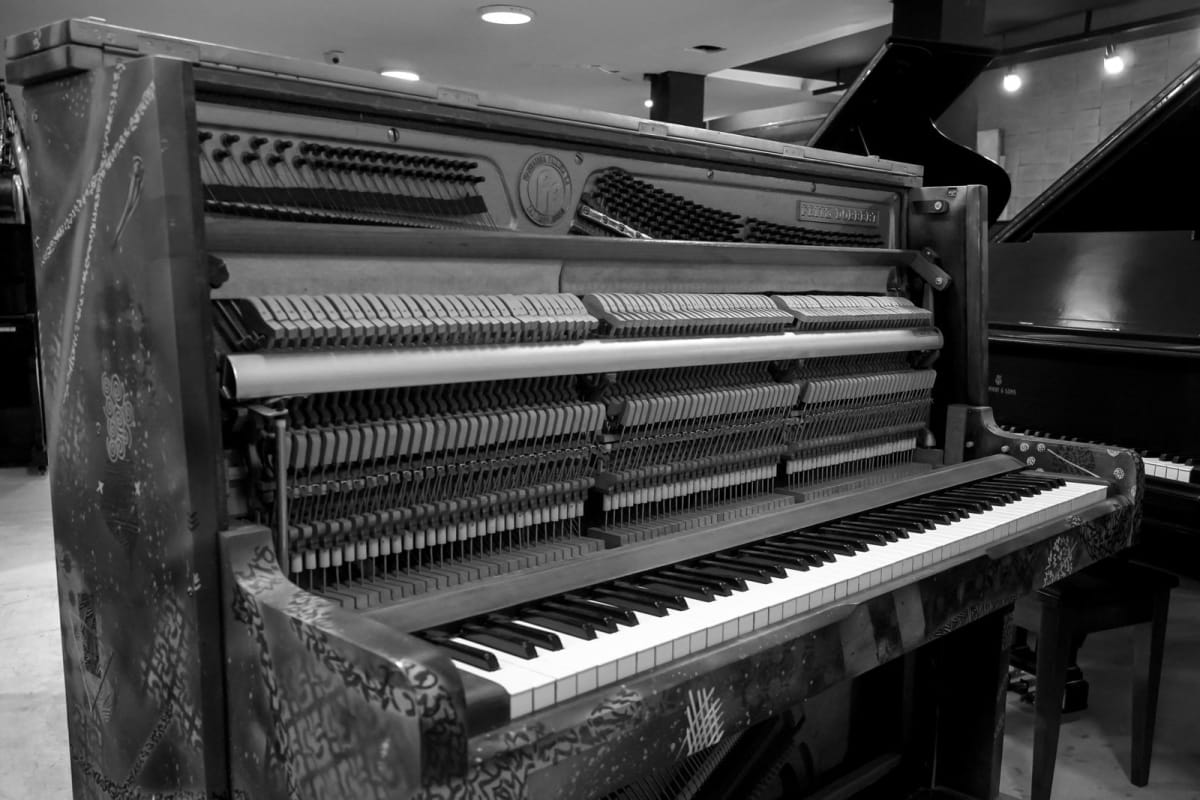
The phrase "free piano" describes the seller's price, not the buyer's cost. A private-sale upright may need a professional move, tuning, regulation, hammer work, pedal repair, or structural work. Cosmetic wear can be harmless; a weak pinblock, damaged bridge, serious soundboard problem, or deeply worn action can turn a bargain into an instrument that never becomes stable.
The Piano Technicians Guild's buying guidance is unusually direct: have a Registered Piano Technician evaluate a used piano before buying it. This is different from asking a pianist to play it. A good player can notice uneven touch and tone, but a technician can inspect the internal condition and estimate the work required after the move.
Before paying for that inspection, a buyer can still screen obvious failures:
- Play every key softly and firmly. Note sticking keys, notes that fail to repeat, severe unevenness, and keys that produce an obvious rattle or two-pitch wobble.
- Use every pedal. Listen for squeaks, incomplete damping, and pedals that move without doing useful work.
- Look inside with permission. Heavy rust, missing strings, deeply grooved hammers, loose parts, water marks, and evidence of pests justify caution, not amateur diagnosis.
- Ask about location and history. Long periods beside a radiator, in a damp basement, or in uncontrolled storage matter more than a polished case.
- Get the moving route quoted. Stairs, tight corners, elevators, long carries, and disposal of an old instrument can change the economics quickly.
A dealer's used acoustic usually costs more than a private listing, but may include preparation, delivery terms, warranty, rental, or trade-up options. Those are not glamorous benefits; they transfer some risk away from a beginner who cannot yet judge an action. Ask exactly what has been serviced, what is guaranteed, whether the first tuning is included, and what happens if the piano will not hold tune after delivery.
The recommendation by beginner situation
Adult beginner in an apartment: buy a weighted 88-key digital with good headphones and the most convincing action the budget allows. The quiet hours it creates are more valuable than a theoretical acoustic advantage that cannot be used. Try at least three models in person, because actions that share the same marketing label can feel quite different.
Child beginning weekly lessons: ask the teacher for minimum requirements, then solve for daily access. An 88-key weighted digital on a rigid stand is a sound default for many families. If the child is entering a serious classical track and the household can support an acoustic, let the teacher and an independent technician help evaluate specific instruments rather than buying by brand name alone.
Committed classical beginner with a stable home: a healthy acoustic is worth serious consideration from the start. Its continuous mechanical response, natural sound in the room, and pedal behavior remove a later transition. The commitment needs to include maintenance and professional moving, not just purchase money.
Family offered an inherited or free upright: do not reject it, and do not move it yet. Pay for the inspection first. A good older piano can be a much better musical instrument than its listing price suggests; an unhealthy one can cost more to move and repair than a dependable digital.
Beginner who expects to move or is testing a one-year interest: digital is the lower-friction choice. Renting from a dealer, buying a clean used digital, or choosing a dealer with a trade-up policy can reduce the cost of changing direction later.
Player switching between a digital at home and an acoustic in lessons: expect an adjustment rather than treating it as evidence that home practice is wasted. Spend a few minutes at each lesson recalibrating soft attacks, repeated notes, and pedal depth. Our post on practicing across digital and acoustic pianos gives that transition a more detailed routine.
The final test should be musical, not just technical. Play the same slow scale, repeated-note pattern, quiet chord, and pedaled phrase on each candidate. Notice whether the sound changes predictably with the hands, whether the bench and pedal position feel natural, and whether the instrument can stay ready in the room. For most beginners, that test will lead to a good weighted digital. For the beginner with the right home and a genuinely good acoustic in reach, the heavier commitment can be worth it from day one.


