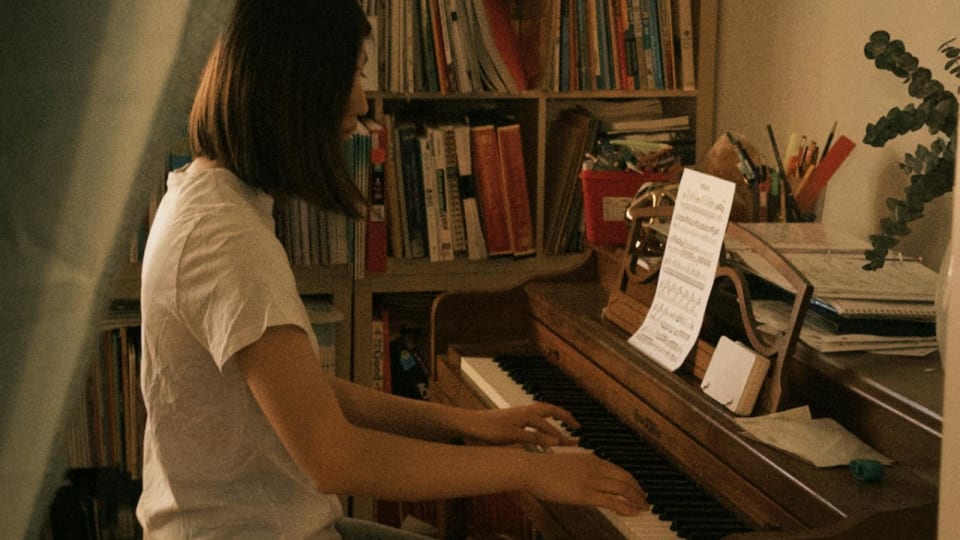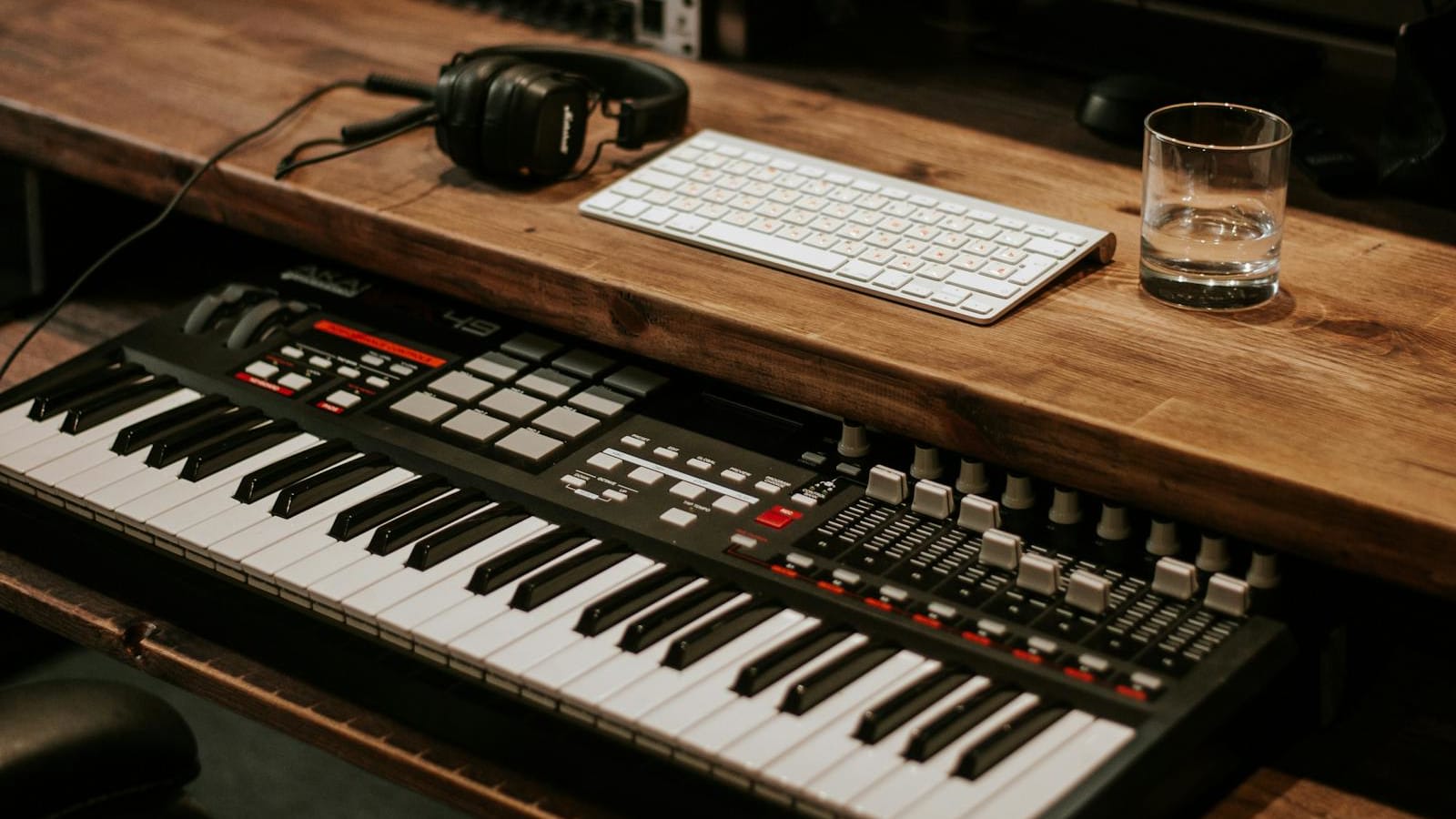
Most online piano lessons assume an acoustic piano. Most students who watch them practise on a digital. The gap between the assumption and the reality is wider than either teachers or students usually admit, and it has specific, addressable consequences for technique. A student who works for six months at a digital instrument while watching teachers play and demonstrate on grand pianos is not getting the practice the lesson assumes they are getting. The exercises are the same. The instrument is doing something different with them.
This article is for the substantial majority of adult learners who practise primarily on a digital piano — apartment dwellers, beginners with budget constraints, anyone unable to host an acoustic instrument at home — and who want to know what is actually different about the instrument under their fingers, what skills transfer, what skills do not, and how to compensate so that the work they do on a digital remains useful when they eventually sit at an acoustic.
What is actually different
The real differences between a digital piano and an acoustic piano are mechanical, acoustic, and dynamic. The mechanical differences live in the action — the system of levers, hammers, and weights that connects a key to a sound. The acoustic difference lives in how the sound is produced and projected after the strike. The dynamic difference lives in the range of expressive control the instrument gives a player.
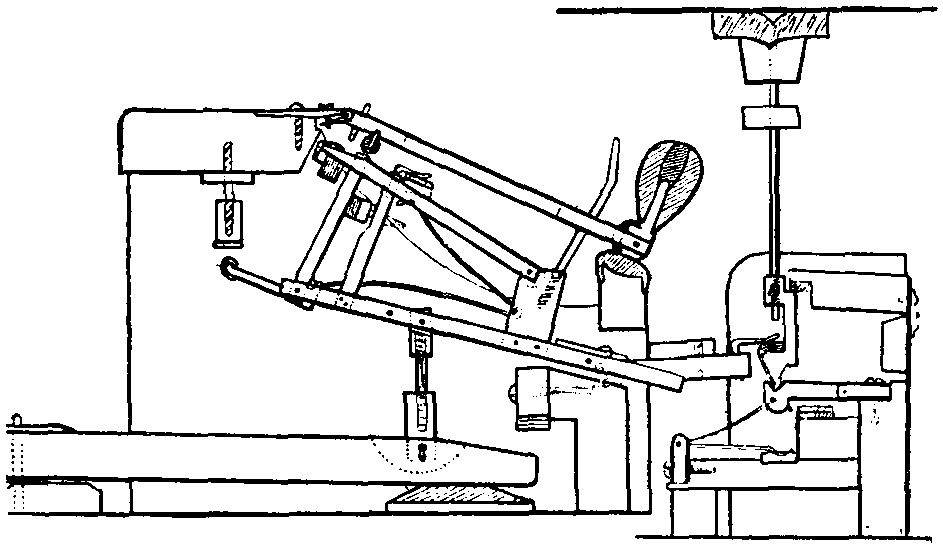
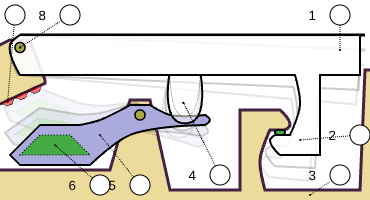
An acoustic action — particularly Sébastien Érard's double escapement design, the basis for nearly every grand piano since 1821 — uses an intricate mechanical chain. When you depress a key, a hopper drives a hammer toward the string. After the strike, the hopper escapes, allowing the hammer to bounce off the string cleanly. A repetition lever lets the hammer return to a partially-up position so that the key can be re-struck quickly without fully releasing. The result is a complex tactile experience — subtle resistance at the start of the keystroke, an acceleration through the down-motion, a tiny bump at the moment of escapement, and a measurable depth before the key reaches bottom. Every one of these layers contributes to what pianists mean when they talk about "the feel" of an instrument.
A digital piano simulates this experience to varying degrees. The best modern digital actions — hybrid hammer mechanisms with graded hammer weights and triple-sensor scanning — get remarkably close. The cheapest digital actions, with simple weighted keys or unweighted synth-action keys, miss most of it. The Pract.is article on best digital pianos for beginners covers the buying side; this article covers the practice side, which depends partly on which tier of digital instrument you actually have under your hands.
"A student who works for six months at a digital instrument while watching teachers play on grand pianos is not getting the practice the lesson assumes they are getting."
The four specific differences that matter
Of all the differences, four affect technique most directly. Each has consequences for what skills develop, what skills atrophy, and what habits are formed.
1. Action weight and graded resistance
An acoustic grand piano's bass keys are noticeably heavier than its treble keys — by deliberate design, since the bass hammers are heavier and need more force. The gradient feels natural after a few minutes. Most digital pianos approximate this with "graded hammer action," but the effect is often less pronounced than on a good acoustic. A student trained on a digital with too-light overall action may push too hard at an acoustic; one trained on a digital that is uniformly heavy may struggle to produce nuance in the treble.
The fix is to know your instrument. If the digital is uniformly weighted, deliberately practise lighter touches in the upper register and heavier ones in the lower, even though the keys themselves are not asking you to. If the digital is too light, expect to compensate at an acoustic by working slightly more weight into the keys for the first few minutes of any session there.
2. Dynamic response and velocity range
An acoustic piano has an enormous dynamic range — from barely-audible pianissimo through to violent fortissimo, with hundreds of perceptible gradations in between. The instrument responds to tiny variations in the speed and weight of the keystroke. Most digital pianos compress this range. The softest note your digital can produce may be noticeably louder than the softest note on an acoustic; the loudest is usually quieter; and the gradations in between are quantised to whatever velocity resolution the sensors support.
The practical consequence is that voicing and dynamic shaping on a digital often feel like they are working when, played on an acoustic, the same gestures produce muddier or coarser results. The Pract.is article on how to practice voicing covers the voicing skill in detail; the digital version is harder to develop because the instrument forgives imprecise weight differentiation that an acoustic exposes immediately. Pianists who work primarily on digitals should expect to need extra time at any acoustic instrument before voicing on it feels controlled.
3. Pedal sensitivity
The damper pedal on a grand piano is a continuous control — every depth produces a different acoustic effect, from no damping at all (full release) through partial damping (half-pedal) through full sustain (fully depressed). The pedal on most digital pianos is binary: depressed or not, with little or no perceptible difference in between. Even digitals that advertise "half-pedal support" usually offer two or three discrete steps rather than the smooth continuous response of an acoustic.
This is the difference most invisible from outside and most consequential inside. A student trained on a binary digital pedal will arrive at an acoustic without a half-pedal reflex at all. The Pract.is article on how to practice pedaling deliberately covers the four levels of pedal mastery; on a digital with binary pedal response, Levels 2 and 3 — depth and half-pedaling — cannot really be practised. The fix is to invest in a continuous-response pedal (some better digitals support this; you may need to upgrade) and to be aware that the pedal habits you build at a binary digital will not transfer.
4. Acoustic feedback and tone production
The fourth difference is the one pianists feel most viscerally. On an acoustic, the sound is produced by strings vibrating in a wooden case, projected by a soundboard, with body-conducted vibration reaching your seat and feet. The instrument feels like it is sounding. On a digital, the sound emerges from speakers (or headphones), with no body-conducted feedback, no real soundboard resonance, no felt sensation of the instrument as a sounding body.
This affects tone production directly. Pianists at an acoustic adjust their touch in response to the felt and heard quality of the sound; the feedback loop is constant. At a digital, the feedback loop is thinner — the player produces a touch, hears the resulting sample, and adjusts based on auditory information alone. The result is that tone-production skill develops more slowly on a digital, and pianists who train exclusively on one often find that their tone at an acoustic is less refined than their notes-and-rhythms accuracy would suggest. The Pract.is article on why your slow movements sound empty covers tone as one of five exposed layers in slow music; the digital case is the one where this layer develops with extra friction.
The differences, side by side
| Dimension | Acoustic | Digital (typical) | What this means for practice |
|---|---|---|---|
| Action weight | Graded; bass heavier than treble | Often uniform or only slightly graded | Imagine the gradient; practise differential weight |
| Dynamic range | Wide; very quiet to very loud | Compressed; quantised to sensor resolution | Voicing feels easier than it actually is |
| Pedal response | Continuous; every depth different | Often binary; sometimes 2–3 steps | Half-pedalling cannot be practised on binary pedals |
| Acoustic feedback | Body-conducted resonance, soundboard | Speakers / headphones only | Tone-production skill develops more slowly |
| Repetition | Double-escapement allows fast re-strike | Variable; best digitals approximate it | Trills and fast repeated notes may behave differently |
| Sustain length | Decay follows physical string behaviour | Sample-based; may end abruptly | Long held notes can sound different |
What transfers and what does not
Knowing the differences, it becomes possible to be specific about which skills transfer from digital practice to acoustic playing and which do not.
What transfers well. Notes, rhythms, fingerings, basic technique, repertoire-learning, sight-reading, and most of what happens in the first one-to-two years of study. A student who practises Bach inventions on a serviceable digital will play them at an acoustic with the same essential accuracy. The Pract.is article on the 30-minute beginner routine describes work that is almost entirely transferable across instruments at the early stage; the digital limitation does not bite hard until later.
What transfers partially. Voicing skill, phrase shape, dynamic control, and articulation. These develop on a digital, but at lower resolution than at an acoustic. A student with two years of digital-only practice will recognise the gestures of voicing at an acoustic but will need recalibration time before the gestures produce the intended results.
What does not transfer. Continuous pedal control, fine tone production, and the felt sense of the instrument as a sounding body. These require an acoustic to develop fully. Digital practice can prepare a student to learn these skills quickly when they reach an acoustic, but cannot produce them in isolation.
"Two years of digital-only practice prepares a student to learn voicing and pedal control at an acoustic — it does not produce those skills in isolation."
Practical compensations
If digital is your primary instrument, several deliberate compensations protect the skills that would otherwise atrophy.
First, spend periodic time on an acoustic. Once a month at a friend's piano, a teacher's studio, a community piano, or a local hall is meaningfully different from never. The acoustic time recalibrates your sense of weight, dynamic range, pedal, and tone. The improvements you make on the digital after these visits are deeper because your reference point has been refreshed.
Second, practise dynamic extremes deliberately. On a digital, the temptation is to play in the middle of the velocity range where the instrument feels most natural. Deliberately spend time at the soft end and the loud end of what the instrument allows. This trains the gestures even if the instrument's response is quantised.
Third, upgrade the pedal if at all possible. A continuous-response pedal is often a separate accessory and a much smaller investment than upgrading the whole instrument. If your digital supports half-pedal input, use it; if it does not, consider whether the next upgrade should specifically include this capability.
Fourth, play through speakers, not only headphones. Headphones flatten the acoustic experience further than speakers do. Speakers placed near the instrument provide at least some spatial sound and some sense of the instrument as a sounding object. Headphone-only practice over years is the configuration that produces the largest gap when arriving at an acoustic.
Fifth, study recordings of acoustic instruments deliberately. The reference for what a piano "should" sound like has to live in your head if it cannot live in the room. The Pract.is article on how to listen more critically while you practise covers the listening skill; for digital-trained pianists, this listening becomes one of the main ways the acoustic reference stays present.
When to upgrade
For serious students whose digital is below the hybrid-action tier, the question of when to upgrade is real. The honest answer is that the gap matters more once you pass the early intermediate level. A beginner can do excellent work on a serviceable digital. A late-intermediate or advanced student who never plays an acoustic will start to hit ceilings on voicing, pedal, and tone that are partly artifacts of the instrument rather than of their skill.
If acoustic ownership is impossible (apartment living, budget constraints, climate), the next-best option is a top-tier digital with hybrid action (Yamaha AvantGrand, Kawai NV-series, Casio Grand Hybrid), combined with deliberate acoustic time elsewhere. These instruments use real piano hammer mechanisms with sensor-based sound generation, and they close most of the action and pedal gap, though the acoustic-feedback gap remains. The Pract.is article on the best piano practice tools for intermediate players covers the upgrade question more broadly.
What this means for teachers and online lessons
The asymmetry between online lesson assumptions and student instruments is rarely addressed. A teacher demonstrating on a Steinway is showing a touch and dynamic range that the student watching cannot exactly reproduce on their digital. Teachers who acknowledge this — who specify which gestures will translate and which will not, who advise on compensations, who occasionally watch the student play to assess what the digital is doing to their technique — give better lessons than teachers who simply ignore the gap.
For students, the right response is to be honest with their teacher about the instrument they actually practise on and to ask explicit questions about what to do differently. The instrument under your fingers is part of your context; the lesson works better when it is part of the conversation. The Pract.is article on how to get more out of each music lesson covers the broader principle; the digital-vs-acoustic specific case is one where a few minutes of explicit conversation each lesson saves months of slow recalibration later.
The honest picture
The digital piano is one of the most important instruments in modern piano study, and most working adult learners cannot practise on anything else. This is fine. A serious student can develop excellent musicianship at a serviceable digital. The work that does not develop as fully — fine pedal control, refined tone production, the felt sense of the instrument — can be approximated, supplemented with occasional acoustic time, and learned quickly when access to an acoustic finally arrives. The skills that develop fully at a digital are the bulk of what most pianists need.
The honest position is to know what your instrument is doing, and what it is not. The acoustic action that Érard designed in 1821 is still the ideal that digital pianos imitate. Some imitate it well; some less so. Practising deliberately for the gap — knowing which skills transfer, compensating for the ones that do not, supplementing with occasional time at an acoustic — produces musicians who arrive at their first conservatory recital, their first competition, or their first serious performance ready for what an acoustic asks of them. The digital is not a compromise. It is a tool whose limitations are addressable when you understand them.