
Music Lesson Planning for Private Teachers: A Weekly Workflow
A weekly music lesson planning workflow for private teachers that connects lesson goals, quick notes, home practice, and follow-up.
Pract.is Editorial
Research-based practice guidance for musicians from the Pract.is editorial team.
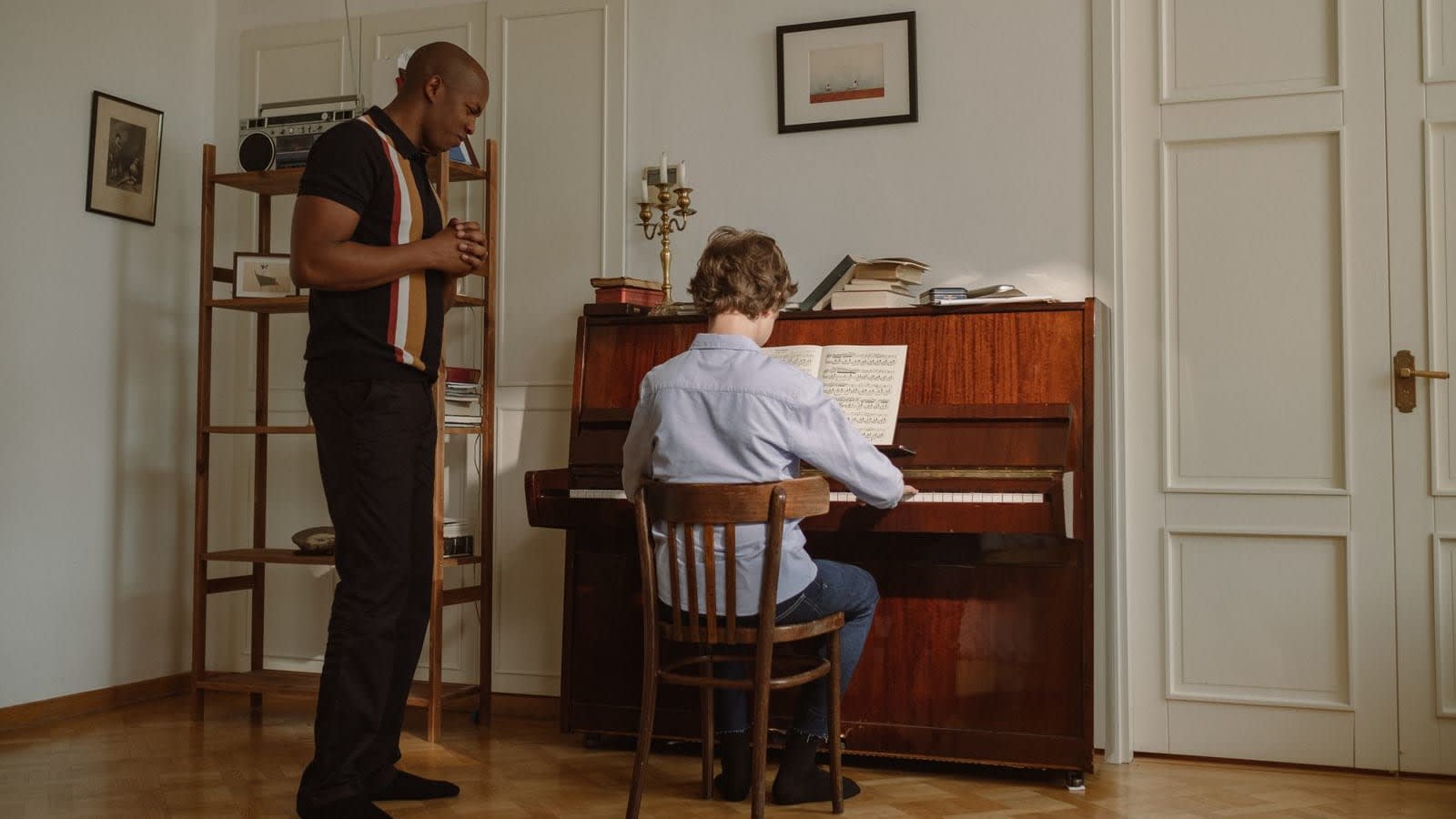
Private music lesson planning works best when it starts with what happened last week, not with a blank template. A strong plan connects the previous assignment, the student's home practice, the next lesson focus, and the follow-up that will carry the work into the next seven days.
That is the part many planning systems miss. They help the teacher prepare the lesson, but they do not keep the lesson alive after the student leaves.
The weekly planning job
Plan from evidence, not memory
The biggest mistake in private music teacher planning is treating each lesson as a fresh event. A teacher may remember that the student was "nearly there" on a piece, or that scales needed work, or that a parent mentioned a busy week. But memory blurs details. It is especially unreliable when the teacher has thirty students, different instruments or levels, and lessons packed back to back.
A better pre-lesson routine takes three minutes and starts with evidence. Open the student's previous assignment, recent practice logs, repertoire status, recordings if available, and any notes from the last lesson. Look for the first decision the lesson has to make: move forward, repair, reduce, review, or reset. This is where a teacher's plan becomes more than a list of activities.
Research on self-regulated learning gives a useful frame for this. Hans-Christian Jabusch's 2016 Frontiers commentary on musical practice describes self-regulation as a cycle that includes forethought, performance, and self-reflection. For a private teacher, that means a lesson plan should not only say what will happen in the room. It should prepare the student to plan, observe, and reflect during home practice.
This is also why a clean tracking system matters. If the teacher has to reconstruct the week from texts, notebooks, a spreadsheet, and memory, planning becomes guesswork. The guide to tracking music student progress without spreadsheets covers this record problem in more detail. For lesson planning, the shorter version is simple: the plan improves when the teacher can see what the student actually did.
Three-minute pre-lesson scan
Give each lesson one primary job
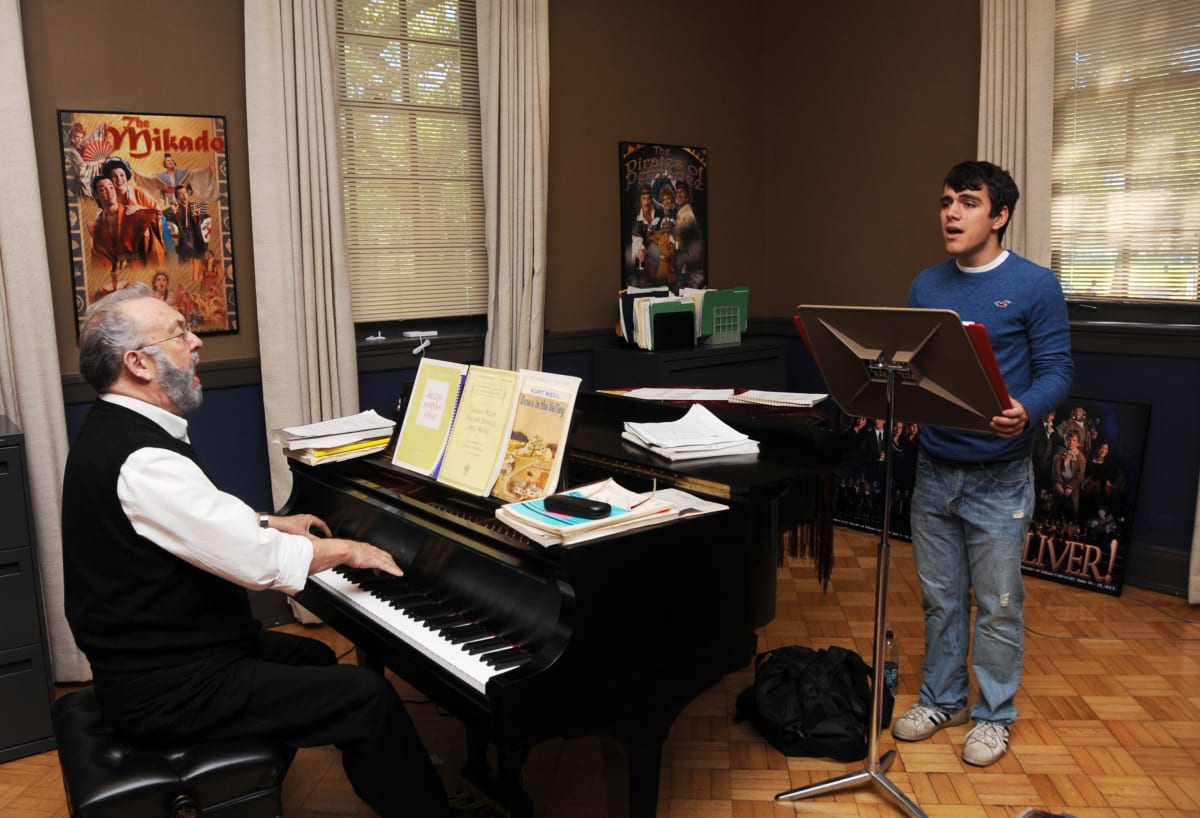
A private lesson can contain many things: warm-up, technique, repertoire, sight-reading, theory, ear work, improvisation, exam prep, performance practice, and parent handoff. The plan falls apart when all of those things compete equally. A useful weekly plan names one primary job and then lets the rest of the lesson support it.
The job is not always "learn the next page." It might be "make the student understand how to isolate the hard bar," "rebuild confidence after a bad performance," "fix left-hand rhythm before adding tempo," or "decide whether this piece should continue." Once the primary job is named, planning gets easier. The teacher can choose what to hear first, what to interrupt, what to leave alone, and what home assignment will make the next week better.
NAfME member Elizabeth Caldwell's article on lesson planning under constrained conditions is written for general music, but the priority principle transfers well to private teaching. She recommends identifying the skills and concepts that are most essential: the ones that build year to year, require the most practice, and matter most for musicianship. A private teacher can use the same filter every week. If a student can only absorb one main concept this lesson, which concept will make future practice more productive?
The Music Teachers National Association's assessment materials point in a similar direction. Their teacher self-assessment questions ask whether the teacher enlists the student's help in planning the lesson, asks about trouble with assignments, and helps the student judge whether the amount of weekly work fits the available practice time. That is a useful corrective: music lesson planning is not only teacher preparation. It is also a shared decision about what the student can realistically carry home.
Pick the lesson's main job
| What the evidence shows | Main lesson job | Home assignment should be |
|---|---|---|
| Student practiced often, but the same bar stayed messy. | Repair method | A small loop with a clear trigger and tempo. |
| Student barely practiced and seems embarrassed. | Reset friction | Short, easy-start sessions that rebuild action. |
| Piece improved, but confidence is fragile. | Stabilize performance | Run starts, recovery points, and one recording task. |
| Student did the assignment but misunderstood the goal. | Clarify strategy | One task written as "how to practice," not just "what to play." |
| Student is ready for more, but the old piece is lingering. | Decide and transition | A finish, polish, or retire plan with a new target. |
Capture lesson notes while the decision is fresh
Lesson notes become a burden when the teacher tries to write a transcript. A transcript is too slow to capture during the lesson and too dense to use before the next one. The note needs to preserve the decision that was made: what changed, why it changed, and what the student should do next. If the note does not help the student practice or help the teacher plan next week, it can usually be cut.
A practical in-lesson note can be short: one win, one problem, one practice action. For example, "Win: tone opened up in the middle register. Problem: rushed bar 18 before the leap. Action: three-note lead-in to bar 18, hands separate, quarter note = 56, stop after clean landing." That note gives the student a task and gives the teacher a starting point next time. It does not need poetic detail.
The 2026 Sage study Building reflective practice is a useful model because each lesson in the intervention was treated as a cycle: planning through analysis of practice forms, action in the lesson, and observation/reflection afterward. The details differ from a private studio, but the planning logic is strong. Good notes should feed the next cycle instead of sitting in a private archive.
"A lesson note is not a record of everything taught. It is the handoff from teaching to practice."
Fast note template
This is where teacher tools should reduce friction. If notes are scattered across a paper notebook, a phone note, a spreadsheet, and parent messages, the teacher has to rebuild the lesson story later. A focused practice system should keep the student's assigned work, home activity, repertoire notes, and teacher follow-up close together. The post on music practice tracking for teachers explains what to look for if the current note system is not giving enough lesson visibility.
Make the home assignment the real output
The lesson is not finished when the student understands something in the room. It is finished when the student knows how to work on it without the teacher. That means the home assignment is the real output of music lesson planning. A beautiful lesson with a vague home task leaves too much to chance.
A strong assignment has four parts: what to practice, where to start and stop, how to practice it, and how the student will know whether it is working. "Practice Minuet" is not enough. "Bars 9-12, right hand alone, two-measure loops, quarter note = 60, three clean times before adding left hand" is far more useful. The second version gives the student a small procedure, not just a reminder.
This matters because students often fail at home for reasons that are not motivational. They sit down and cannot remember the first move. They play the whole piece because that feels familiar. They avoid the hard section because the assignment was too broad. If that sounds familiar, the guide on what to do when a student will not practice between lessons covers the practice-habit side. From the planning side, the fix is to make the assignment small enough to start and specific enough to verify.
Structural visual
The lesson planning loop
Feedback research helps here too. McPherson, Blackwell, and Hattie's 2022 article on feedback in music performance teaching adapts the idea of feedback as feed back, feed up, and feed forward: what changed from before, where the student is now, and what points forward. A home assignment should do the same. It should remind the student what improved, identify the present target, and tell them what to do next.
Review the week before planning again
The weekly workflow only works if the next lesson starts by checking whether the last assignment survived real life. This does not need to take long. Ask the student to play the assigned target, read the practice evidence, and compare the result to the plan. If the assignment worked, the lesson can move forward. If it did not, the teacher should decide whether the problem was motivation, clarity, difficulty, schedule, or method.
This review step is where many private teachers lose time. Without a clear record, the lesson starts with "How did practice go?" and the answer is usually too vague to plan from. With a better workflow, the teacher can start more specifically: "You logged three short sessions, but none on the left-hand rhythm task. Let's find out whether the task was unclear or just hard to start." That sentence is calmer, more useful, and less moralizing.
Next-week decision card
Private teachers do not need a corporate planning system. They need a weekly loop they can maintain on busy teaching days. Review the evidence, choose one primary job, capture the lesson decision, send the student home with a real practice action, and check the result next week. Practis fits naturally into that loop because it keeps lesson goals, practice logs, notes, repertoire progress, and weekly patterns in one place instead of asking the teacher to rebuild the week from memory.
The plan is not the paperwork. The plan is the bridge between this lesson and the next one.
More on teaching.
Tonara Alternatives for Teachers and Studios After the Shutdown
Tonara alternatives for teachers and studios, compared by assignments, practice logs, recordings, messaging, admin tools, pricing, and migration friction.
Pract.is Editorial
What to Charge for Piano Lessons in 2026 (Data + a Calculator Mindset)
Set sustainable piano lesson rates for 2026 using current benchmarks, real workload, collected hours, payment fees, and a practical rate-floor formula.
Pract.is Editorial
How to Start Teaching Piano Online in 2026 (From First Student to Full Studio)
Start teaching piano online with a clear offer, first-student plan, studio policy, lesson workflow, and growth system that stays manageable.
Pract.is Editorial