Musician burnout usually does not begin with collapse. It begins with a logic that sounds responsible. Say yes to the project. Practice through the fatigue. Stay visible online. Be grateful for the work. Fix the weak spot before you sleep. Push through because everyone else seems to be pushing through too.
That logic feels normal in music because music is one of the easiest careers to over-identify with. It is work, but it is also craft, aspiration, reputation, income, social world, and often self-worth. So when the system starts hurting you, it rarely feels like “I am overworking.” It feels like “I am doing what serious musicians do.”
This is why burnout in music is easy to underestimate. It does not always look dramatic at first. Sometimes it looks like practicing longer but enjoying less. Sometimes it looks like irritability, numbness, or a strange inability to feel recovered after time off. Sometimes it looks like needing more and more validation just to feel temporarily steady. And sometimes it looks like the most respectable thing in the room: discipline.
No single survey should carry the whole argument, but the pattern is consistent enough that it should not be waved away. Help Musicians and the Musicians’ Union reported in the 2023 Musicians’ Census that 30% of surveyed musicians reported poor mental wellbeing, with worse outcomes among early-career musicians, lower earners, disabled musicians, LGBTQ+ musicians, and those dealing with debt and discrimination. The point is not that every musician is burned out. The point is that the profession contains a lot of the exact conditions that make burnout easier to build and harder to spot.
Burnout is not the same thing as being tired after a hard week
The World Health Organization defines burnout in ICD-11 as a syndrome resulting from chronic workplace stress that has not been successfully managed. It is marked by exhaustion, increased mental distance or cynicism toward work, and reduced professional efficacy. That definition is useful because it separates burnout from ordinary fatigue.
Fatigue is expected. Burnout is a pattern. A hard rehearsal week can leave you physically spent but still emotionally connected to the work. Burnout is different. It is when the depletion starts changing your relationship to music, to people, and to your own sense of competence.
| If this is true... | More likely ordinary fatigue | More likely burnout pattern |
|---|---|---|
| You rest and feel meaningfully better | Yes | Usually not |
| You still care about the work even if you are tired | Yes | Less often |
| You feel numb, cynical, detached, or oddly joyless | Sometimes | Much more often |
| Rest triggers guilt rather than relief | Can happen | Common warning sign |
| You feel less effective no matter how much you push | Temporary | Core part of the pattern |
The Musicians’ Union burnout guidance puts this in musician-specific language. It notes that burnout can show up as emotional exhaustion, loss of enjoyment, low mood, and a sense that you are accomplishing less than you should. It also notes something especially revealing for musicians: you may withdraw from practice sessions or practice too much. That matters because it breaks the easy stereotype that burnout always looks like doing less. For musicians, it can also look like doubling down.

What actually fuels burnout in musicians
Burnout in music rarely has one cause. It behaves more like a flywheel. Several pressures push together, and each one makes recovery feel less permissible.
Unstable work
Freelance uncertainty, uneven income, touring, late nights, and broken routine make recovery hard to protect.
Identity fusion
When music becomes your main proof of worth, any pause feels morally suspicious instead of restorative.
Overpractice
The first thing musicians often cut is rest, even though fatigue makes learning, mood, and technique worse.
Comparison
Peers, auditions, public metrics, and curated online success stories make “enough” feel like it keeps moving away.
Social media
Promotion, visibility, and audience maintenance create a second job that competes directly with rest and offline life.
Rest guilt
Many musicians do not just forget to recover. They experience recovery as evidence that they are falling behind.
Those fuels are not speculative. The Musicians’ Union explicitly lists common burnout risks in music as precarious freelance work, touring, late nights, difficulty creating routine, intense competitive environments, and the social demands of networking and self-promotion both offline and online. The same guidance also flags a poor sense of self-worth, external validation, perfectionism, and working intensively to the exclusion of other activities as musician-specific vulnerability factors.
That combination matters because it explains the special weirdness of burnout in music: the profession often rewards the exact behaviors that later become the problem.
Why social media has become such a strong accelerant
Social media is not the root cause of musician burnout, but it is an unusually effective accelerant. It intensifies visibility pressure, comparison pressure, and the feeling that there is no clean boundary between making music and marketing yourself.
George Musgrave and colleagues' 2025 study literally framed this experience as musicians “working in the content factory”. Their interviews found benefits in social media too: networking, self-expression, community, inspiration. But the harms were hard to ignore: harmful social comparison, trolling and abuse, algorithmic uncertainty, and the sense of needing to share more and more, with the risk that it starts to displace valued offline activities.
That last part is one of the most important insights in the whole burnout discussion. Social media does not just affect mood. It can steal recovery time while convincing you that you are still working responsibly. That is a dangerous combination. A musician can end the day thinking they never stopped hustling, while their nervous system never got a real off-switch either.

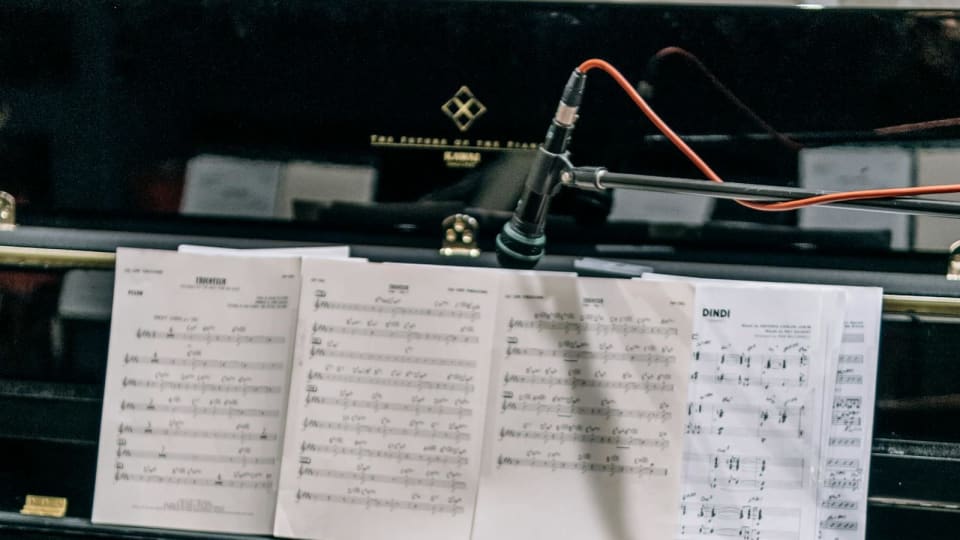
Photo: Weavehall Collective via Pexels
Why musicians are especially vulnerable to guilt around rest
Most occupations can generate burnout, but music has a particular trap: the work is tied to identity. Music students and professionals are often told, directly or indirectly, that serious people are always doing more. More listening. More practicing. More audition prep. More content. More networking. More output. More visibility. The industry has enough instability that the message never fully stops feeling rational.
Tuula Jääskeläinen’s 2022 synthesis on music students’ workload, stress, and coping is useful here because it shows how music training carries discipline-specific stressors: performance anxiety, perfectionism, career concerns, physical strain, and unequal workload pressures. Magdalena Rosset and colleagues' 2022 longitudinal study adds another crucial layer: music students often identify strongly with their professional path, work close to physical and mental limits, and study in conditions where stage exposure, pressure, and overuse are already normal. That is the perfect environment for rest to feel like betrayal instead of maintenance.
This is also why the mythology around heroic practice time is so unhelpful. The argument in 10,000 hours is a misleading idea matters here because burnout is often fueled by a distorted moral reading of effort. The musician does not merely think, “I need more practice.” They think, “If I rest, I am becoming less serious.” That is how recovery stops feeling earned unless you are already broken.
Burnout gets stronger when recovery has to justify itself. If rest only feels acceptable after injury, collapse, or visible failure, you are already operating inside the wrong logic.
What interrupts the pattern before it gets worse
The fix is not a vague reminder to “practice self-care.” Burnout is structural enough that it needs structural interruption. The goal is to reduce the number of places where pressure can quietly convert itself into constant activation.
| Pressure source | Small interruption that actually helps |
|---|---|
| Unstable schedule | Protect one or two non-negotiable recovery anchors each week: sleep window, meal time, day-off block, or no-screen evening |
| Overpractice | Set a stop rule before starting, not after fatigue has already scrambled judgment |
| Identity fusion | Keep one activity, relationship, or ritual that has no career utility at all |
| Social comparison | Limit exposure to metrics when you are already depleted or fragile |
| Online pressure | Separate creation time from posting time so promotion does not eat every open interval |
| Physical spillover | Treat pain, hand fatigue, and overuse as warning signs, not badges of commitment |
This is where several of our other pieces connect directly: why your hands hurt after practicing, piano injuries are more common than you think, and how to learn an instrument when you have a full-time job. They all push against the same bad idea from different angles: that serious musicians should keep expanding effort while shrinking friction, limits, and recovery.
Useful reframing
Rest is not the opposite of seriousness. In music, it is often the condition that keeps seriousness from mutating into self-damage.
Musician burnout is common not because musicians are weak, but because the field combines unstable work, emotional intensity, identity fusion, comparison, and public visibility in unusually concentrated ways. The right response is not shame. It is better pattern recognition.