
How to Use Practice Notes So They Actually Help Next Session
Most musicians don't have a note-writing problem. They have a note-reading problem — they journal diligently and never open it again. The fix is to write each note as an order to your next self, and to build the one trigger that makes you read it.
Pract.is Editorial
Research-based practice guidance for musicians from the Pract.is editorial team.

There's a particular kind of conscientious musician who writes a note after every practice session and never once reads one back. The notebook fills up. The app accumulates entries. And the next session still starts the way every session starts: sitting down, fingers on the keys, trying to remember where things were left and what to do about it. The notes were written. They just never did anything.
If that's you, the problem almost certainly isn't how you write your notes — there's solid advice on structuring them well, and we've written it in how to organize your practice notes. The problem is upstream of structure and much simpler: the notes are write-only. They get created and never consulted, which means all the effort of writing them buys you nothing. A note's entire value is unlocked at the moment you read it back, and for most people that moment never arrives. This post is about fixing that — making notes you'll actually open, and writing them so they're worth opening.
The write-only journal
Start by being honest about the failure, because naming it correctly points straight at the fix. The standard advice treats note-taking as a writing task: capture what happened, label the problem, record the plan. All good — but it quietly assumes the reading half takes care of itself, and it doesn't. A practice note is only ever useful as a message received, not a message sent. Written and never read, it's a diary entry: a record of your past, of mild therapeutic value and zero effect on tomorrow's playing. Your hands can't read your diary.
And the reading half fails for a reason that has nothing to do with discipline. Remembering to consult a note at the start of the next session is what psychologists call a prospective memory task — "remembering to remember" to do something in the future — and prospective memory is notoriously unreliable. The research of Gilles Einstein and Mark McDaniel shows that these intentions get retrieved only when there's a salient cue at the right moment to trigger them; without one, the intention simply never pops into mind. Here's the trap: the obvious cue, sitting down at your instrument, is the cue to play, not the cue to check your notes. So you sit, you play, and the note never crosses your mind until long after the session, when it's useless. Nothing was wrong with your memory. There was just no trigger.
"A note you never reopen isn't a practice tool. It's a diary entry — and your playing can't read your diary."
The only difference is whether the note gets read
Both musicians wrote a note. Only one of them gets anything back for it.
Write the note for the person who'll read it
Once you accept that a note is a message to a future reader, the question of how to write it answers itself: write for that reader. And that reader is a very specific person — it's you, tomorrow or next week, sitting down tired, with no memory of today's session, mild decision fatigue, and a strong urge to just play something familiar. That person does not want your feelings about how today went. They want to be told, plainly, what to do first. Most useless notes fail because they're written for the author in the moment — an emotional discharge — rather than for the reader who arrives later needing instructions.
The practical test is brutal and clarifying: could a slightly distracted stranger sit at your instrument, read the note, and know exactly what to do without asking you a single question? "The Bach was rough, felt frustrated" fails completely — it's a mood, not a move. A note that passes names the piece, points to the smallest specific location, and gives one concrete action. The shift is from recording the past to instructing the future, and it's mostly a matter of who you imagine reading it.
Notice that the good notes are barely longer than the bad ones. This isn't about writing more; it's about pointing at something. And keep it to one instruction that matters, not a list — the tired reader will act on a single clear order and ignore a wall of ten observations. If today threw up several problems, pick the one most worth starting with tomorrow and make that the note. The rest can stay in your detailed log; the note is the headline. (Choosing that one thing well is its own skill, the same one a good teacher uses, which we get into in reviewing your own practice like a teacher would.)
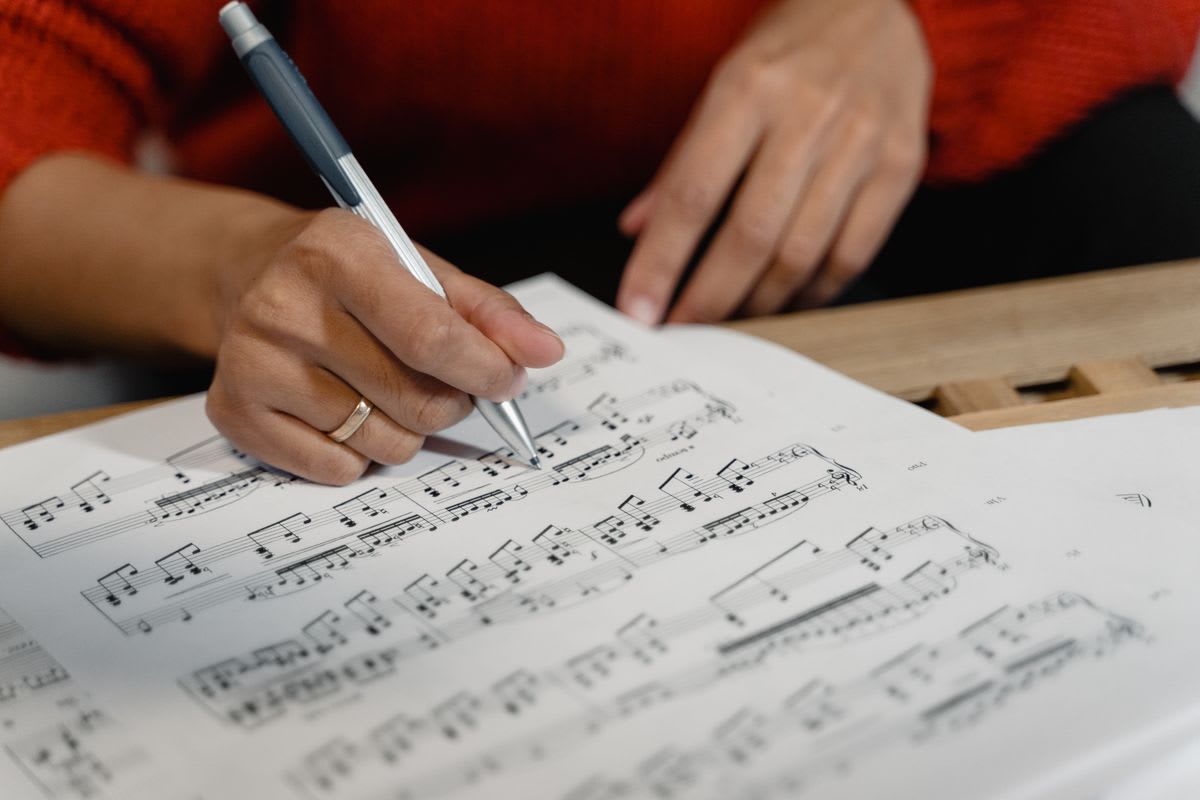
Build the trigger that makes you read it
A perfectly written instruction still does nothing if it's never opened, so the second half of the fix is engineering the trigger that the prospective-memory research says you need. The principle is called intention offloading: rather than relying on yourself to remember to check the note, you arrange the world so the note appears at the right moment without you having to remember anything. You're outsourcing the remembering to something more reliable than your in-the-moment brain — which is exactly what every good reminder system does.
In practice, that means making "read last session's note for this piece" the literal first action of the session — before the warm-up, before you play a single note. Not "I'll glance at it if I think of it," but a fixed opening ritual, the same way you'd put your keys on the same hook so you never hunt for them. The strongest version attaches the note to the piece itself, so that opening the piece surfaces the note automatically and the cue becomes impossible to miss. That's the specific job a piece-attached notes feature does in a tracker like our own app, Practis — so weigh that accordingly: you open tonight's piece and last session's instruction is right there waiting, no remembering required. But the principle matters more than the tool. A sticky note on the music stand, a card tucked in the score at the exact page, a notebook left open to today's entry — anything that puts the instruction in your eyeline at the start works, because it converts a fragile act of memory into an unmissable cue.
The open-first ritual
"Write the note for the tired, forgetful person who sits down tomorrow with no memory of today. They don't want your feelings. They want their orders."
Do those three things and the note stops being a thing you produce and abandon, and becomes a genuine handoff — the end of one session feeding directly into the start of the next. That hand-off is the whole point of taking notes in the first place, and it's the difference between a stack of practice sessions and a line of them that actually goes somewhere. If you're still deciding which format to keep all this in, the trade-offs between a log, a tracker, and a journal are laid out in practice log vs tracker vs journal.
Common questions
How long should a practice note be?
One sentence for the part that matters. A useful note names a piece, a specific spot, and one action — that fits in a line. You can keep a longer log of everything you noticed if you like detail, but the note your next session actually reads should be the single headline instruction, short enough to absorb in the two seconds before you start playing.
Should I write notes during the session or after?
A quick jot during, when you hit the problem and it's vivid, then one summarising instruction in the last half-minute before you stop. Writing the closing note while the session is still fresh is far more accurate than reconstructing it later, and it doubles as a natural cue to decide what tomorrow's starting point should be.
Is it worth noting good sessions, or only problems?
Note both, but make even the good ones actionable. "Felt great" helps no one; "Nocturne is performance-ready — next, add the repeat" turns a good session into a clear next step. The job of every note, win or struggle, is the same: tell your next self where to begin.
You probably don't need to write more notes, and you certainly don't need a more elaborate system. You need the notes you already write to be two things they usually aren't: instructions instead of feelings, and read instead of filed. Write the next one as a plain order to the tired person who'll sit down tomorrow, put it somewhere that person can't avoid seeing it, and open it before you play. Do that, and the note finally does the one job it was always supposed to do — carry today's work into tomorrow instead of leaving it behind.
More on practice tips.

Why Your Practice Time Is Lying to You (The Distribution Problem)
You practised the piece for 45 minutes. The timer agrees, and so does your memory. But "45 minutes on the piece" hides the only thing that matters — where in the piece those minutes actually went. And they almost always went to the wrong place.
Pract.is Editorial
Practice Tracking for Returning Musicians: Restarting Without the Guilt
The comeback rarely fails on the music — your hands recover faster than you think. It fails on the comparison: present-you measured against the best you ever were. Change the yardstick, and the guilt that makes returners quit again simply has nowhere to stand.
Pract.is Editorial
What a Good Week of Practice Actually Looks Like (With Real Numbers)
The imaginary good week is seven identical hours at the instrument. We pulled the real practice logs of Practis users to see what the good weeks actually look like — and they are shorter, lumpier, and far more forgiving than the fantasy.
Pract.is Editorial