
Practice Tracking for Returning Musicians: Restarting Without the Guilt
The comeback rarely fails on the music — your hands recover faster than you think. It fails on the comparison: present-you measured against the best you ever were. Change the yardstick, and the guilt that makes returners quit again simply has nowhere to stand.
Pract.is Editorial
Research-based practice guidance for musicians from the Pract.is editorial team.
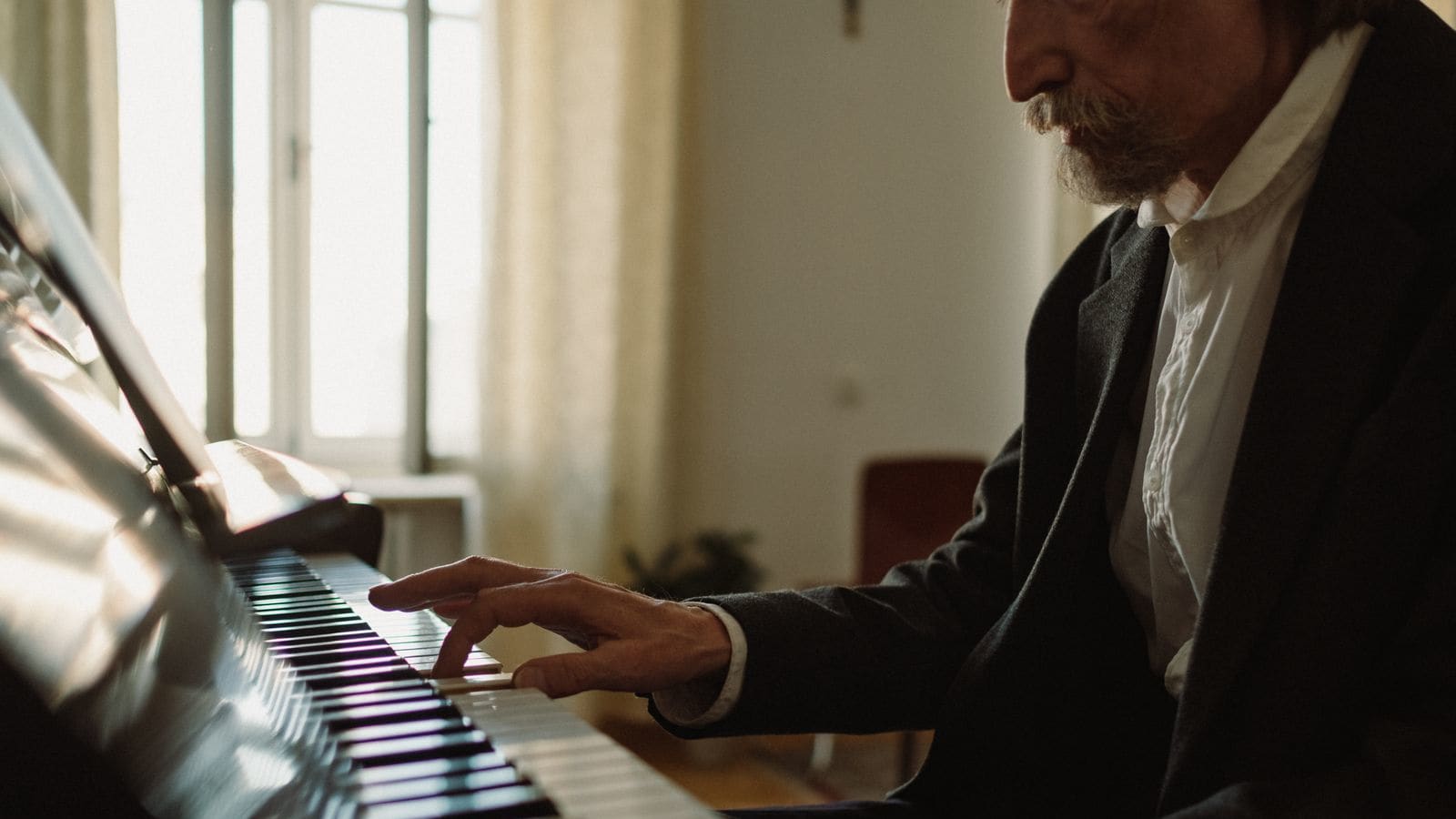
The first session back is almost always a small heartbreak. You sit down at the instrument you used to play well, you reach for something that was once easy, and your hands fumble through it like a stranger's. The sound that comes out is nothing like the sound in your memory. And the feeling that floods in isn't curiosity or rust — it's guilt. I used to be able to do this. I let it go. Look how far I've fallen.
That feeling, far more than any difficulty in the music, is what ends most comebacks. People don't quit again because the notes are too hard; they quit because every session is a fresh reminder of a loss, and nobody volunteers for daily grief. But the guilt rests on a premise that is simply false, and once you see the error, the whole emotional weight of restarting lifts. Your hands are not the problem. Your yardstick is.
It isn't gone — the science of coming back fast
Start with the fact that should change everything: the skill you think you lost is mostly dormant, not erased, and it comes back far faster than it went in. This is one of the oldest findings in memory research. When Hermann Ebbinghaus studied forgetting, he also measured relearning, and found that material which seemed completely gone took dramatically less time to relearn than it took to learn the first time — a phenomenon he called savings. Your years of practice didn't evaporate. They left a deep groove that re-forms quickly the moment you start playing again.
Motor skills are especially durable this way; the procedural memory that drives your fingers is among the most persistent kinds of memory we have. That's why returning players are so often astonished by week three or four, when passages they couldn't stumble through on day one suddenly flow again. You're not relearning the instrument from zero. You're reactivating something that was only ever sleeping, and the reactivation is quick precisely because of all those years you're busy feeling guilty about. We made the fuller case for how dormant skills revive cheaply in the practice tracker as a memory aid — the same savings that keep old repertoire recoverable are what bring a whole instrument back.
"You're not bad at your instrument again. You're measuring a beginner's week against a virtuoso's memory."
The guilt is a measurement error
So if the skill is coming back, why does it feel like failure every night? Because of what you're comparing yourself to. The returning musician anchors on a single, merciless reference point: their past peak. The seventeen-year-old who played the Chopin, the version of you at the height of your conservatory years, the best you ever sounded. Every present session gets measured against that ghost — and against a peak, today's playing will always read as a deficit, even on a day you genuinely improved. You've quietly set up a comparison you are guaranteed to lose, and then you're surprised that you feel like a loser.
That self-criticism isn't just painful; it's actively sabotaging the comeback. The research of Kristin Neff, across hundreds of studies, finds that self-compassion is a far more effective motivator than self-criticism: people who treat themselves kindly after a setback set more ambitious goals and persist longer, while self-critical people are the ones who give up. Neff's work also ties self-compassion to mastery goals — the intrinsic drive to grow — rather than the approval-seeking that fuels the "I should already be good" spiral. Beating yourself up for being rusty doesn't toughen you into practising. It just makes the instrument the place where you feel bad, and people stop going to places where they feel bad.
The same playing, two verdicts
Your playing tonight is identical on both paths. The reference point you pick is the entire difference between quitting and continuing.
Tracking gives you a new yardstick — and a clean slate
Here's where something as unglamorous as a practice log becomes the most useful psychological tool you have. The single most powerful move a returning musician can make is to change the reference point from past peak to restart baseline — to start measuring against last week instead of against the best you ever were. And to do that, you need a record of last week, which is exactly what tracking from day one gives you. Once you can see that this week's tempo on a passage beat last week's, that you logged four days instead of two, that the piece you couldn't read on day one is now half-learned, the story flips from decline to climb. Because of savings, that climb is steep — so the feedback a tracker shows a returner is unusually, encouragingly good.
There's a deeper psychological mechanism here too, and it has a name. The fresh-start effect, documented by Hengchen Dai, Katherine Milkman, and Jason Riis, shows that temporal landmarks — a new week, a birthday, any felt "new beginning" — boost motivation by relegating past imperfections to a previous chapter, letting people psychologically separate the present self from the past self. Opening a brand-new practice log is a deliberate version of exactly that landmark. It draws a line: the lost years go in the old account, closed and forgiven; the new account opens at zero and only ever goes up. You are no longer the protagonist of a story about decline. You're on day one of a new one.
This is the genuine, non-gimmicky reason a tracker helps a comeback, and it's part of what we built Practis to do — so weigh that accordingly: a clean baseline from your first session back, and a visible upward line that measures you against the returning you, never the ghost. The tool matters only because it makes the better yardstick effortless to keep; a fresh notebook started today does the same job. What matters is that you stop carrying the old account's debt into the new one.
"Don't reopen your old account, with all its debt. Start a new one — and watch it only ever climb."

How to restart without the guilt
The reframe is the hard part; the practice that follows from it is simple. A few deliberate choices keep the comeback on the kind side of the line, where it survives.
Five moves for a guilt-free restart
If you want the practical mechanics of resuming — what to play first, how to rebuild technique, how to handle the physical rust — that's its own subject, and we cover it in how to come back to an instrument after years away and how to restart after months or years away. This piece is about the part those guides can't do for you: refusing to measure your first weeks back against a memory, so you actually stay long enough for the savings to show.
Common questions
How long until I'm back to my old level?
Sooner than the first week suggests, and that's the wrong question anyway. Because of savings, the early recovery is fast — many players feel substantially back within a few months of consistent, modest practice — but fixating on "my old level" just reinstalls the past-peak yardstick that causes the guilt. Aim at being better than last week. The old level arrives on its own while you're not staring at it.
I feel embarrassed playing so badly compared to before. Is that normal?
Completely — it's the single most common feeling among returning musicians, and it fades fast once you stop feeding it. The embarrassment comes entirely from the comparison to your former self; nobody else is making it, and you don't have to either. Treat the rust as information, not indictment, and it loses its sting within a few sessions.
Should I get a teacher again, or just play on my own?
Either works for the comeback itself, so choose by what keeps you coming back. A teacher adds structure, accountability, and an outside ear that won't compare you to your past; playing alone keeps it low-pressure and entirely yours. If the guilt is loud, a kind teacher who meets you where you are now can be worth it for the reframing alone — but plenty of people rebuild beautifully on their own with nothing but a log and a forgiving yardstick.
The years you spent away from the instrument are not a debt you have to repay before you're allowed to enjoy it again. They're the deposit that makes the comeback fast. Stop measuring this week against the best you ever were — that person isn't gone, they're just on a later page you haven't rewritten yet. Measure against last week instead, watch the line climb the way savings guarantees it will, and let the guilt go exactly where the lost years went: into a closed account you never have to open again.
More on practice tips.

Why Your Practice Time Is Lying to You (The Distribution Problem)
You practised the piece for 45 minutes. The timer agrees, and so does your memory. But "45 minutes on the piece" hides the only thing that matters — where in the piece those minutes actually went. And they almost always went to the wrong place.
Pract.is Editorial

How to Use Practice Notes So They Actually Help Next Session
Most musicians don't have a note-writing problem. They have a note-reading problem — they journal diligently and never open it again. The fix is to write each note as an order to your next self, and to build the one trigger that makes you read it.
Pract.is Editorial

What a Good Week of Practice Actually Looks Like (With Real Numbers)
The imaginary good week is seven identical hours at the instrument. We pulled the real practice logs of Practis users to see what the good weeks actually look like — and they are shorter, lumpier, and far more forgiving than the fantasy.
Pract.is Editorial