
Will AI Replace Working Musicians? Where the Risk Is Real — and Where It Isn't
AI is not threatening every music job equally. The highest risk sits in generic, low-context, low-budget work; the lowest in relational, custom, high-trust work.
Pract.is Editorial
Research-based practice guidance for musicians from the Pract.is editorial team.
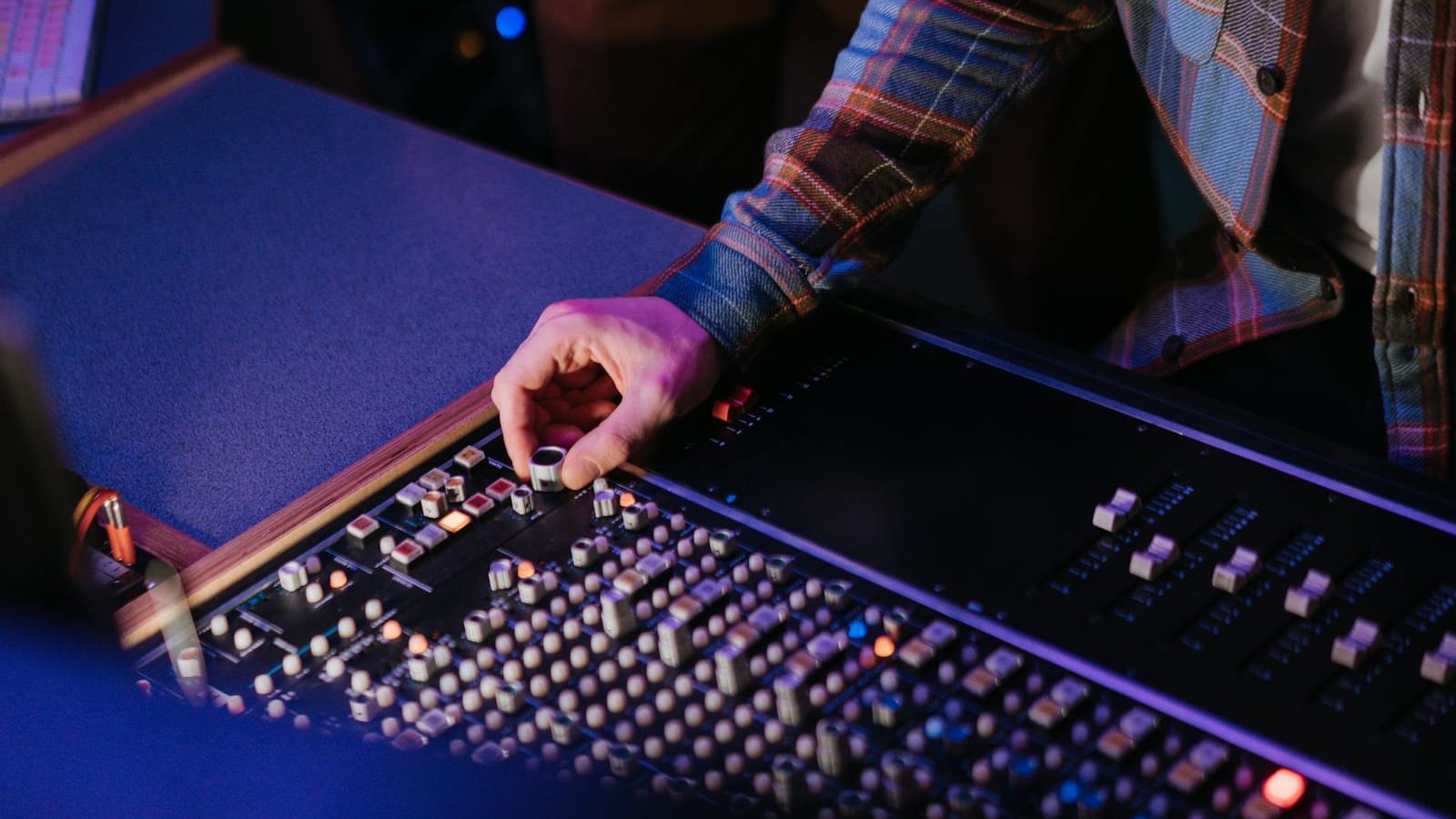
AI is more likely to replace a cue than a collaborator. That is the simplest honest answer. The risk is not spread evenly across “musicians” as one giant category. Some jobs are built around fast, generic, good-enough output. Others depend on taste, trust, revision judgment, and a human relationship that the client is explicitly paying for.
That distinction matters because the public conversation is still too blunt. “Will AI replace musicians?” sounds like a yes-or-no question. It is not. It is really a job-shape question. The more anonymous, template-driven, low-budget, and low-context the work is, the more pressure it is under. The more custom, relational, and responsibility-heavy the work is, the less convincing full replacement becomes.
One important caveat up front: there is not yet a clean public labor dataset that breaks AI risk down neatly by stock composer, session player, teacher, and arranger. So parts of this map are an inference from current tool capabilities, official market data, and how these jobs actually work. The inference is still useful, and I think it is much closer to reality than the vague “AI will replace everyone” line.
The real divide is not prestige. It is job shape.
The strongest current macro signal comes from CISAC’s 2024 global study with PMP Strategy. The headline number is already serious: under current conditions, 24% of music creators’ revenues are projected to be at risk by 2028. But the more revealing detail is where the substitution pressure is expected to land. CISAC says Gen AI music could account for around 20% of streaming-platform revenues and roughly 60% of music-library revenues by 2028.
That last number is the giveaway. Music libraries are not the same thing as every other music job. They are one of the most template-compatible parts of the market: mood-driven, metadata-friendly, brief-led, often anonymous to the end listener, and frequently bought on speed and fit rather than on a specific artist identity. That is exactly the kind of work current systems pressure first.
| Work type | Risk now | Why the pressure differs | What still protects humans |
|---|---|---|---|
| Stock music / production libraries | High | Buyers often want searchable mood-fit assets with fast turnaround | Brand trust, licensing clarity, and premium custom work |
| Low-budget commercial and social content cues | High | Good-enough music can beat bespoke music when budgets collapse | Campaign-specific taste, brand sensitivity, legal confidence |
| Draft arranging / mockups / demo parts | Medium | AI can generate fast placeholders and rough sections cheaply | Real orchestration judgment, editability, and problem-solving |
| Session work | Medium to low | Entry-level or generic overdub tasks face more pressure than high-trust sessions | Speed in the room, taste under direction, interpretation, reliability |
| Teaching | Low | Learning is feedback, adaptation, accountability, and motivation, not just correction | Dialogue, diagnosis, emotional reading, tailored next steps |
This is the right place to connect the macro data with the craft argument from what AI still gets wrong inside the music. The more a job can accept generic plausibility, the more exposed it is. The more it depends on judgment that unfolds with a client or student in real time, the weaker the replacement case becomes.
Where the risk is real already
The highest-pressure zone is work where the buyer is not attached to you as a musician. They just need a usable result. Stock music is the cleanest example, and CISAC’s projection about music libraries makes that explicit. But the same logic extends to a lot of low-budget commercial work: social clips, background underscore for internal videos, quick mood beds, podcast cues, temp tracks, and generic creator content where the brief is simple and the budget is unforgiving.
Current tools are increasingly designed for exactly that market. Suno’s own materials openly pitch AI music for social media, video production, and commercial use. Suno Studio says it can generate AI stems that integrate with existing tracks, “eliminating the need for sample libraries or additional musicians” in some workflows, which is not a subtle signal about where the company sees value. That does not mean human composers disappear. It does mean the lowest-margin part of the market becomes easier to undercut.
Volume is the second pressure point. Deezer said in January 2026 that it was receiving more than 60,000 fully AI-generated tracks per day, or about 39% of daily uploads. Even if much of that material is junk, the economic effect is still real: flood enough cheap supply into the system, and parts of the market that run on abundance rather than authorship start getting cheaper.
My strongest inference from the current evidence: the most vulnerable music jobs are the ones where the client would happily trade personality for speed, and depth for cost control.
The LANDR survey of 1,241 music makers helps here too. It found that 87% use AI somewhere in their workflow, and 29% are already using song generators at some stage, especially for parts rather than complete tracks. That is not proof of replacement by itself, but it is proof that “I’ll just get a draft from AI first” is already becoming normal behavior. Draft-first behavior is exactly what eats away at entry-level paid work.
Where the risk is partial, not total
Arrangement and session work sit in the middle. There is real pressure here, but it is not uniform. If a client mainly needs a fast demo, a rough string pad, a mockup horn section, or a serviceable background layer, AI can already take a meaningful bite out of that market. That is especially true when the arranger or player was being hired mostly to create a placeholder.
But that is not the whole category. Good arrangers do more than fill space. They solve balance problems, write around the real strengths and weaknesses of an ensemble, protect the vocal, manage transitions, and decide what not to add. Good session players do more than provide a tone sample. They make fast musical decisions under direction, fix phrasing in context, offer better options, respond to the producer’s language, and stay reliable under time pressure.

Photo: cottonbro studio via Pexels

This is why I would split session and arranging work into two layers. Commodity draft work is under real pressure. Trusted interpretive work is not. If your value is “I can generate a plausible pad quickly,” the market is moving against you. If your value is “I make the producer’s vague note musically actionable in ten minutes and save the session,” the replacement story is much weaker.
It is also why some distribution policies cut both ways. LANDR’s current guidance says it accepts AI-assisted music but places limits on AI-generated releases, and notes that some platforms still restrict or reject this material. That does not stop AI from pressuring work-for-hire markets, but it does mean the path from generated draft to frictionless commercial exploitation is not equally smooth everywhere.
Where AI is weakest as a replacement
Teaching is the clearest example. Music teaching is not just note correction. The strongest educational literature on music feedback keeps returning to dialogue, adaptation, and the learner’s mental state. McPherson, Blackwell, and Hattie’s Feedback in Music Performance Teaching is explicit about this: meaningful progress depends on feedback that helps the student know “where to next,” not just whether something was right or wrong.
That matters because even the best current AI teaching tools still frame themselves as assistants inside a broader human learning ecosystem. ROLI’s own AI Music Coach page says the goal is to grow, not reduce, demand for human music teachers, and argues that learning music from others will remain central. That is vendor positioning, not neutral research, but it is still revealing. Even a company selling an AI coach knows the clean replacement story is weak once learning becomes deeply personal, emotional, and adaptive.
Hard to replace
One-to-one teaching
Diagnosis, accountability, psychology, pacing, and trust are part of the job, not side features.
Hard to replace
Custom session leadership
Real sessions reward taste under pressure, communication, and immediate musical judgment.
Hard to replace
High-context arranging
The more the arranger is solving for ensemble, room, singer, and story, the less generic automation is enough.
This is also where our earlier pieces stay relevant. What musicians actually want from AI points toward assistive tools, not identity replacement. And what AI feedback tools can and cannot detect shows why measuring notes is not the same as teaching a musician how to think, listen, and adapt.
What working musicians should do now
If a large part of your income comes from music-library work, generic cue writing, or fast draft production, the risk is real enough that pretending otherwise is a mistake. The smart response is not panic. It is repositioning. Move up the chain where possible: more custom briefs, more revision-sensitive work, more direct client trust, more human communication, more identifiable taste. The less interchangeable your deliverable is, the safer you are.
If you teach, arrange, or play sessions, the task is different. You do not need to outrun AI on speed alone. You need to make the human part of your work legible. Spell out the diagnosis. Show the revision thinking. Show the musical alternatives. Make the client or student feel what they would lose if the relationship were replaced by a button. A lot of musicians already do this instinctively. They just do not always market it clearly.
And if you are early in your career, the uncomfortable truth is that some entry-level paid work will get thinner before it gets thicker. That is usually where automation bites first. But those same tools also make it easier to learn production, make better demos, and build hybrid skills. So the goal is not purity. It is to avoid staying trapped in the most replaceable layer of the market.
Will AI replace working musicians? Some, in some jobs, partly. Not evenly. Not all at once. And not most convincingly where music still depends on responsibility to another human being.
More on science.
AI × Music in 2026: The Living Guide to Suno, Udio, Copyright, and Licensing
AI music in 2026 is moving from open generation toward licensed systems. Here is the current Suno, Udio, copyright, and release-rights picture.
Pract.is Editorial

Why A=440 Hz Is the Standard (and the A=432 Hz Myth)
A=440 became the global standard for practical reasons: coordination, manufacturing, and broadcasting. A=432 is a valid preference, but the bigger healing claims do not hold up cleanly.
Pract.is Editorial

Why Real Instruments Still Matter in an AI Music Era
Real instruments still matter because music is not just output. It is touch, timing, visible effort, feedback from the instrument, and the shared response of people in the room.
Pract.is Editorial