
Why A=440 Hz Is the Standard (and the A=432 Hz Myth)
A=440 became the global standard for practical reasons: coordination, manufacturing, and broadcasting. A=432 is a valid preference, but the bigger healing claims do not hold up cleanly.
Pract.is Editorial
Research-based practice guidance for musicians from the Pract.is editorial team.

A=440 is a convenience standard, not a law of nature, and A=432 is not a hidden upgrade to music. That is the short answer. The longer answer is more interesting because it explains why pitch standards got so messy, why 440 won, and why so many 432 arguments keep mixing together history, acoustics, temperament, and wellness marketing as if they were the same thing.
This topic keeps resurfacing because it sounds deeper than it is. People hear that 440 was "imposed," that 432 is "natural," or that one number heals while the other disturbs. The real history is much less cinematic. It is mostly about singers, instrument makers, broadcasters, and the basic need for ensembles in different places to agree on the same note.
Current ISO standard
ISO 16 still specifies the note A in the treble stave at 440 Hz.
Actual pitch gap
A=432 sits 8 Hz lower than A=440, or about 32 cents flatter.
What changes
The whole piece shifts lower if you keep the same temperament. The intervals do not become magically purer.
What does not follow
Small pilot studies do not justify sweeping claims about DNA repair, cosmic alignment, or unique healing power.
| Question | A=440 | A=432 |
|---|---|---|
| What is it? | The current international reference pitch standard | An alternative lower reference pitch |
| What changes? | Nothing if you stay at standard concert pitch | The entire piece sits slightly lower in absolute pitch |
| Does temperament change automatically? | No | No |
| Is there strong evidence for unique healing effects? | No special claim attached to the number itself | No strong evidence for the bigger claims |
What A=440 actually means
A=440 does not mean "music is tuned to 440 Hz" in some totalizing sense. It means one reference note, the A above middle C, is fixed at 440 vibrations per second. From there, the rest of the instrument is tuned relative to that reference. NIST's summary is the cleanest simple version: A440 is the internationally recognized standard for musical pitch, and NIST has even broadcast it from WWV since 1936.
This is where online conversations often go wrong first. Reference pitch is not the same thing as temperament. Reference pitch answers, "Where is this A?" Temperament answers, "How are the intervals across the scale distributed?" You can set A to 440 or 432 and still use equal temperament in both cases. Britannica's tuning-and-temperament overview is useful here because it separates the absolute pitch question from the interval-layout question that people often mash together.
That matters because many 432 arguments quietly promise more than a pitch shift. They imply a different harmonic truth, a more natural interval system, or a secret restoration of order. But if you simply retune an equal-tempered keyboard from 440 to 432, the compromise structure of equal temperament remains exactly that: a compromise structure. The whole keyboard just sits lower.
What retuning from 440 to 432 actually changes
Reference A drops
A4 moves from 440 Hz to 432 Hz
Every note shifts down
the whole piece becomes slightly lower in absolute pitch
Intervals stay
if temperament is unchanged
Feel may change
because the register is lower
Magic does not appear
a new reference pitch is not a new physics
Why pitch standards had to be standardized at all
Before A=440, pitch was not one stable civilized constant waiting to be rediscovered. It varied a lot. Britannica's pitch history sketches the mess clearly: for decades there was a confusing variety of local standards, and by the nineteenth century the pitch level had also crept upward enough to create real practical problems. Singers hated the strain, wind instruments went obsolete faster, and moving between cities or institutions meant finding out that "the same" A was not actually the same A.
The article also gives the rough sequence people need to know. An international commission in Paris in 1858-59 adopted diapason normal at A=435. England later adopted a New Philharmonic Pitch at A=439 in 1896. By 1939, A=440 was adopted as the U.S. standard. None of that sounds mystical because it was not. It was administrative, musical, and industrial.
That older mess is the reason the modern conspiracy versions fall apart so quickly. If you start from the actual history, 440 does not appear as a sinister break with an ancient 432 golden age. It appears as one stop in a long, untidy process of trying to keep instruments, voices, and institutions aligned. That is much less dramatic, but it is also what the historical record shows.
1859
Paris adopts A=435 as diapason normal, a practical compromise after decades of pitch inflation.
1896
England adopts A=439, the so-called New Philharmonic Pitch.
1936-1939
NIST begins broadcasting A440, and 1939 marks the modern adoption of A=440 as the U.S. standard pitch.
1955 / 1975
ISO formalizes the standard, and ISO 16:1975 still specifies A at 440 Hz.
Why 440 won
440 won because standardization solves annoying real-world problems. It helps instrument makers build to the same reference, helps broadcasters distribute the same reference, and helps ensembles from different places avoid spending half their rehearsal discovering that their "concert pitch" is incompatible. ISO 16 is dry reading, but that dryness is the point. It is a standards document, not a manifesto.
NIST's A440 entry points in the same direction. The U.S. time-and-frequency service started broadcasting 440 in 1936 so orchestras and tuners could use it as a reference. That is almost painfully practical. No cosmic warfare. No secret ideological plot. Just a broadcast standard for getting people tuned to the same note.
This is also where the 432 advocates sometimes oversell the historical angle. Lower pitches did exist. So did higher ones. But that is not the same as proving that 432 was the universal, original, or naturally ordained answer. The stronger historical claim is narrower and more defensible: lower pitch standards were common, pitch inflation was a real problem, and standardization was a compromise. That is enough. It does not need numerology added to it.
If you want the musician-facing version of this instead of the history-facing one, the best companion reads are our broader classical-apps stack and our metronome-context guide. Both point at the same practical reality: serious players routinely work with adjustable reference systems because real music making is full of context, not one eternal number.
What the A=432 claim gets right, and what it gets wrong
The part it gets right is simple. Music at A=432 really is lower than music at A=440. Some listeners and players genuinely prefer that slightly darker or softer register. That preference is real. It does not need to be mocked. If a singer feels more comfortable, a pianist likes the color, or a producer wants the aesthetic, that is a legitimate musical choice.
The part it gets wrong is the leap from "different" to "proved superior." In modern equal temperament, retuning from A=440 to A=432 lowers every pitch by the same ratio. The difference is about 31.8 cents, just under a third of a semitone. That can change the feel of a track. It does not prove that the new reference pitch is more aligned with nature, more mathematically truthful, or uniquely healing.
A second common mistake is confusing 432 with a different tuning system altogether. People often mix A=432, C=256, just intonation, Pythagorean tuning, and "natural harmonics" into one blended story. They are not the same thing. In fact, if you insist on C=256 within modern equal temperament, A does not land neatly at 432 anyway. This is one reason the online rhetoric gets slippery so fast: it depends on swapping definitions mid-argument.
| Claim about 432 | What is reasonable | What overreaches |
|---|---|---|
| "It sounds warmer." | Yes, many people may prefer the slightly lower register. | No universal superiority follows from that preference. |
| "It is more natural." | It is a lower reference pitch, and some musical situations may suit it. | "Natural" is usually asserted, not demonstrated. |
| "It changes the tuning system." | It changes the reference pitch. | It does not automatically turn equal temperament into something else. |
| "It heals the body." | Some small studies report modest physiological differences. | That is nowhere near proof of broad healing claims. |
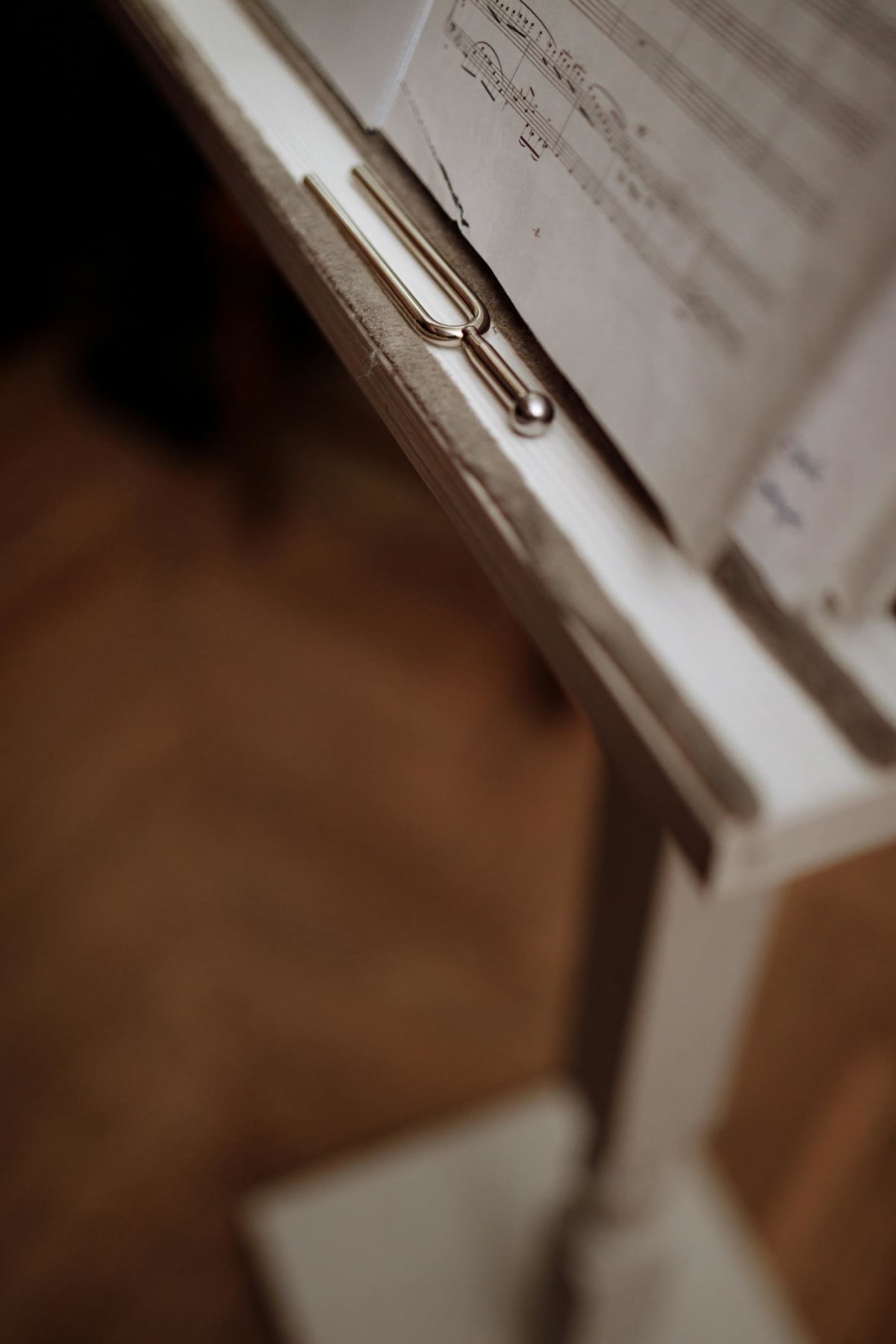
Photo: Thirdman via Pexels
What science actually says about the healing claims
This is where the honest answer gets narrower. There are a few studies comparing music tuned to 432 and 440. Some report small differences in heart rate, blood pressure, sleep, or subjective relaxation. But the literature is small, the designs are often pilot or crossover studies, and the claims circulating online are much larger than the evidence base can support.
The 2019 double-blind crossover pilot study indexed on PubMed found that 432-tuned music was associated with a lower mean heart rate than 440 in one listening context. That is interesting. It is not the same as proving special healing power. The 2025 randomized cross-over trial in BMC Complementary Medicine and Therapies is similarly careful in tone: it discusses purported benefits, notes the thin empirical base, and calls for more extensive trials. That is what actual research language looks like when a field is still tentative.
The biggest problem is scale mismatch. Online claims talk about DNA repair, cosmic resonance, and uniquely therapeutic frequencies. The studies talk about small physiological or subjective differences under controlled conditions, if they find differences at all. Those are two very different levels of claim. A cautious reading of the evidence leaves room for "some listeners may respond differently to slightly lower tuning" and little room for "432 is the frequency your body was meant to hear."
This is also one place where musicians should raise their bar. If a claim depends on mystical arithmetic, a conspiracy story about why 440 was chosen, or the idea that one pitch number flips a song from harmful to healing, the burden of proof should be high. It is fine to prefer 432. It is not fine to pretend preference is proof.
Why musicians still use other reference pitches anyway
Rejecting the myth does not mean pretending 440 is the only pitch musicians ever use. It is not. Historically informed performance often works lower. Some professional orchestras work above 440. The 2025 BMC study comparing 432 and 443 notes that 443 is a common concert pitch in German professional orchestras. That alone should kill the idea that modern performance is locked to one exact sacred number.
Musicians change reference pitch for concrete reasons: ensemble tradition, singer comfort, instrument design, historical repertoire, hall response, or plain aesthetic choice. That is normal. It is no stranger than the practical choices discussed in our intonation guide for non-fixed-pitch instruments or the reference discipline in our metronome article. Standards are tools. They help until a context gives you a reason to choose a different tool.
Can most people hear the difference between 440 and 432?
Some can notice it, especially with direct comparison, but the gap is small. The 2025 BMC paper even notes that a larger 432-versus-443 difference is not noticeable to the average listener in ordinary terms. That does not mean nobody hears anything. It means the dramatic online language usually outruns the perceptual reality.
Is 432 the same as just intonation or scientific pitch?
No. People often combine them rhetorically, but they are different ideas. A reference pitch sets where one note sits. A temperament defines interval relationships across the system. Mixing them is one of the main reasons 432 discussions become so confusing so quickly.
So should musicians ever use 432?
They can, if they like the sound or if the context calls for it. The case for 432 as an artistic preference is perfectly defensible. The case for 432 as a uniquely true, natural, or medically superior frequency is much weaker.
A=440 became the standard because standardization is useful. A=432 remains available because musical preference never disappeared. The clean way to think about this is simple: use 440 when you need the shared reference, use 432 if you prefer the lower pitch, and stop pretending the choice turns ordinary tuning practice into metaphysics.
More on science.

AI × Music in 2026: The Living Guide to Suno, Udio, Copyright, and Licensing
AI music in 2026 is moving from open generation toward licensed systems. Here is the current Suno, Udio, copyright, and release-rights picture.
Pract.is Editorial

Why Real Instruments Still Matter in an AI Music Era
Real instruments still matter because music is not just output. It is touch, timing, visible effort, feedback from the instrument, and the shared response of people in the room.
Pract.is Editorial

Why Gen Z Keeps Finding Classical Music Online
Gen Z is not stumbling into classical music by accident. Clips, study playlists, gaming scores, and internet-native creators have built a much easier path into the genre than classical institutions used to offer.
Pract.is Editorial