
What Musicians Actually Want from AI in 2026
Most musicians are not asking AI to replace the core creative job. They want AI to save time, improve feedback, respect consent, and stay inside human control. That is the real 2026 demand signal.
Pract.is
Research-based practice guidance from the Pract.is team.

The AI music conversation is still stuck on the wrong question. The loud question is whether AI can replace musicians. The more useful one is what musicians actually want from AI when they are trying to practice, produce, teach, rehearse, edit, and release music.
My read on 2026 is simple: most musicians do not want a button that dissolves authorship and spits out finished songs. They want AI that removes friction, gives better feedback, respects consent, and leaves the human clearly in charge of the musical point of view.
Source note: this piece was written on March 16, 2026 from current official and primary sources, including CISAC's creator-rights study and policy material, the current official pages for Moises, LANDR AI Mastering, ROLI AI Music Coach, and BandLab SongStarter. There is no single perfect survey that answers the title question cleanly, so some of the broader market reading here is an inference from creator-rights data, current product directions, and what kinds of tools musicians are actually being asked to use.
The pattern is not mysterious
When you strip away the hype, the current demand signal looks like this:
| What musicians mostly want | Why it matters | Current examples |
|---|---|---|
| Consent, disclosure, and payment | Because creators do not want their work absorbed into black-box systems without permission | CISAC's 2024 creator-rights survey and policy push |
| Help with tedious technical work | Because stem extraction, key detection, cleanup, and rough mastering save real time | Moises, LANDR |
| Better learning and practice feedback | Because musicians want clearer loops between action and correction | ROLI AI Music Coach, performance-analysis tools |
| Optional ideation under human control | Because sketches are useful; outsourced identity is not | BandLab SongStarter |
| Tools that fit real workflows | Because musicians want less friction, not another walled garden | Assistive AI inside practice, production, and editing workflows |
That is a much narrower and much more sensible list than the usual “AI will make all music” sales pitch.
1. Rights first, features second
This comes before every product conversation. CISAC's global creator survey could not have been much clearer: according to the organization's published results, 95% of creators want transparency obligations, 93% want authorization before copyrighted works are used by generative AI models, 91% want remuneration, and 99% say AI outputs should declare significant use of copyrighted works.
Those are not fringe numbers. They tell you something basic about the market mood. Musicians are not only asking, “Can this tool save me time?” They are also asking, “Was my catalog used without permission?” and “If value is being created from human work, where does the money go?”
That is why the argument over licensed models matters, even if licensed generative music is not what most working musicians are personally looking for day to day. It is a governance question first. If you want the details on that shift, read our explainer on the Suno and Udio licensing deals.
2. Musicians do want AI for the boring, technical, time-heavy jobs
When musicians say yes to AI, the yes is usually practical.
Moises is a good example of that practical lane. Its current official feature list centers on audio separation, chord recognition, key and BPM detection, transposition, metronome and count-in tools, and lyric transcription. That is not a fantasy of AI replacing musicians. That is a toolkit for getting from raw audio to usable practice or production information faster.
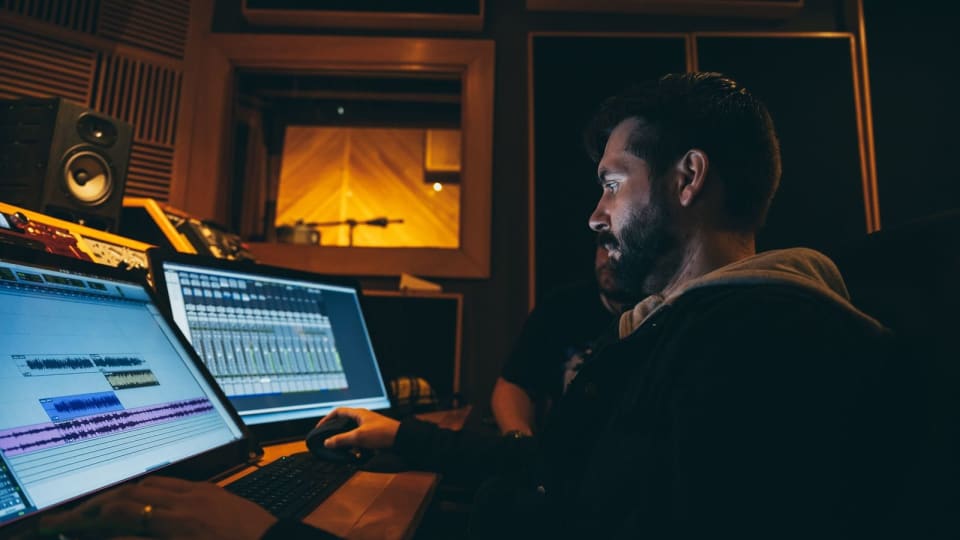
LANDR sits in the same bucket from the finishing side. Its current official page still leads with AI Mastering as a way to get release-ready sound quickly. Again, the appeal is obvious: musicians are often happy to let software accelerate repetitive or technical work, especially when the alternative is time they do not have.

Photo: MART PRODUCTION via Pexels
This is the part of the AI market that makes the most sense to me: replace friction, not authorship. Separate the stems. Pull the chords. Rough-master the demo. Help me prep the session. Do not pretend that generating a finished artist identity from a prompt is the same category of need.
3. Feedback is more interesting to musicians than replacement
One of the strongest 2026 signals is that musicians are more interested in AI that responds to what they actually do than AI that simply generates content at them.
ROLI's AI Music Coach is a good example. Its current official page emphasizes real-time spoken guidance, mistake identification, adaptive lessons, and suggestions for what to improve next. Whether the product fully delivers on that promise is a separate question. The important market signal is the target itself: musicians want better feedback loops.
That fits the broader pattern across music education and practice tech. A lot of players would happily accept AI help with note/rhythm feedback, posture tracking, repetition analysis, or smarter diagnosis of what to work on next. They are much less excited by AI that skips the whole learning process and hands them a synthetic result.
That is also why I think the most durable AI music tools will look more like coaches, analyzers, editors, and assistants than fake artists. If you want the current limits of that category, pair this with our breakdown of what AI music feedback tools can and cannot really detect.
4. Musicians will accept ideation tools more easily than identity machines
There is still a real place for AI-assisted ideation. The point is that ideation is not the same thing as authorship.
BandLab SongStarter is a useful example of the softer, more acceptable end of AI music assistance. The current official page describes it as a tool that generates royalty-free ideas and lets users fine-tune them through controls for genre, mood, and tempo. That is a very different proposition from “replace the songwriter.” It is closer to a sketchbook, a prompt deck, or a jump-start when the session is cold.
Some musicians will still hate that category. Fair enough. But it is much easier to see why someone might tolerate or even enjoy AI that helps them generate a starting texture than AI that claims to generate a whole artistic identity on command.
The cultural backlash is a clue here. The biggest resistance is not against every assistive use of machine learning. It is against the collapse of authorship, trust, and credit. That is the same fault line running through AI songs charting on Billboard and the broader creator-rights fight.
5. What musicians mostly do not want
There are exceptions, obviously. Some people genuinely do want full prompt-to-song generation. But if you look at the creator-rights data and the categories of tools that keep making practical sense, the things musicians mostly do not want are pretty consistent.
- They do not want invisible training pipelines. Consent and licensing remain the baseline issue.
- They do not want AI to erase the value of human musical identity. Style, taste, authorship, and interpretation are not the “boring parts.”
- They do not want hype dressed up as workflow. A feature is only useful if it removes a real bottleneck.
- They do not want more friction. If the tool creates more checking, more cleanup, or more uncertainty than it saves, it fails the test.
This is why I think the winning AI music products in 2026 are not the ones that imitate musicians most aggressively. They are the ones that understand where musicians already lose time, money, confidence, or clarity, and then fix that specific leak.
If you want the trade-show version of the same idea, the NAMM 2026 AI piece makes a similar argument from the product-launch side. This article is the demand-side version.
FAQ
Are musicians anti-AI in 2026?
Not in any simple way. Many are strongly against unlicensed training, weak disclosure, and replacement narratives. Many are also perfectly happy to use AI for editing, cleanup, transcription, mastering, or feedback if the tool is honest and useful.
What AI music tools are actually useful right now?
The useful category is mostly assistive: stem separation, chord and key detection, rough mastering, transcription, practice feedback, and constrained ideation. Those solve real workflow problems without pretending to replace musicianship itself.
Will licensing deals solve the trust problem?
They help, but they do not solve everything. Licensing addresses one major rights issue. It does not automatically answer attribution, disclosure, cultural trust, artistic value, or whether the tool is actually useful to working musicians.
The AI tools musicians keep are the ones that give time back without taking authorship away. That is the real line.
More on science.
AI × Music in 2026: The Living Guide to Suno, Udio, Copyright, and Licensing
AI music in 2026 is moving from open generation toward licensed systems. Here is the current Suno, Udio, copyright, and release-rights picture.
Pract.is Editorial

Why A=440 Hz Is the Standard (and the A=432 Hz Myth)
A=440 became the global standard for practical reasons: coordination, manufacturing, and broadcasting. A=432 is a valid preference, but the bigger healing claims do not hold up cleanly.
Pract.is Editorial

Why Real Instruments Still Matter in an AI Music Era
Real instruments still matter because music is not just output. It is touch, timing, visible effort, feedback from the instrument, and the shared response of people in the room.
Pract.is Editorial