
Conservatory Studio Practice Tracking for Applied Faculty
Applied conservatory teaching is structurally different from K-12 or private studio work. The practice tracking that fits has to honor artistry, support self-regulation, and produce semester-arc visibility - without becoming a compliance report.
Pract.is Editorial
Research-based practice guidance for musicians from the Pract.is editorial team.
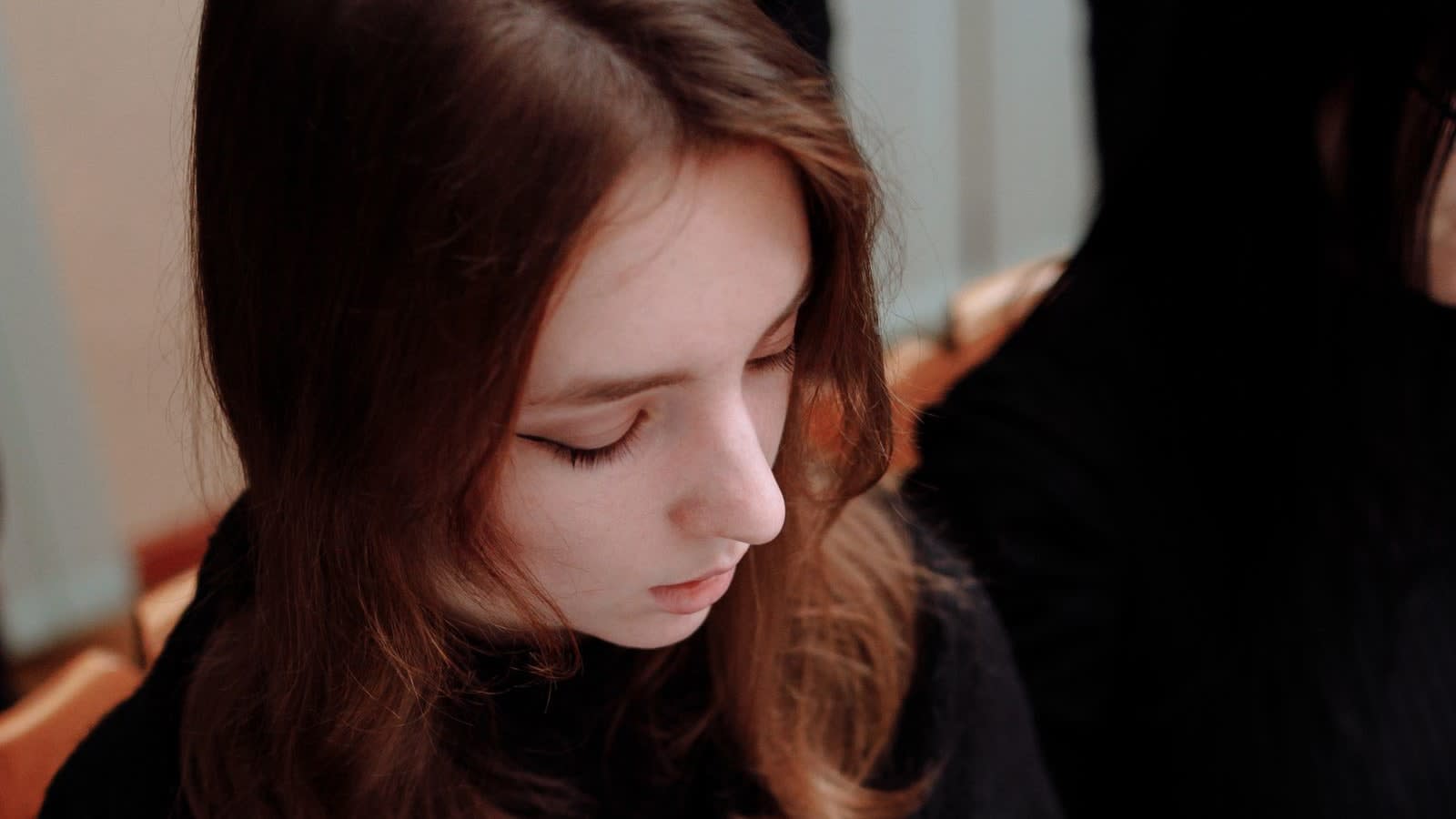
Applied conservatory teaching is structurally different from anything else in music education. The studio lesson is one hour per week. The student is twenty years old, lives away from home, and is preparing for juries, recitals, concerto competitions, and the start of a professional career. They carry three to five pieces in motion at any given time, each at a different stage. They are not failing to practice. They are managing a workload most adult amateurs would find punishing. The teacher's job is not to make them practice. It is to keep the semester's architecture coherent across thirteen weeks of independent work.
This article is for applied faculty at conservatories, university music programs, and pre-professional training environments who want a clearer view of what their studio is doing between lessons — without turning the practice life of a young artist into a compliance report. The Pract.is article on music practice tracking for teachers covers the general case; the conservatory version requires a different frame, and the rest of this article lays it out.
What conservatory tracking needs to support
Why standard practice-tracking models break at this level
Most practice-tracking systems are built around accountability. They count minutes, flag streaks, surface skipped days, and produce reports a parent can read. None of that translates to applied conservatory teaching. The student is an adult. There is no parent to read the report. Minutes are not the unit of work. A twenty-minute focused session on a Brahms exposition is more valuable than a two-hour run-through of the whole sonata. Streaks have nothing to do with what the player is producing artistically. The faculty member who tries to introduce a K-12-style accountability tool into a conservatory studio is signalling, accurately, that they have not understood what their students actually do.
The frame that does work at this level is oversight, not accountability. The student manages their own practice. The faculty member needs visibility into what is happening across the semester — which pieces are advancing, which are stalling, which milestones are at risk, which students are quietly drifting. The tool is for the teacher's planning, not the student's compliance. That single distinction changes everything about what the tracking layer should do and how it should be introduced.
"At conservatory level the tool is for the teacher's planning, not the student's compliance. Get that distinction wrong and the studio rejects the tool by month two."
The four things applied faculty actually need to see
An oversight layer for conservatory studio teaching should expose four streams of information. None of them is "minutes practised." All of them are observable, all of them are honest, and all of them support better lessons without turning the studio into a surveillance environment.
The first is repertoire architecture. A conservatory student typically carries three to five pieces in active rotation: the concerto for orchestra week, the jury programme, a chamber assignment, an audition piece, the recital arc. Each is in a different state — learning, polishing, performance-ready, maintenance. The faculty member should be able to see all of it at once: which pieces are where, how the load is distributed, what is converging on which date. That single overview makes lesson planning enormously cleaner.
The second is semester arc. Juries fall on a fixed week. The studio recital is on a fixed week. The concerto competition has a hard date. The visible question for the faculty member is not "is the student practising?" — it is "is the repertoire arc converging on the dates that matter?" An oversight tool should make that convergence visible at a glance, across the whole studio, so the teacher can intervene in week 6 rather than in week 12.
The third is self-regulation evidence. The hallmark of a conservatory student is that they are learning to coach themselves. Reflections, observations, problem statements, recordings the student made for self-review — these are the artifacts that show whether the self-coaching is actually happening. They are also the artifacts that make the next lesson sharper: the teacher can read what the student noticed before the lesson and start the hour at the level the student is already thinking at.
The fourth is lesson continuity. The same piece returns to the studio week after week, semester after semester. What was discussed last week. What was decided. What was assigned. What the student tried. Without a record, every lesson restarts from memory; with a record, the lesson can build cumulatively across the semester arc. The Pract.is article on music lesson planning for private teachers: a weekly workflow covers the private-studio version of this; the conservatory version is the same principle applied to a longer arc and more pieces.
The semester at a glance
A conservatory semester looks completely different from a private K-12 teaching week. Multiple repertoire threads run in parallel, each with its own arc and milestone. The diagram below shows what a typical fourteen-week semester might look like for one advanced student — three pieces in motion, each converging on a different date.
A conservatory studio semester at a glance
Most accountability-style practice tools cannot visualise this. They count minutes per day across one student; they have no concept of repertoire arc, milestone alignment, or the parallel structure that defines conservatory life. The faculty member who wants oversight at this level needs a system designed around pieces and arcs, not days and minutes. The Pract.is article on best apps to track piano repertoire covers the repertoire-state layer specifically; for conservatory studios it is the structural foundation.
What student self-regulation evidence actually looks like
Conservatory students are at the level where their own observations should be sharper than most amateur teachers' would be. They have ears, technique, and pedagogical vocabulary. The artifacts that show their self-regulation is working are not minute counts. They are short, specific observations about what they noticed during practice — and questions about what they could not solve alone.
A useful weekly reflection from a conservatory student might read: "The Schumann second-movement passage broke down at tempo because the left-hand 32nds are out of phase with the breath I want in the right hand. I tried isolating the LH alone at 80 then adding RH from the cue note; the alignment held until bar 47, then collapsed again. Bringing this to lesson." That is the level. The faculty member who can read three such observations from a student before the lesson starts the lesson at a different point than the faculty member who arrives with no context.
The Pract.is article on how to listen more critically while you practice covers the underlying listening skill; the conservatory version is to make that listening visible to the studio teacher between lessons. Without a place for reflections to live, they happen in the student's head and the teacher never sees them.
Tool requirements for an applied studio
The table below lists the features that matter for applied conservatory faculty, and the features that do not.
What an applied studio tool should and should not do
| Feature | Conservatory use | Why or why not |
|---|---|---|
| Repertoire view (pieces, stages, milestones) | Required | The whole semester is repertoire architecture. |
| Per-piece reflection log | Required | Self-regulation evidence is the highest-value artifact at this level. |
| Recording attachments per piece | Required | Faculty needs to hear cold takes, not run-throughs from memory. |
| Lesson notes anchored to repertoire | Required | Lesson continuity across a fourteen-week arc breaks without this. |
| Studio-wide overview for faculty | Required | Spotting drift across 12-20 students is the actual faculty job. |
| Streaks, badges, gamification | Avoid | Insults the level the student is operating at. |
| Compliance reports for administration | Avoid | Wrong audience; the tool is for the studio, not the dean. |
| Parent visibility | Skip | No parent layer at the conservatory level. |
| Minute counts as the primary metric | Avoid | Minutes do not measure conservatory work; pieces and arcs do. |
How to introduce a tool without losing the studio
The introduction of any tracking layer into an applied conservatory studio is a delicate move. Students at this level are adults with strong opinions about what is and is not legitimate to ask of them. A tool introduced as "I need you to log your practice" will be rejected within a month. A tool introduced as "I want to be able to read your reflections before our lesson so we can use the hour better" will land differently.
The framing that works at this level is honest: the tool is for the teacher's planning, and the student benefits because the lesson becomes more useful. The faculty member is not policing practice. They are trying to arrive at each studio hour with context, so the hour can begin at the student's actual point of stuck-ness rather than at "how is the Bach going?" The Pract.is article on how to get more out of each music lesson covers the student-side reciprocal; the conservatory version is that the student gets a sharper lesson in exchange for short weekly reflections, not a compliance score.
A few specific introductions work better than others. "Three reflections a week, two sentences each" is realistic. "A short cold-take recording on the harder passages once a week" is realistic. "Update the repertoire status when a piece moves stage" is realistic. "Log every session" is not — students will fake it, the data will be noise, and the studio will quietly lose trust in the tool. Less is more here. Three honest artifacts per week per student is the realistic target, and it is enough for the faculty member to gain real visibility.
The mistakes applied faculty make with practice tracking
A few specific patterns are worth flagging because they appear repeatedly in conservatory studios that have tried to introduce a tracking layer and regretted it.
The first is treating practice data as evaluation. The moment students sense that their reflections are being graded, the reflections become performances. The data becomes useless. The tool needs to be safe; the assessment lives elsewhere — juries, recitals, lesson observation.
The second is importing K-12 framings. Streaks, badges, minutes, parent dashboards — these features exist for a reason at K-12 level, and that reason does not exist at conservatory level. A tool that surfaces these features prominently is the wrong tool for an applied studio, regardless of what its marketing says.
The third is insisting on completeness. Conservatory students will not log every session. They are practising six to eight hours a day across multiple weeks; logging every session is unworkable. The tracking layer should accept incomplete data gracefully and surface what is there. Insisting on completeness produces fabricated logs, which is worse than incomplete logs.
The fourth is letting the tool replace listening. The tracker shows arcs and reflections. It does not replace the studio hour. A faculty member who starts to evaluate students primarily through the tracker is doing it wrong. The hour is still the work. The tracker is preparation for the hour.
What changes when oversight is real
Applied faculty who run a real oversight layer across a semester report several specific changes. The first lesson of every week starts at the student's actual point rather than at a status update. Drift across a fourteen-week arc gets caught in week 4, when intervention is still cheap, rather than in week 10, when it is no longer cheap. Studio recital programmes converge more cleanly because the milestone alignment is visible. Difficult conversations with struggling students happen earlier and more honestly because the evidence trail exists.
The deeper change is the studio's culture. When students see that their reflections are read, considered, and built into the lesson, the reflection becomes a real artistic practice rather than a chore. When students see that their faculty member arrives at the lesson having looked at the week, they take the lesson hour more seriously. The Pract.is article on why some adult beginners improve faster than others covers the principle at amateur level; at conservatory level it is multiplied because the students were already at a high level of self-direction.
None of this requires a complicated system. It requires a tool that respects what conservatory students are doing — three honest reflections a week, an accurate repertoire-state view, a place for short recordings, and a studio-wide overview that supports faculty planning. The tool does the rest.
Applied teaching at this level is not about counting minutes. It is about keeping fourteen weeks of independent artistic work coherent. The right tracking layer makes that possible. The wrong one breaks the studio.
More on teaching.
Tonara Alternatives for Teachers and Studios After the Shutdown
Tonara alternatives for teachers and studios, compared by assignments, practice logs, recordings, messaging, admin tools, pricing, and migration friction.
Pract.is Editorial
What to Charge for Piano Lessons in 2026 (Data + a Calculator Mindset)
Set sustainable piano lesson rates for 2026 using current benchmarks, real workload, collected hours, payment fees, and a practical rate-floor formula.
Pract.is Editorial
How to Start Teaching Piano Online in 2026 (From First Student to Full Studio)
Start teaching piano online with a clear offer, first-student plan, studio policy, lesson workflow, and growth system that stays manageable.
Pract.is Editorial