
How to Diagnose a Struggling Student From Their Practice Patterns
A struggling student's practice log has a shape, and the shape usually tells you why they're stuck before they say a word. The cram, the avoider, the scatter, the fade — how to read each pattern, and what to do about it in the next lesson.
Pract.is Editorial
Research-based practice guidance for musicians from the Pract.is editorial team.

Every teacher has a student like this: the playing isn't improving, but the practice is apparently happening. The minutes are there. The parent confirms it. The student swears to it. And yet week after week the same passage limps, the same piece stalls, and the lesson keeps restarting from the same place. When the minutes and the results disagree, the explanation is almost never that the student is lying — it's that the practice has a shape problem, and shape is invisible in a total.
This is where a practice log stops being an accountability tool and becomes a diagnostic one. A student's log, read across two or three weeks, has a recognisable silhouette — and a handful of silhouettes account for most stuck students. Learn to see them and you can usually tell why someone is struggling before they've played a note in the lesson, which changes what you do about it entirely. This piece is an atlas of the four shapes that matter most: what each looks like in the data, what it usually means, and the first move to make in the next lesson. (If you're new to reading student logs at all, start with what happened between lessons — this post assumes the logging is running and goes a level deeper.)
First, know what healthy looks like
You can't spot pathology without a baseline. A healthy log has a boring, unmistakable profile: practice on several days rather than one, short sessions that return to the same trouble spots repeatedly across the week, and notes that name specific problems — "bar 24 uneven at 60" — rather than moods. That silhouette matches what researchers actually find when they watch effective practice happen. In a well-known study by Robert Duke, Amy Simmons, and Carla Davis Cash, advanced pianists learned a difficult passage and were tested on retention the next day; what separated the best performers wasn't how long or how much they practised, but how — they located errors precisely, corrected them immediately, and kept returning to the exact trouble spot until it was stable. The study's title says it plainly: it's not how much, it's how.
That's the quiet revolution in reading a log: total minutes are the least informative number on the page. The information lives in the distribution — across days, across pieces, across passages. Which is exactly where the four problem shapes show up.
"When the minutes say one thing and the playing says another, believe the shape of the week — not the total at the bottom."
Three shapes you can spot at a glance
The totals can look identical across all three. The shapes — and what they need from you — could not be more different.
The cram: seven days of practice in one evening
The most common shape by far: nothing Monday through Saturday, then one heroic session the night before the lesson. The minutes total can look genuinely respectable, the parent honestly reports "she practised," and the student isn't lying — but the retention math is brutal. Decades of work on the spacing effect say the same thing: massed practice produces fluency that evaporates, while the same minutes spread across days actually stick. The cram student is the living demonstration — they often play decently at the lesson (the cram is fresh) and then regress by midweek, which is why they feel perpetually stuck at the same spot while insisting they're working.
The cause is usually structural, not moral: practice has no anchor in the week, so it gets deferred until the deadline — the lesson — forces it. Which means the fix is scheduling, not scolding. Change what you prescribe: not "ninety minutes this week" but "ten minutes on five different days — and I'd rather you skip the long session entirely." Have the student name, in the lesson, when those ten minutes happen (after dinner, before school), because an intention with a time survives and one without doesn't. Then judge next week's log purely on days-touched, and say so. Cram students often convert quickly once the target is days rather than minutes, because the bar per day is suddenly tiny.
The avoider: plenty of practice, zero on the assignment
Read the per-piece breakdown and a second shape appears: this student practises happily — five, six days a week — but the passage you assigned got nothing, while the piece they already play well soaked up the week. Observation studies of young learners find this drift constantly: students gravitate to what already sounds good, because it's rewarding, and away from what doesn't, because it isn't. The crucial reframe is that avoidance is information, not laziness. A passage that gets avoided all week is a passage that feels bad to practise — usually because it's too hard as assigned, or because the student doesn't actually know how to work on it, only that they can't play it yet.
So the first move isn't "you need to practise bar 17" — they know, and knowing didn't help. Shrink the assignment until it's unavoidable: two bars, one hand, a tempo where success is nearly guaranteed. Then do the first repetition together in the lesson, so the student leaves having already started — the dread of starting is most of what avoidance is made of. And next week, open the log together and look at the piece breakdown without judgment: "look — the nocturne got five days, the étude got none; that tells us the étude assignment was wrong, so let's fix the assignment." You've turned the avoidance from a guilt object into a diagnostic the two of you read together.
The scatter: touches everything, finishes nothing
Third shape: the log is full — many days, many entries — but every session visits five pieces for a few minutes each, and nothing gets returned to twice. This is the diligent-looking version of unproductive practice, and it's what the Duke study's lower-ranked pianists did more of: play through, move on, never close the loop on an error. Nothing consolidates because nothing repeats. The cause is usually the absence of a priority rather than the absence of effort — the student genuinely doesn't know which one thing matters this week, so they give everything a polite visit.
The intervention is one sentence at the end of every lesson: name the single primary job of the week, and make everything else explicitly optional. "This week is bars 9–16 of the Bach, hands separate. If that's done, anything else is dessert." The scatter student's log usually snaps into focus within two weeks of getting real priorities, because the underlying work ethic was never the problem — the missing piece was an ordering. (This is also the student for whom a well-structured log itself teaches the skill: seeing "7 pieces, 0 repeats" in their own data is often the first time the pattern becomes visible to them.)
The fade: the dropout, announcing itself early
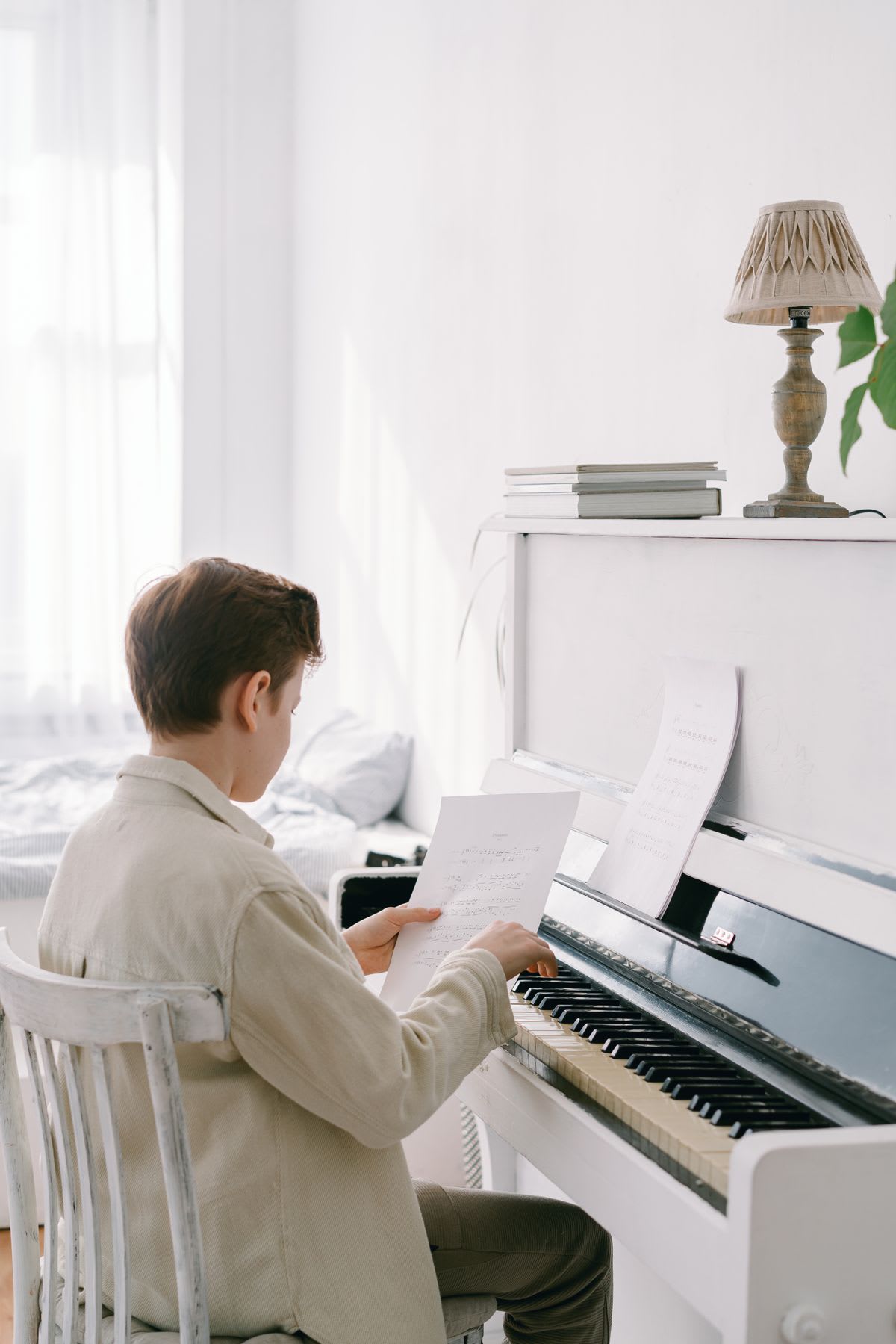
The fourth shape is the one with the highest stakes. Five days a week becomes three, becomes two, becomes a single token session — a slow dimming across four to six weeks. No single week looks alarming, which is exactly why teachers miss it lesson to lesson; each individual week has a plausible excuse attached. But plotted across a month, the fade is unmistakable, and it is very often the first visible sign of a student who is going to quit — months before anyone says the word. Motivation drains long before attendance does, and practice frequency is where it drains first.
Treat the fade as a fire alarm for a conversation, not for pressure. Nagging a fading student accelerates the fade, because the practice has already become a guilt object and you're adding weight. Instead, name it gently and ask a real question: "I noticed the last few weeks have been lighter — what's going on?" The answer is usually one of three things: life got busier (solve with a smaller, honest routine), the repertoire stopped mattering to them (solve with music they actually want to play), or the whole activity is quietly losing to something else (a much bigger conversation, and one you want to have now rather than at the cancellation email). If the fade has already reached zero, that's a different situation with its own playbook — that's what to do when a student won't practise between lessons.
"Students rarely announce they're about to quit. Their practice frequency announces it for them, about two months early."
Read patterns as questions, not verdicts
One discipline keeps all of this honest: a pattern is a hypothesis, never a conviction. The cram shape sometimes belongs to a student whose week genuinely only has Sundays in it; the "avoider" sometimes didn't understand the assignment; the fade is sometimes just exam season. The log tells you where to look and what to ask — it does not tell you what's true, and the fastest way to poison a studio's logging culture is to use the data as a prosecution exhibit. Open with curiosity ("I noticed X — tell me about that") and the log stays what it should be: a shared instrument the two of you read together. Wielded as surveillance, students stop logging honestly within a month and the whole diagnostic channel goes dark. What you ask students to log matters here too — keep it light enough to stay truthful; we cover that balance in what student logs should track (and what to ignore).
Here's the whole atlas on one card — the two-minute read before each lesson.
None of this requires new hours from you. If your students log in something that shows spacing and a per-piece breakdown at a glance — that's precisely the week-shape view our own Practis prep screen is built around, so weigh the mention accordingly — the read takes about two minutes per student before the lesson, and it replaces the five interrogative minutes at the start of it. But the tool is secondary. The skill is the thing: when a student is stuck and the minutes look fine, stop reading the total and start reading the shape. The shape almost always knows why — and once you can name the why, the next lesson finally gets to be about fixing it.
More on teaching.
Tonara Alternatives for Teachers and Studios After the Shutdown
Tonara alternatives for teachers and studios, compared by assignments, practice logs, recordings, messaging, admin tools, pricing, and migration friction.
Pract.is Editorial

What to Charge for Piano Lessons in 2026 (Data + a Calculator Mindset)
Set sustainable piano lesson rates for 2026 using current benchmarks, real workload, collected hours, payment fees, and a practical rate-floor formula.
Pract.is Editorial
How to Start Teaching Piano Online in 2026 (From First Student to Full Studio)
Start teaching piano online with a clear offer, first-student plan, studio policy, lesson workflow, and growth system that stays manageable.
Pract.is Editorial