
Why Hayato Sumino (Cateen) Is the Most Important Classical Musician on the Internet Right Now
Hayato Sumino matters online for a different reason than most viral classical pianists do. He is not just a brilliant performer who happens to do well on the internet. He is one of the first major classical musicians who actually understands the internet as a native medium.
Pract.is
Research-based practice guidance from the Pract.is team.

I think Hayato Sumino is the most important classical musician on the internet right now. Not because he is the only great pianist online, and not because every clip he posts goes viral. He matters because he understands something most of the classical world still does not: the internet is not just a marketing channel. It is a real artistic medium.
That sounds obvious until you look around. A lot of classical musicians are online. Very few are native to it.
Here is the current context, checked on March 9, 2026: Hayato Sumino’s official biography says his Cateen channel has passed 1.52 million YouTube subscribers and 240 million total views. The same bio says his November 2025 K Arena Yokohama recital sold 18,546 tickets and was recognised by Guinness World Records as the largest indoor solo piano recital by ticket sales. His second Sony Classical album, Chopin Orbit, was released on January 23, 2026.
This Is Not a “Best Pianist” Argument
Let me be clear about the claim. I am not saying Hayato Sumino is the single greatest classical pianist alive, or that every musician should copy him, or that internet size should decide artistic value. That would be a shallow way to think about this.
I am saying something more specific: no other classical musician currently combines serious artistic credibility, native internet fluency, and broad audience conversion quite the way he does.
That is why he matters.
What Makes Him Different
There are plenty of classical musicians with huge reputations. There are also plenty of musicians with strong online followings. Sumino is unusual because the categories do not feel artificially stitched together.
| What many musicians do online | What Sumino does differently |
|---|---|
| Post performance clips after the real work happens elsewhere | Treat the channel itself as part of the artistic identity |
| Use social media mainly for promotion | Build audience through format-native content, experimentation, and personality |
| Keep genres in separate boxes | Move comfortably between Chopin, improvisation, arrangements, originals, and crossover programming |
| Assume online audiences are shallower than concert audiences | Bring online audiences toward deeper listening and real halls |
That last point is the important one. He is not just succeeding on the internet. He is converting internet attention into actual classical engagement.
If you want one concrete example of how he packages serious material for an online audience without flattening it, this official video for White Keys from Chopin Orbit is a good place to start.
He Did Not Arrive Online as an Afterthought
This is the part people miss. A lot of classical artists start with the institution and then add the internet later. Sumino’s path is different. Apple Music’s editorial material on Human Universe quotes him saying that when he was younger, he kept his genre-mixing ideas under a separate identity because he was nervous about combining classical music with other styles. That identity was Cateen.
That matters because it means the internet was not just a place to publicize finished prestige work. It was where experimentation happened. It was where arrangement, improvisation, humor, speed, curiosity, and audience trust were built.
His official biography also notes that while at the University of Tokyo he co-founded the six-member city-soul band Penthouse. That detail matters more than it first seems to. It tells you he does not think in the old classical binary of “serious repertoire here, everything else somewhere lower.” He thinks like someone who actually lives in contemporary listening culture.

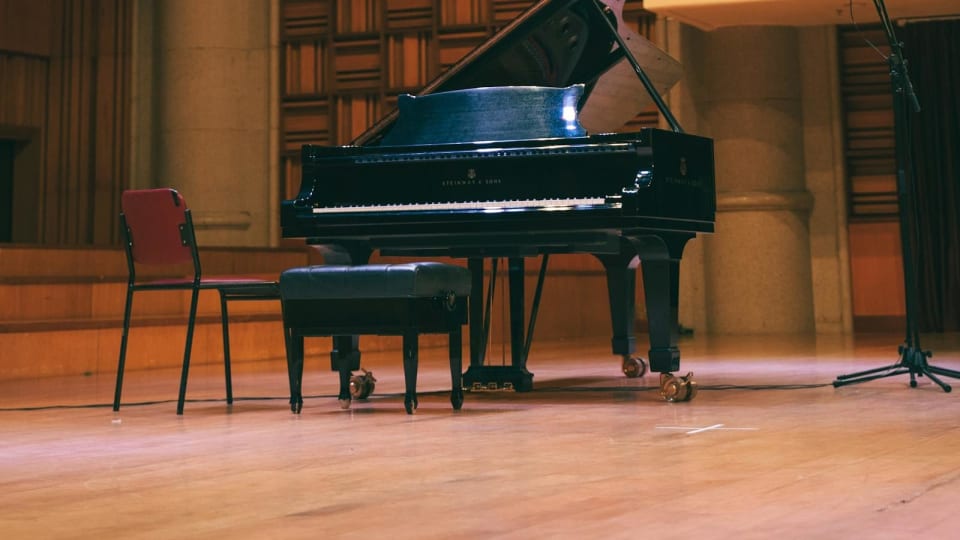
Photo: Mikhail Nilov via Pexels
Chopin Orbit Is Part of the Argument
Chopin Orbit is not important only because it is a new album. It is important because the concept itself is internet-literate without being cheap.
Sony Classical describes the album as a musical “orbit” with Chopin at the center and Sumino’s responses, reflections, and companion pieces circling around him. Apple Music Classical’s editorial note pushes the same idea from another angle: Chopin’s music is treated not as a museum object, but as something with improvisational fire still inside it. That is exactly the kind of framing that works online when it is done by someone who actually means it.
In other words, the project is not “play famous Chopin and hope clips spread.” It is: build a coherent artistic world that modern listeners can enter from multiple directions.
That is why I think Chopin Orbit matters more than the usual “young star releases album” cycle.
He Connects Two Audiences That Usually Stay Apart
Classical music still suffers from a split that a lot of institutions pretend is normal:
- the concert-hall audience
- the algorithmic audience
Most musicians reach one better than the other. Sumino reaches both.
His official biography is full of institutional credibility: semi-finalist at the 2021 Chopin Competition, Sony Classical exclusive artist, Apple Music Classical ambassador, Carnegie Hall debut, Berlin Philharmonie debut, Vienna Konzerthaus debut, touring with major orchestras. None of that is lightweight.
But the online side is just as real. The Japanese Sony Music announcement around Chopin Orbit says flatly that Cateen’s channel has passed 1.52 million subscribers and 240 million views, and calls him a new kind of classical messenger for the digital age. I think that description is fair.
He is not a conservatory product awkwardly trying to “do content.” He is a serious musician whose seriousness already includes content fluency.
Why This Matters More Than a Viral Clip
Single-performance virality is real. I wrote about that in the posts on classical piano on TikTok and Yunchan Lim’s Goldberg Variations. But Sumino’s importance is slightly different.
He is not just benefiting from the internet’s attention spikes. He is helping define a working model for what a 2026 classical career can look like:
- serious repertoire
- original music
- high-level improvisation
- format-native video presence
- major-hall legitimacy
- fans who do not see those worlds as contradictory
That is much more important than one trending week.
The Part Classical Institutions Should Pay Attention To
The K Arena Yokohama record is not just a fun headline. The official number, 18,546 tickets, should make every orchestra, conservatory, and presenter ask harder questions about audience development.
Because the old lazy explanation was always that younger listeners simply did not have the appetite for serious instrumental music at scale. That explanation looks weaker every year.
What younger listeners often lack is not appetite. It is an entry point that feels alive, porous, and contemporary without being dumbed down. Sumino is one of the clearest proofs of concept for that.
My Real Answer
I think Hayato Sumino is the most important classical musician on the internet right now because he has made the false wall between “serious musician” and “internet-native artist” look obsolete.
He can do the big halls, the prestige institutions, the Chopin weight, the improvisation, the channel logic, the visual framing, the fan culture, and the crossover curiosity without making it feel like a branding exercise.
That is rare. And for classical music, it is strategically huge.
The internet is not waiting for the old gatekeepers to become less awkward. Musicians like Sumino are building the next version of the audience themselves.
FAQ
Why is Hayato Sumino also called Cateen?
Cateen is the online name under which he built his YouTube presence. It became the digital-side identity through which many listeners first discovered him before following him deeper into concert work and major-label releases.
What makes Chopin Orbit important?
It shows how Sumino frames classical repertoire for modern audiences without flattening it. The album pairs Chopin with his own responses and related works, creating a concept that is artistically coherent and easy for newer listeners to enter.
Why not just say he is a popular pianist online?
Because the point is bigger than popularity. His importance is structural: he offers one of the clearest current models for how classical music can build serious internet-native audiences without abandoning depth.
More on motivation.
Why Some Piano Prodigies Disappear in Their 20s
The transition from 'wunderkind on YouTube at 12' to 'working pianist at 24' is brutal — and most do not survive it. The structural reasons are specific and the few who navigate the gap share a recognisable pattern.
Pract.is Editorial
The Hidden Economics of Being a Concert Pianist in 2026
Most working concert pianists below the very top tier earn the majority of their income from teaching, adjudicating, and masterclasses — not from concerts. An honest breakdown of how the career math actually works in 2026.
Pract.is Editorial

Why Japanese Piano Education Produces So Many World-Class Pianists
Uchida, Sumino, Fujita, Kobayashi — the list of world-class Japanese pianists is striking and growing. The reasons are structural: Yamaha and Kawai's institutional reach, competition culture, early starts, and a pedagogy that treats music as serious work from age four.
Pract.is Editorial