
Formative Assessment in Music Class With Practice Data
How practice consistency, reflection, and effort patterns turn into formative assessment evidence — earlier intervention, more personalized feedback, less performance-only pressure.
Pract.is Editorial
Research-based practice guidance for musicians from the Pract.is editorial team.
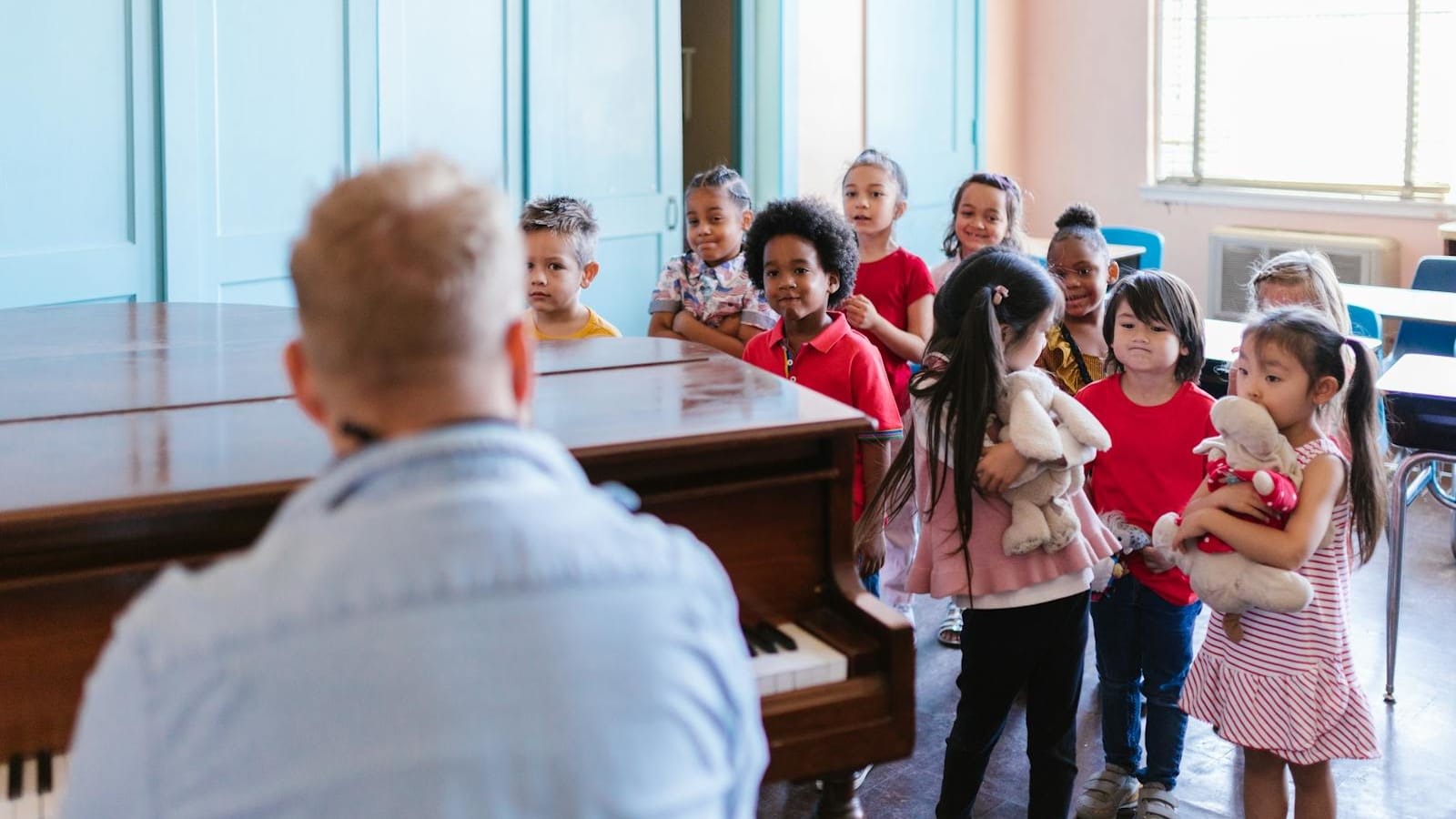
Most music assessment is summative. A recital. A grade. A juried performance. An end-of-term concert. By the time those moments arrive, the time for intervention has already passed. The teacher knows a student struggled with rhythm at the spring recital, but the spring recital is the wrong place to find out. Formative assessment — the smaller, continuous, evidence-based feedback that happens while learning is still in motion — is where the real teaching happens. And in music, the strongest formative evidence often already exists. It is in the student's weekly practice patterns.
This article is for K-12 music educators, ensemble directors, and assessment-minded private teachers who want stronger evidence between formal performances. The goal is not more paperwork. The goal is to turn practice consistency, reflection, and effort patterns into the kind of formative information that supports earlier intervention and more personalized feedback — without turning the music classroom into a gradebook.
Summative vs formative in music education
What formative assessment actually means in music
Formative assessment is not a "small test." It is the continuous gathering of evidence about how learning is developing while it is still developing. In a math class, this looks like the homework that signals which students have not understood the lesson. In a music class, this looks like the weekly practice pattern that signals which students are stuck, which are coasting, and which are ready for more. The evidence is not the score on a piece. It is the pattern of effort, attention, and reflection leading up to the piece.
This distinction matters because most music programs evaluate students on what they can play at a single moment — the recital, the exam, the audition. That single moment captures only the tip of the learning. What the student did across the four weeks before the recital, how they responded to feedback in week two, whether they actually practiced the metronome work in week three, what they noticed about their own playing — all of this is formative evidence, and most of it is invisible to the assessment system. The music teacher knows it informally. They just rarely have a way to use it.
The pedagogical tradition of Zoltán Kodály, refined across the twentieth century into one of the most respected music education systems in the world, is built around exactly this idea. Each step in the Kodály method is small enough that the teacher can see whether the student has it; the next step does not begin until the previous one is secure. That model is not unique to Kodály — Orff, Suzuki, Dalcroze, and modern band and orchestra pedagogies all share the same logic. Formative assessment is not a research framework imported into music education from somewhere else. It is what music teachers have always done, structured.
The three pillars of formative evidence in music
Three streams of evidence carry the most weight for formative assessment in music. Each is observable, each can be recorded lightly, and each tells the teacher something different about where the student actually is in their learning.
The first is practice consistency. Did the student practice across the week, or did they cram on the day before the lesson? Consistency is not a moral question; it is a learning question. Spaced practice produces durable skill. Massed practice produces a short-term performance that fades. A student who shows up to lessons having practiced once for two hours has a very different learning curve from a student who practiced for twenty-five minutes five days in a row. The Pract.is article on music practice tracking for teachers covers the evidence collection side; the formative interpretation is that consistency itself is a learning indicator the teacher should be reading.
The second is reflection. What did the student notice about their own playing? Did they identify the broken bar before the teacher pointed it out? Did they try a strategy and record what happened? Self-assessment in music education is a real, trainable skill — and the moment a student begins to make accurate observations about their own playing is a major formative milestone. A student who can say "the left-hand rhythm collapsed on bar 12 when I added tempo" is doing more learning than a student who simply says "I practiced it." The teacher's formative work is to support this reflection: ask better questions, model better observations, and create the conditions where the student practices noticing rather than just playing.
The third is effort pattern. Where did the student's attention go? Did they spend the week running the piece end-to-end, or did they isolate the hard sections? Did they touch the new piece three times and ignore the scales? Did they work the metronome task assigned last week? Effort pattern is the difference between practice that produces development and practice that fills time. A teacher who can see effort patterns can intervene where it actually matters — not by demanding more practice but by reshaping how the available practice time is being used.
The formative cycle
The three pillars feed a continuous cycle that runs week to week. Practice activity produces patterns. Patterns become evidence. Evidence becomes a teacher decision. The decision becomes a new assignment. The new assignment shapes the next week of practice. The cycle repeats. Each pass is small; the accumulation across a term is what produces real, defendable assessment evidence.
The formative cycle
The cycle works because each step produces a small artifact the teacher can act on. The patterns step does not require a formal report — it can be a thirty-second scan of the week's practice activity. The intervention step does not need a long memo — it can be a one-sentence change to the home assignment. The compounding across weeks is what turns these small artifacts into a defensible formative record that supports report cards, parent conversations, and student self-assessment.
What to look for: specific formative signals
Knowing the cycle is one thing. Knowing what specific signals to read is another. The table below lists the most common formative signals in music practice data and the teacher decisions they support.
Formative signals worth reading
| Signal | What it suggests | Possible intervention |
|---|---|---|
| Practice is consistent but the same passage stays broken. | The student is repeating the same method rather than diagnosing. | Teach a specific repair method; assign three loops at slower tempo. |
| Practice has dropped from 5 sessions to 1 over three weeks. | Motivation, schedule, or task fit is failing. | Send a check-in; reduce assignment scope; ask what changed. |
| Student logs sessions but never notes anything observed. | Reflection has not become a practice habit yet. | Model a reflection out loud in the lesson; assign one observation. |
| Student practices only the easy parts of the assignment. | The hard section is unclear, intimidating, or poorly framed. | Rewrite the assignment as a smaller hard-section action. |
| Student practices long sessions with no focus shift. | Likely playing through, not practicing. | Assign timed micro-sessions with specific exit criteria. |
| Student's reflections suddenly become detailed and accurate. | Self-assessment is developing — a major formative milestone. | Confirm and reinforce; raise the demand of the assignments. |
Several of these signals would be invisible on a traditional gradebook. A student who quietly stops doing the assigned metronome work but still shows up smiling at the lesson is not a "below-average student." They are a student whose effort pattern has shifted in a way that needs a teacher response. Formative evidence catches this; summative grading does not. The Pract.is article on digital practice logs vs paper journals for music students covers why these signals are easier to see in a digital format that aggregates lightly across weeks.
Recording formative evidence without bureaucracy
The fastest way to ruin formative assessment is to turn it into a separate documentation task. Music teachers already carry a heavy load — scheduling, billing, communication, programming, performance prep. A formative system that requires fifteen extra minutes per student per week will be abandoned by the second month of the school year. The system that survives is the one where formative evidence is already being produced by the work the student is doing, and the teacher just has to read it.
This is why a good practice tracking system carries so much weight. If the student is logging sessions anyway, those logs are formative evidence. If the teacher is leaving short post-lesson notes anyway, those notes are formative evidence. If the student is making reflections anyway, those reflections are formative evidence. The teacher's job is not to generate documentation — it is to interpret what is already there. The Pract.is article on music lesson planning for private teachers covers the planning side; the formative version is the same loop applied at the assessment level.
"Formative assessment that survives the school year is the kind teachers do not have to add to their load. It is the kind that emerges from the work that is already happening."
Student self-assessment as part of the system
The strongest formative assessment systems in music education make the student a participant, not just a subject. When a student is asked to reflect on their week — to name what improved, what failed, and what should happen tomorrow — they are doing assessment, not just receiving it. Over a term, the student's reflections become part of the formative record. Over years, they become the foundation of a musician who can self-correct without the teacher in the room.
The prompts that work best are short and specific. "What was the clearest change in your playing this week?" produces better reflection than "How did practice go?" "What did you not understand?" produces better reflection than "Did you practice?" The Pract.is article on how to increase student practice between music lessons covers the reflection habit; for formative assessment, the same reflections become a layer of assessment evidence that the teacher can read alongside the practice patterns.
Common mistakes in music formative assessment
A few specific patterns weaken otherwise good formative systems and are worth flagging.
The first is collecting formative evidence and then using it only summatively. If the teacher gathers practice patterns but only references them at the end of the term in the report card, the formative point has been missed. Formative evidence has to feed intervention while learning is still in motion; otherwise it is just delayed summative evidence.
The second is letting formative assessment become a grading exercise. The moment students realize their practice logs are being graded, the logs stop being honest. Formative assessment depends on observation, not scoring. The student should feel that the practice record is part of the teaching relationship, not a separate evaluation channel.
The third is over-measuring. A formative system with twelve metrics is a bureaucratic system, not an educational one. The three pillars — consistency, reflection, effort pattern — are sufficient for almost all cases. Adding more dimensions usually adds more noise, not more signal.
The fourth is ignoring student variation. Two students with identical practice patterns can be in different formative places. A student who has just started lessons and is logging three sessions a week is in a different position from a student in year four logging the same three sessions. Formative assessment is contextual, not standardized. The pattern matters less than what the pattern means for this specific learner.
What this changes across a year
Music teachers who run a real formative system across a year report several specific changes. Interventions happen earlier; struggling students get noticed before they fail at the recital. Personalized feedback becomes more concrete; the teacher has evidence to point to rather than impressions. Report cards and parent conferences become easier; the teacher can speak from a record rather than from memory. Student self-assessment improves; the loop trains the student to think about their own learning. And summative outcomes — the recital, the audition, the exam — get better, because the term-long formative work has prepared the student more accurately than weeks of cramming ever could.
None of this requires turning the music classroom into a data center. It requires lightweight, continuous evidence collection on three things students are already doing — consistency, reflection, effort pattern — and a teacher willing to read it weekly and act on what it shows. The cycle is small. The accumulation is what matters.
Formative assessment in music is not the test before the test. It is what happens between the lessons, week after week, where most of the real learning lives.
More on teaching.
Tonara Alternatives for Teachers and Studios After the Shutdown
Tonara alternatives for teachers and studios, compared by assignments, practice logs, recordings, messaging, admin tools, pricing, and migration friction.
Pract.is Editorial
What to Charge for Piano Lessons in 2026 (Data + a Calculator Mindset)
Set sustainable piano lesson rates for 2026 using current benchmarks, real workload, collected hours, payment fees, and a practical rate-floor formula.
Pract.is Editorial
How to Start Teaching Piano Online in 2026 (From First Student to Full Studio)
Start teaching piano online with a clear offer, first-student plan, studio policy, lesson workflow, and growth system that stays manageable.
Pract.is Editorial