
Group Classes and Practice Tracking: What Changes With 10+ Students
The tracking habits that work beautifully in a one-to-one studio quietly assume a number — and somewhere past ten students, every one of them breaks. What actually changes in group classes, and the triage system that scales where deep reading can't.
Pract.is Editorial
Research-based practice guidance for musicians from the Pract.is editorial team.

Somewhere between the eighth and the fifteenth student, every practice-tracking habit you built in a one-to-one studio quietly stops working. Not because the ideas were wrong — reading each student's week, tailoring each assignment, chasing each lapsed logger — but because every one of those habits assumes a number, and the number was small. A teacher with five students can be a craftsman about tracking. A teacher with a Tuesday group of twelve and a Thursday group of ten has to become something else: a system designer.
This post is about that shift. Not whether to track practice in group settings — groups arguably need it more than private studios, for a reason we'll get to — but what has to change in how you run it once the class size makes your old methods arithmetically impossible. The short version: you stop reading students one by one and start reading the group by exception, you assign to the class and adapt for the flagged few, and in exchange you gain something solo teachers never get — a cohort to compare against.
The arithmetic stops working first
Start with the brutally simple part: the math. Reading one student's week properly — spacing, what got avoided, where it broke down — takes a few minutes. At five students that's a coffee's worth of prep. At twenty-five it's over an hour of reading per week, every week, unpaid, before you've planned a single class — and that's before you count the other per-student habits that scale just as badly: individually tailored assignments, individually chased non-loggers, individually messaged parents. Group teachers don't abandon tracking because they stop believing in it. They abandon it because nobody redesigned the workflow for the headcount, so it collapses under its own reading load somewhere around week four.
Here's the same collapse, habit by habit — and what replaces each one at scale.
Groups dilute effort — which is exactly why they need individual visibility
Now the less obvious problem, and the reason group settings need tracking more than private studios rather than less. Social psychology has a name for what happens to individual effort inside a group: social loafing. In the classic experiments by Bibb Latané, Kipling Williams, and Stephen Harkins — people shouting and clapping alone versus in groups — individual effort dropped reliably as group size grew, and the driving mechanism was identifiability: when your individual contribution disappears into a collective output, the pressure to contribute quietly drains away. Their paper's title says it: many hands make light the work.
A group music class is a textbook setup for exactly this. In a private lesson, an unpracticed week is instantly, personally exposed. In a class of twelve, it hides — the ensemble sound papers over individual gaps, the teacher's attention divides twelve ways, and every student can reasonably assume someone else's practice will carry the group. The old-school answer, the paper practice chart with a parent's signature, failed precisely because it restored accountability without restoring truth — every band teacher alive has collected a stack of Sunday-night fictions. What actually counters loafing is what the research says counters it: making each individual's real contribution individually visible again. A per-student practice log does for the group class what the group setting took away — it gives every student back a week that is unmistakably theirs, seen by someone who knows their name.
"In a class of twelve, an unpracticed week hides inside the ensemble sound. The log gives every student back a week that is unmistakably theirs."
Read by exception, not by student
The workflow change that makes tracking survive scale is a single inversion: stop reading logs and start reading flags. You are no longer trying to know everything about everyone — you're trying to reliably notice the handful of students who need attention this week. That's a triage problem, and triage has a shape: a fast scan across everyone, a shortlist of exceptions, and deep attention for only the few who earn it. In practice, the weekly read of a fifteen-student class takes about ten minutes: two minutes scanning the whole roster for who practised at all, a pass over whatever got flagged — missed weeks, untouched assignments, a frequency that's been fading for a month — and then a proper look at the two or three students behind the worrying flags, the same diagnostic read we laid out in diagnosing a student from their practice patterns.
The ten-minute weekly triage
Attention flows down the funnel — not evenly across the roster. That's the only version of "reading everyone's week" that survives fifteen students.
This only works if the flags come to you rather than you hunting for them — a roster you can sort by last-practised, with the untouched assignments visible at a glance, does the first two funnel layers automatically (that roster-level scan is what our own Practis teacher view is built around, so weigh the mention accordingly). But the principle is tool-independent: define, in advance, the three or four conditions that earn your attention, and refuse to spend deep reading on anyone who doesn't trip one. Guilt-free. The students whose logs you didn't read this week are the ones for whom the system is working.
Assign to the class, adapt for the few
Assignments invert the same way. Bespoke weekly plans for twelve students is a fantasy that survives about a month; the sustainable version is one shared class assignment — same piece, same passage, same practice instruction — with individual variation only where a flag or a lesson observation demands it. That isn't a pedagogical compromise so much as an honesty about what group teaching is: the class moves as a class, and your differentiation budget is real but small, so it should be spent on the students the triage surfaced rather than sprinkled evenly and invisibly across everyone.
The second structural trick is to move logging inside the class hour. The last three minutes of class are for logging this week's plan and last week's result — together, every time, as a routine rather than homework. This solves the non-logger chase at the root (there's nothing to chase; it happened in the room), it anchors the habit to a moment that already exists in every student's week, and — per the loafing research — it makes each student's week publicly started in front of the person who'll read it. The rollout mechanics are the same ones that work one-to-one, just run for a roomful at once; we walk through them in getting your students actually using a practice tracker.
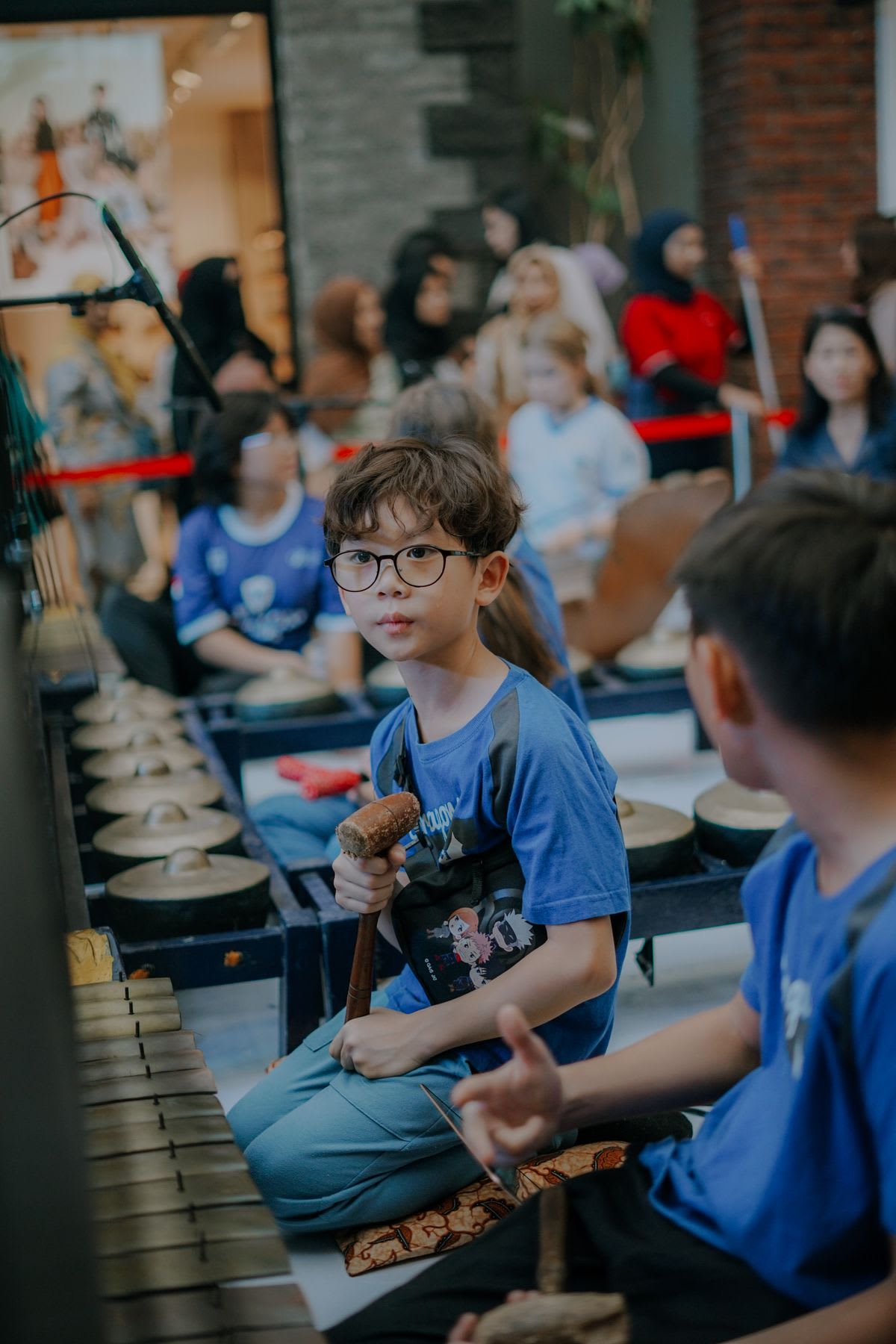
The cohort dividend — and its one ethical rule
Here's what solo-studio teachers never get and you now do: a baseline. With fifteen students logging the same assignment in the same week, "normal" stops being a guess. You can see that the class median was three practice days, which instantly reframes the student on one day (genuinely adrift) and the student on six (carrying an unusual load, worth understanding too). Outliers surface against the cohort rather than against your intuition, fades stand out weeks earlier because the rest of the class holds steady around them, and a class-wide dip after a hard new piece tells you the assignment missed, not the students. This is the point where group tracking stops being a scaled-down version of studio tracking and becomes its own, better instrument.
One rule keeps the dividend from turning toxic: the comparisons are yours, not the class's. It is tempting to publish the leaderboard — minutes practised, streaks, a wall chart with gold stars — and for the top third it even works. But public practice rankings hand the bottom third a weekly, visible confirmation that they're the worst, which is how a struggling ten-year-old decides music isn't for them. Use cohort data privately for diagnosis, praise privately and specifically ("your week was your best this term"), and if you want a public number at all, make it collective — the class's total days practised — so the group wins together or not at all. What each student should be logging in the first place doesn't change with class size, and we cover that in what student practice logs should track.
"Cohort data is a diagnostic for you, not a scoreboard for them. Publish the leaderboard and the bottom third learns exactly one thing: that they're the bottom third."
When you outgrow this too
The system above — exception-based reading, class-level assignment, in-class logging, private cohort baselines — comfortably runs one teacher's groups up to thirty-odd students. Past that, or the moment a second teacher joins, you've crossed another threshold: now there are multiple rosters, someone needs oversight across teachers, and reporting starts to matter to people who've never met the students. That's the point where a teacher's system becomes a school's, with different tooling stakes — a decision we've mapped in the best practice log apps for music schools and studios.
But the core insight scales all the way up and all the way down, and it's worth ending on because it's the opposite of how most group teachers feel about tracking. The group setting isn't where practice tracking becomes impractical. It's where tracking earns its keep most: groups are precisely where individual effort goes invisible, and the log is the cheapest instrument ever invented for making it visible again. Redesign the reading — not the belief — and ten-plus students is not where your tracking dies. It's where it finally has enough data to be interesting.
More on teaching.
Tonara Alternatives for Teachers and Studios After the Shutdown
Tonara alternatives for teachers and studios, compared by assignments, practice logs, recordings, messaging, admin tools, pricing, and migration friction.
Pract.is Editorial
What to Charge for Piano Lessons in 2026 (Data + a Calculator Mindset)
Set sustainable piano lesson rates for 2026 using current benchmarks, real workload, collected hours, payment fees, and a practical rate-floor formula.
Pract.is Editorial
How to Start Teaching Piano Online in 2026 (From First Student to Full Studio)
Start teaching piano online with a clear offer, first-student plan, studio policy, lesson workflow, and growth system that stays manageable.
Pract.is Editorial