
Suno and Udio Now Have Licensing Deals. What Does That Actually Mean for Musicians?
Suno and Udio are moving from lawsuit targets to licensed AI music platforms. This explainer breaks down what actually changed, what has already changed in the products, and what musicians should and should not assume in 2026.
Pract.is
Research-based practice guidance from the Pract.is team.

The short version: this is not the music business suddenly deciding AI was fine all along. It is the music business moving from pure lawsuit mode toward licensed, controlled, commercial AI music products.
As of March 10, 2026, the public deals I could verify are these: Universal Music Group and Udio announced an agreement on October 29, 2025, Warner Music Group and Udio announced one on November 19, 2025, and Warner Music Group and Suno announced one on November 25, 2025. That matters because it changes what these platforms are becoming, and it changes what musicians should expect from them.
If you are a working musician, songwriter, producer, teacher, or just someone trying to understand whether Suno and Udio are now “legal,” the useful answer is more specific than that. Some things got clearer. Some things got stricter. And a few very important questions are still not settled.
Important note: this piece was written on March 10, 2026 from a musician's perspective, using official sources from RIAA, Universal Music Group, Warner Music Group's Udio announcement, Warner Music Group's Suno announcement, Udio, Udio's Warner FAQ, Suno, and the U.S. Copyright Office. Where I make an inference, I say so.
The Short Version
| Question | Short answer | Why musicians should care |
|---|---|---|
| Did the labels stop fighting AI music? | No. They started licensing parts of it. | The market is shifting from open conflict toward negotiated, platform-specific control. |
| Are Suno and Udio now fully “safe” to use? | No. | Platform deals and your own legal risk are not the same thing. |
| Will artists get more control? | In some cases, yes. | The public announcements emphasize opt-in participation, compensation, and guardrails. |
| Will users get more freedom? | Mixed. | Some future features expand creative options, but current download and sharing rules got tighter. |
| Are AI songs automatically copyrightable now? | No. | The U.S. Copyright Office still says human authorship is the core test. |
What Actually Happened
The cleanest way to understand this is as a timeline.
| Date | Event | What it meant |
|---|---|---|
| June 24, 2024 | RIAA-backed record companies sued Suno and Udio | The labels argued both companies trained on copyrighted sound recordings without permission. |
| October 29, 2025 | UMG and Udio announced a settlement and licensing agreement | Udio said its new platform would launch in 2026 and be trained on authorized, licensed music. |
| November 19, 2025 | WMG and Udio announced their own agreement | That expanded Udio's move toward a licensed model and resolved Warner's litigation. |
| November 25, 2025 | WMG and Suno announced a partnership | Suno committed to licensed models in 2026, opt-in artist participation, and tighter download rules. |
That last point matters. Udio now has public deals with both Universal and Warner. Suno has a public deal with Warner. As of March 10, 2026, I did not find a matching public Universal-Suno announcement. That does not prove nothing else is happening behind the scenes, but it does mean people flattening this into “everyone settled with everyone” are being sloppy.

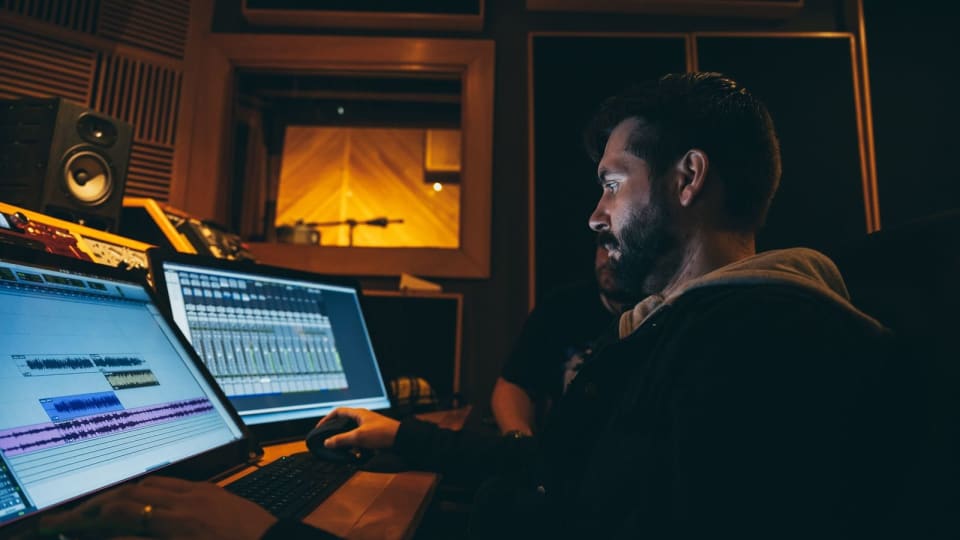
Photo: Mikhail Nilov via Pexels
What a “Licensed AI Music Platform” Actually Means
This is the phrase doing most of the work.
In plain English, it means the companies are trying to move from models allegedly trained on unlicensed material toward products built around authorized training data, formal label agreements, and opt-in artist participation.
| Old model | Licensed model | Why the difference matters |
|---|---|---|
| Train first, fight later | Train on music covered by agreements | That is the basic copyright shift. |
| Broad prompt-based imitation | Opt-in artist participation and guardrails | The labels want names, voices, likenesses, and compositions used inside controlled systems. |
| Loose consumer creation tool | Subscription product with rights management | The platform becomes more commercial, more closed, and less casual. |
| Users take more of the legal ambiguity | Platforms promise a more protected environment | That helps the companies, but it does not automatically clear every user workflow. |
Udio's official language is especially revealing here. Both Universal and Warner describe a new licensed music creation service or new licensed AI music creation platform launching in 2026. Warner and Suno go even further: they explicitly talk about opt-in use of artist names, images, likenesses, voices, and compositions in new AI songs.
That is a very different product from the early “type anything, get a song” phase that made these tools explode. It is closer to interactive, label-approved fan creation than to a totally open AI jukebox.
If you read my earlier NAMM 2026 AI piece or the critique of ROLI's AI Music Coach, the pattern is familiar: the market is moving away from raw novelty and toward tighter, more monetizable, more controlled products.
What Changed for Musicians Using Udio
Udio is the clearest example because the company published both partnership announcements and user-facing transition notes.
According to UMG's October 29, 2025 announcement, Udio's new platform will launch in 2026, use authorized and licensed music, and create a licensed and protected environment for customizing, streaming, and sharing music responsibly.
But the musician-facing change was immediate: Udio's own help center says the Universal deal triggered a transition period in which downloads of audio, video, and stems were disabled. In exchange, subscribers got higher credit limits and extra bonus credits. Udio later said the Warner announcement did not change the day-to-day product further, because the service was already operating under those transition terms.
| Udio change | Verified status as of March 10, 2026 | Why it matters |
|---|---|---|
| Downloads | Disabled during transition | This is a big practical downgrade if you used Udio as a file-export tool. |
| Current models | Still available | Udio says users still have access to v1, v1.5, and v1.5 Allegro during the transition. |
| Core creation tools | Still available | Extend, remix, and Styles remain usable while the licensed platform is being built. |
| Future product direction | More licensed, more artist-linked | Udio says future experiences will include remixes, covers, and new songs using participating artists' voices and styles. |
That last line is the real shift. Udio is not just trying to survive the lawsuits. It is trying to become a rights-managed fan creation platform.
What Changed for Musicians Using Suno
Suno's public picture is different. The verified public licensing deal I found is with Warner, not Universal.
Warner's November 25, 2025 announcement says the Suno partnership settles litigation, commits the company to licensed models, and gives artists and songwriters full control over whether and how their names, images, likenesses, voices, and compositions are used in new AI-generated music.
Suno's own blog and help articles are useful here because they spell out the product consequences more plainly than the press release does.
| Suno change | Verified status as of March 10, 2026 | Why it matters |
|---|---|---|
| Licensed models | Planned for 2026 | The current models are expected to be deprecated when the new licensed ones launch. |
| Downloads | Moving behind paid tiers | Suno says downloads will require a paid account going forward. |
| Free-tier outputs | Shareable, but increasingly restricted | Suno says future free-tier songs will be playable and shareable, not downloadable. |
| Commercial use | Still tied to paid plans | Suno says songs made while subscribed to Pro or Premier are granted commercial use rights. |
There is also an important distinction in Suno's own rights documentation: commercial use rights are not the same thing as copyright protection. Suno's help center says that paid users can own and monetize songs made while subscribed, but also says that those songs may not be eligible for copyright protection, especially if the expressive content was generated by AI rather than authored by a human.
What These Deals Do Not Mean
This is the section musicians most need, because a lot of online coverage collapses everything into one lazy conclusion: “AI music is legal now.” That is not what happened.
1. They do not mean every dispute is over
What changed is that some big disputes turned into some licensing deals. That is a different claim from saying the whole sector is now settled, clean, and universally accepted.
2. They do not mean every artist is now fair game
The public language from Warner and Udio points toward participating artists and opt-in systems. That is the opposite of a free-for-all.
3. They do not mean your AI song is automatically copyrightable
The U.S. Copyright Office's January 29, 2025 Part 2 report says copyright can exist where there is sufficient human authorship, but that prompting by itself is generally not enough. So even if a platform grants you commercial use rights, you still should not assume the output automatically gets strong copyright protection.
4. They do not mean independent musicians are automatically protected
This part is my inference from the structure of the deals, not a direct quote from the companies: these agreements obviously work best for entities that already control valuable catalogs, likeness rights, and major commercial leverage. That does not mean indie musicians get nothing. It does mean the first people to benefit are usually the people who had assets big enough to negotiate with.
So What Should Musicians Actually Do With This Information?
I would keep it simple.
| If you are... | What to do now |
|---|---|
| A songwriter or producer using AI as a sketch tool | Bring more of your own authorship into the result: your own lyrics, your own structure, your own edits, your own recorded material. |
| An artist worried about voice or style cloning | Watch the opt-in language closely and do not assume platform guardrails are the same thing as full protection. |
| An indie musician thinking about distribution | Check distributor policies and do not confuse commercial-use permission from a platform with guaranteed copyright eligibility. |
| A teacher or student trying to understand the broader AI shift | Read these deals as proof that AI music is becoming more commercial and more regulated, not less. |
If you want my blunt take, it is this: the era of carefree AI music toys is ending. The next phase looks more like streaming-era music licensing all over again, just with remixing, synthetic voices, and prompt-based creation layered on top.
That may be better than the previous legal chaos. It is also likely to be more closed, more negotiated, and less generous to users than the first wave was.
The Bottom Line
Suno and Udio did not just get “approved.” They got pulled into the music industry's licensing machine.
For musicians, that means three practical things. First, the big AI music platforms are moving toward licensed data, opt-in artist programs, and more guardrails. Second, users should expect tighter product rules, not just more freedom. Third, your own authorship still matters, because platform permission and copyright protection are not the same thing.
If this whole space felt messy before, that is because it was. Now it is becoming legible. Not simple. Not fully settled. But legible.
FAQ
Did Suno and Udio settle their lawsuits?
Some of them, yes. As of March 10, 2026, I could verify public settlement-and-licensing announcements for UMG and Udio on October 29, 2025, WMG and Udio on November 19, 2025, and WMG and Suno on November 25, 2025.
Does this mean AI-generated songs are legal now?
No. These deals make certain platform relationships more legitimate and more licensed. They do not erase every legal risk around authorship, copyright, distribution, likeness rights, or specific user behavior.
Can I monetize songs I make in Suno?
Suno says songs made while subscribed to Pro or Premier are granted commercial use rights. But Suno also says that does not guarantee copyright protection, which depends on your jurisdiction and the amount of human authorship in the work.
Why did Udio disable downloads?
Udio says downloads were disabled during its transition to the new licensed platform announced with Universal on October 29, 2025. The company says it hopes to re-enable downloading after the transition period.
More on science.
AI × Music in 2026: The Living Guide to Suno, Udio, Copyright, and Licensing
AI music in 2026 is moving from open generation toward licensed systems. Here is the current Suno, Udio, copyright, and release-rights picture.
Pract.is Editorial

Why A=440 Hz Is the Standard (and the A=432 Hz Myth)
A=440 became the global standard for practical reasons: coordination, manufacturing, and broadcasting. A=432 is a valid preference, but the bigger healing claims do not hold up cleanly.
Pract.is Editorial

Why Real Instruments Still Matter in an AI Music Era
Real instruments still matter because music is not just output. It is touch, timing, visible effort, feedback from the instrument, and the shared response of people in the room.
Pract.is Editorial