
The Best Classical Pianists to Watch Right Now (2026 Edition)
Eight classical pianists worth paying attention to in 2026, from Yunchan Lim and Hayato Sumino to Aristo Sham, Sophia Liu, Jaeden Izik-Dzurko, and more.
Pract.is Editorial
Research-based practice guidance for musicians from the Pract.is editorial team.
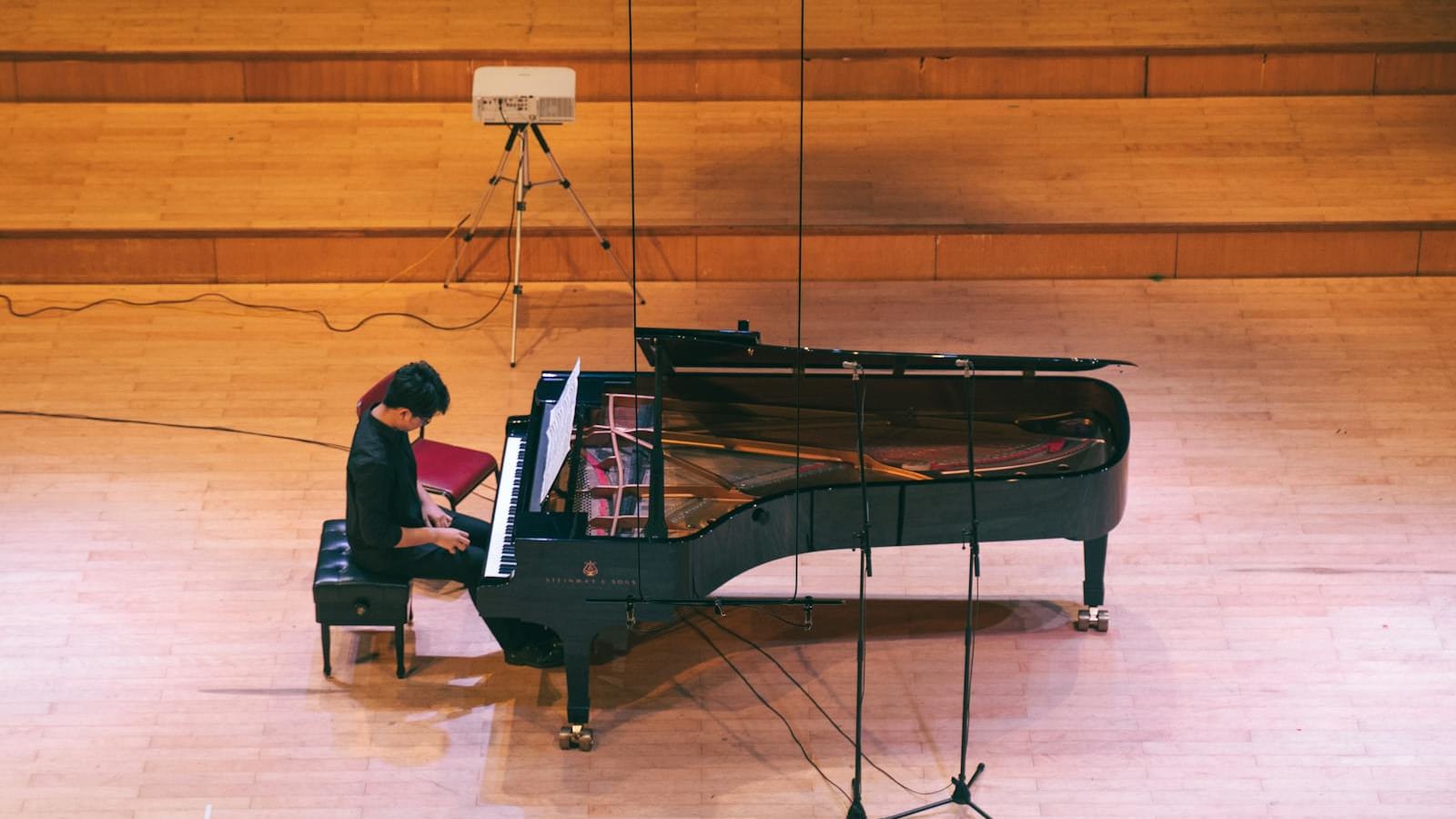
If you care about where piano culture is moving in 2026, you do not need another safest-possible list of famous names. You need the players whose careers are changing shape right now. Some are turning competition momentum into real long-term authority. Some are building enormous reach without flattening their musicianship. Some are still early enough that getting familiar now will feel smart in two years.
This is not a ranking of the greatest pianists alive. It is a watch list. The thread connecting these eight names is that each one currently sits at an interesting pressure point: a new album, a breakout season, a competition aftershock, a digital following that is converting into hall-level demand, or a repertoire identity that is starting to look unmistakably their own.
Readers who already know why Yunchan Lim's Goldberg Variations cut through so hard and why Hayato Sumino matters far beyond YouTube novelty should treat this as the next layer out from those posts. The point is to widen the radar, not to repeat the same two stories.
If you want structural gravity
Yunchan Lim
Start with the 2026 Carnegie Hall Goldberg release if you want proof that hype can harden into something much bigger.
If you want internet-native virtuosity
Hayato Sumino
Chopin Orbit is the cleanest entry point if you want someone who can move between Chopin, arrangement, and improvisational energy without sounding fake.
If you want the next post-Cliburn leap
Aristo Sham
The Cliburn win mattered, but the real reason to watch him is that the playing already sounds built for heavyweight repertoire.
If you want the early-arrival pick
Sophia Liu
She still carries prodigy language around her, but the 2025 debut album and 25/26 season suggest she is already moving past that frame.
Why this is a good moment to pay attention
There is no single pipeline to piano relevance anymore. A decade ago, the cleanest path still looked institutional: competition, manager, orchestra, album, then maybe press attention. That path still exists, but it now sits beside two others. One is the internet-native route, where musicians build real audiences before institutions know how to place them. The other is the hybrid route, where digital reach, label support, and concert-hall credibility start reinforcing each other instead of fighting. That broader pattern is part of the same shift behind why younger listeners keep discovering classical music through online fragments and why viral classical clips now matter even when they look superficial at first glance.
The eight names below are not all in the same lane, which is exactly why the list is useful. Yunchan Lim and Hayato Sumino are already pulling large amounts of attention toward themselves, but for different reasons. Aristo Sham, Sophia Liu, Jaeden Izik-Dzurko, and Ilya Shmukler look like the next competition-to-career names with real staying power. Alexander Malofeev and Eunike Tanzil matter because they show two different ways a pianist can build a distinctive identity once technique is no longer the interesting part of the conversation.
Three lanes of piano attention in 2026
Hall-to-world stars
Yunchan Lim
Alexander Malofeev
Jaeden Izik-Dzurko
Competition launchers
Aristo Sham
Sophia Liu
Ilya Shmukler
Internet-native hybrids
Hayato Sumino
Eunike Tanzil
The two names already bending the center of gravity
Yunchan Lim
Yunchan Lim is on this list because the hype phase has ended and the substance phase looks even stronger. Decca's official materials around Bach: Goldberg Variations, Live at Carnegie Hall position the February 6, 2026 release as a landmark recording, not just another young-star album drop. That matters because it turns the post-Cliburn narrative into a longer artistic claim: he is not merely a prodigy with astonishing control, but a pianist willing to stake identity-level seriousness on repertoire that rewards patience, architecture, and sustained thought.
What makes Lim worth watching right now is the combination of youth and interpretive weight. Plenty of players can generate buzz with velocity or volatility. Lim's appeal is stranger than that. The sound world feels unusually inward, and the pacing often suggests an old musician's seriousness inside a very young career. If the Goldberg release becomes the recording people keep using as the reference point for this phase of his development, then 2026 will look less like a victory lap and more like the year his center of gravity hardened.
Hayato Sumino
Hayato Sumino matters because his career is proving that internet fluency and serious piano culture do not have to cancel each other out. His official biography now says he has 1.52 million YouTube subscribers, over 240 million views, and more than 2.2 million followers across platforms. That would be enough to make him interesting on its own, but the more important signals are elsewhere: his 18,546-ticket K Arena Yokohama recital set a Guinness record, his 2025/26 season includes major debuts at Carnegie Hall and the Vienna Konzerthaus, and Sony Classical released Chopin Orbit on January 23, 2026.
He is worth watching because the career no longer reads like "famous online pianist who also gives concerts." It reads like a new model of international classical stardom. The musicianship has enough detail to survive contact with serious repertoire, and the presentation has enough freedom to keep drawing listeners who do not want another museum-safe classical persona. He already matters. The question now is how much larger that circle gets.
Six more pianists who look much bigger than their current name recognition
Aristo Sham
Aristo Sham is the clearest post-competition name on this list. His official site notes that after winning both the Gold Medal and Audience Prize at the 2025 Van Cliburn Competition, he signed with Intermusica New York for worldwide general management, and his 25/26 season already includes a major Asia tour, U.S. recitals, and a return to the Hong Kong Philharmonic under David Robertson. That is exactly the kind of infrastructure jump that separates a nice competition story from a real career launch.
Why watch him now instead of later? Because the case for him is not mainly "fresh winner energy." It is repertoire weight. Even his own site foregrounds the 2025 Cliburn quarterfinal Hammerklavier and the Brahms Second Concerto final as calling-card material, which tells you something about how his team wants him heard. He feels like a pianist built for large forms, authority, and seriousness rather than quick-hit effect.
Sophia Liu
Sophia Liu is still young enough to attract lazy prodigy framing, which is exactly why it is a good time to pay attention before that framing gets stale. Her official biography says the 25/26 season opens with her NHK Symphony debut in Tokyo and Osaka, followed by recitals in Berlin, Venice, Lyon, La Roque d'Antheron, Bologna, Tokyo, and elsewhere. On top of that, both her own site and Mirare's release page point to the October 2025 debut album Chopin, Liszt, which is not a trivial debut program.
The musical impression here is not just speed or polish. The recurring language around her playing is risk, fluidity, and unusual poise. That matters because some young players arrive with astonishing mechanics but no clear sense of atmosphere or proportion. Liu already sounds more shaped than that. If the next two seasons continue to push her through major halls without the playing losing its nerve, the name recognition gap will close fast.
Jaeden Izik-Dzurko
Jaeden Izik-Dzurko looks like one of the healthiest competition stories currently developing. His official biography leads with the fact that he won the 2024 Leeds International Piano Competition and became the first Canadian Grand Prize Laureate in an instrumental edition of the Concours musical international de Montreal. That is already enough to matter, but the follow-through is what makes him worth watching now: Wigmore Hall, Fondation Louis Vuitton, the Royal Liverpool Philharmonic, and a debut EP with Warner Classics suggest that institutions are treating him as a long-term artist, not just a competition headline.
His reputation is built less on spectacle than on maturity. That can sound boring on paper and be incredibly valuable in practice. The language around him tends to emphasize communicative power, refined command, and artistic maturity rather than adolescent shock value. In a field full of pianists who can all play, that kind of musical credibility is usually what survives longest.
Ilya Shmukler
Ilya Shmukler deserves more attention than he currently gets in English-language piano chatter. His biography foregrounds the 2024 Concours Geza Anda First Prize plus four special awards, while his current schedule shows exactly the kind of 2026 season you want to see after a prize breakthrough: Elbphilharmonie, Wiener Konzerthaus, Chopin First Concerto dates in Hiroshima and Graz, and a thick run of European recitals. That is a real touring shape, not just a placeholder calendar.
The musical appeal seems to sit at the intersection of intelligence and voltage. Even his official materials lead with the Frankfurter Allgemeine Zeitung's "Shmukler is a volcano," which is strong language but not completely misleading. The repertoire mix on the current schedule, moving through Mozart, Chopin, Rachmaninoff, Beethoven, Ravel, and Ades, suggests a pianist who is not interested in sounding generically tasteful. He looks like someone still expanding into the larger stage rather than simply occupying it.
Alexander Malofeev
Alexander Malofeev is the most already-established name in this section, but 2026 still feels like a pivot year for him because it is the year the recording identity sharpens. Sony Classical's Forgotten Melodies, released on February 27, 2026, is framed not as a random debut but as a repertoire statement built around exile, nostalgia, Medtner, and Rachmaninoff. That is much more revealing than yet another display album would have been. It tells you he wants to be heard as a pianist with an inner repertoire logic, not just as a phenomenon.
Malofeev's playing has long had the big-sound glamour people notice first, but the more durable attraction is the singing line and the sense of inward pressure. He already has the kind of profile that can drift into generic "young star" admiration if nobody stops to ask what is actually distinctive. This album helps answer that question. It gives the career a more specific shape.
Eunike Tanzil
Eunike Tanzil is the outlier here, and that is why she belongs. Deutsche Grammophon's materials around The First of Everything make clear that the 2025 debut album is not a standard recital disc. It is a composer-pianist-producer project recorded with the Deutsches Symphonie-Orchester Berlin, full of cinematic sweep, storytelling instinct, and a modern sense of format. Her own site also emphasizes that orchestras like Boston Symphony, San Francisco Symphony, and Royal Philharmonic have already performed her music.
So why include her in a pianists-to-watch list? Because the piano culture of the next few years will not be defined only by recital traditionalists. Tanzil represents a different route: orchestral imagination, internet-native compositional fluency, and a version of piano identity that extends beyond the bench without becoming unserious. If your interest in the instrument includes where it touches media, composition, and digital culture, she is one of the clearest names to keep an eye on.

Photo: Matt Reinke via Pexels
Where to start with each pianist
A list like this is only useful if it gives you an entry point. The table below is the practical version: one reason each pianist matters now, plus the cleanest place to start listening or paying attention.
| Pianist | Start here | Why now | If you like... |
|---|---|---|---|
| Yunchan Lim | Goldberg Variations, Live at Carnegie Hall (2026) | He is turning early superstardom into a deeper artistic identity | Architectural intensity, seriousness, inward fire |
| Hayato Sumino | Chopin Orbit (2026) | He is proving internet-native reach can scale into major hall legitimacy | Improvisational energy, modern framing, Chopin with personality |
| Aristo Sham | 2025 Cliburn Brahms 2 and Hammerklavier videos | The post-Cliburn launch already looks structurally serious | Big forms, authority, mature repertoire weight |
| Sophia Liu | Chopin, Liszt (Mirare, 2025) | The debut album and 25/26 season suggest a fast-widening career | Risk, fluidity, lyrical romantic repertory |
| Jaeden Izik-Dzurko | Leeds-winning material and current recital touring | Competition prestige is converting into durable institutional trust | Maturity, control, communicative power |
| Ilya Shmukler | Geza Anda aftermath plus 2026 European recitals | The repertoire and schedule are expanding at the same time | Heat, clarity, smart programming |
| Alexander Malofeev | Forgotten Melodies (2026) | The first major-label identity statement just landed | Late-Romantic color, singing tone, introspection |
| Eunike Tanzil | The First of Everything (2025) | She is showing what a broader piano career can look like now | Cinematic writing, composer-performer hybrids, digital fluency |
What this group suggests about the next few years
The best thing about this moment is that the piano world no longer seems to be rewarding only one type of career. The old pipeline still matters, and people like Aristo Sham or Jaeden Izik-Dzurko can absolutely come through it. But the broader picture is more interesting than that. Yunchan Lim shows what happens when interpretive gravity becomes visible early. Hayato Sumino shows what happens when digital fluency and high-level playing stop pretending they are enemies. Sophia Liu and Ilya Shmukler show how fast a season can change a player's scale. Alexander Malofeev and Eunike Tanzil show that distinct identity is becoming more important than generic virtuoso branding.
That is why these are the pianists to watch right now. Not because all eight will end up occupying the exact same tier, and not because every one of them will become a household name outside classical music. They are worth watching because each one already makes the field look a little different from how it looked before they arrived.
More on culture.
Vienna, Conservatories, and Why European Music Training Is Different
European music training differs less by secret technique than by structure: auditions, one-to-one study, ensembles, performance, and cultural proximity.
Pract.is Editorial
The Best Classical Pianists to Watch in 2027
Six classical pianists are turning 2025 competition breakthroughs into real careers. Hear the official performances that make each worth watching in 2027.
Pract.is Editorial
10 Classical Music Facts That Actually Go Viral on TikTok
The classical facts that spread fastest online all have the same shape: a famous name, a sharp reversal, and one detail that makes people argue in the comments.
Pract.is Editorial