
How to Assign Weekly Music Practice Without Creating More Admin Work
Good practice assignments fail for two opposite reasons: too vague to follow, or so detailed they bury you in paperwork. Here is the middle path — fast, specific, and admin-free.
Pract.is Editorial
Research-based practice guidance for musicians from the Pract.is editorial team.

Most practice assignments fail for one of two opposite reasons. Either they are too vague to act on — "practise the piece, work on your scales" — so the student opens the case on Wednesday, feels the fog, and does the easy bits. Or they are so thorough — a written plan for every day, tracked in a spreadsheet — that they collapse under their own weight, because no teacher with twenty students can sustain that, and the chasing alone becomes a second job.
The trick is the narrow path between the two: assignments specific enough to act on, fast enough to give in seconds, and structured so they report back to you without you running a paperwork operation. Here is how to build that.
Why assigning practice usually creates admin
The admin sneaks in through three doors. First, composition — writing a fresh, detailed plan from scratch for each student each week is genuinely slow, so teachers either skip the detail (vague assignment) or burn their evenings (unsustainable). Second, transmission — if the plan lives in a notebook the student forgets at home, or an email nobody reopens, you end up re-explaining it. Third, and worst, follow-up — without a way to see what happened, the next lesson opens with an interrogation, and between lessons you are reduced to nagging. Every one of those is a process problem, not a discipline problem, and each can be designed out.
A good assignment is small, specific, and lives where they practise
The research on this is unusually clear. Locke and Latham's 35-year review of goal-setting in American Psychologist found that specific, challenging goals consistently beat vague "do your best" intentions across hundreds of studies. "Get bars 9–16 clean at 80 BPM, hands separately" is a different psychological object than "work on the étude" — it tells the student exactly what to do first and exactly when they are done. That specificity is also what makes the assignment short: you are naming one target, not writing an essay.
The second half matters as much as the first: the assignment has to live where the practice happens. A target the student can see the moment they sit down gets done; a target buried in a notebook or an email thread does not. Get those two things right — specific and present — and most of the admin disappears on its own.
The 30-second assignment
Four fields, ten seconds to fill, and it answers the questions a student actually has at home: what, how well, where to start, and what to tell you next time. We went deeper on which of those signals are worth collecting — and which to ignore — in student practice logs: what to track.
Four ways to kill the admin
The template above keeps each assignment fast. These four habits keep the whole system from becoming a job in itself.
Reuse, don't rewrite. Most weeks are last week plus one change. Duplicate the previous assignment and tweak the target — never start from a blank page.
Standardise the shape. Use the same four fields for every student. A fixed format means you fill it on autopilot and the student always knows where to look.
Assign in the lesson, not after. The best moment to set next week's target is the second you find this week's problem. Write it then, with the student watching — zero homework for you later.
Let practice report back. The chasing dies when the log comes to you — the student records what they did, and you read it before the lesson instead of extracting it during one.
That fourth habit is the one that turns assigning into a loop instead of a chore: you assign once, the week happens, and the evidence is waiting for you — no follow-up emails required.
The low-admin assignment loop
What to leave out
The fastest way to rebuild the admin you just removed is to over-specify the assignment. Resist three temptations. Daily minute targets ("20 minutes Monday, 30 on Tuesday") look rigorous and collapse the first busy week — assign outcomes, not a timetable. Per-session mood or effort scores generate a tidy chart of nothing you can act on. And long written explanations belong in the lesson, not the assignment: if a concept needs a paragraph, teach it live and let the assignment be the one-line reminder that triggers the memory. A good weekly assignment is a pointer to work the student already understands, not a document that re-teaches it. When in doubt, cut a field — the version a busy teenager will actually read on a Wednesday night is the short one, and the short one is the only one that works.
What it looks like across a full studio
The reason this scales is that the per-student cost stays flat no matter how many students you have. Assigning in the lesson adds nothing to your week — it happens inside time you are already paying attention. Reusing last week's card turns a five-minute write-up into a ten-second edit. And because the practice reports back on its own, "checking in on twenty students" becomes a two-minute scan of twenty short logs before each lesson, not twenty chase emails on a Sunday night. The admin does not grow with the roster; only the teaching does.
This is also the quiet retention engine. Students who get a clear weekly target and feel you notice the result stay engaged, and the lesson opens with momentum instead of a reckoning — the same dynamic we covered in getting students to practise more without nagging and in seeing what happened between lessons. The assignment is where it all starts.
Pick one student this week and run the loop: in the lesson, write the four-field target with them watching, point them to where it lives, and read the log before they next walk in. If that one assignment cost you thirty seconds and saved you the usual five-minute reconstruction, roll it out to the rest. For the tools that make the "report back" step automatic, our guide to apps for assigning music homework compares the options.
More on teaching.
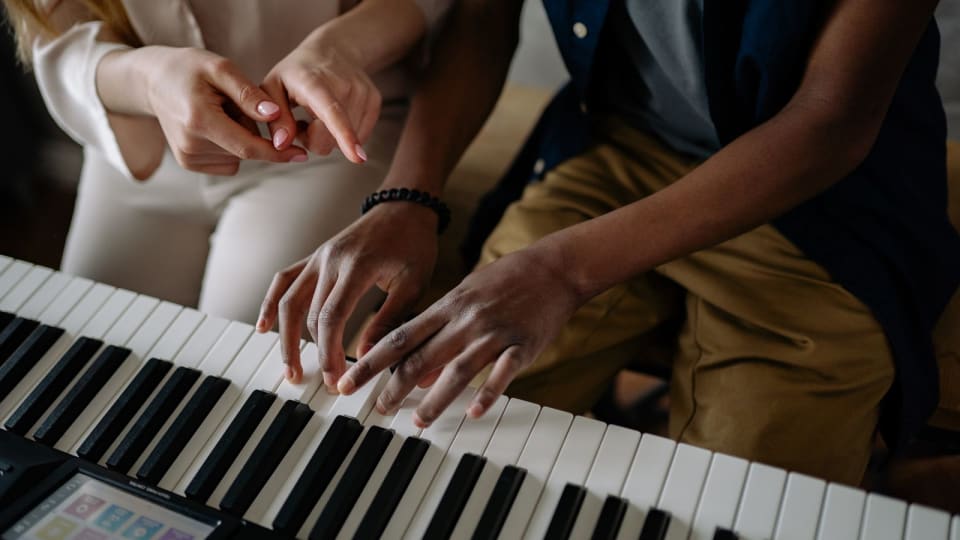
Tonara Alternatives for Teachers and Studios After the Shutdown
Tonara alternatives for teachers and studios, compared by assignments, practice logs, recordings, messaging, admin tools, pricing, and migration friction.
Pract.is Editorial

What to Charge for Piano Lessons in 2026 (Data + a Calculator Mindset)
Set sustainable piano lesson rates for 2026 using current benchmarks, real workload, collected hours, payment fees, and a practical rate-floor formula.
Pract.is Editorial
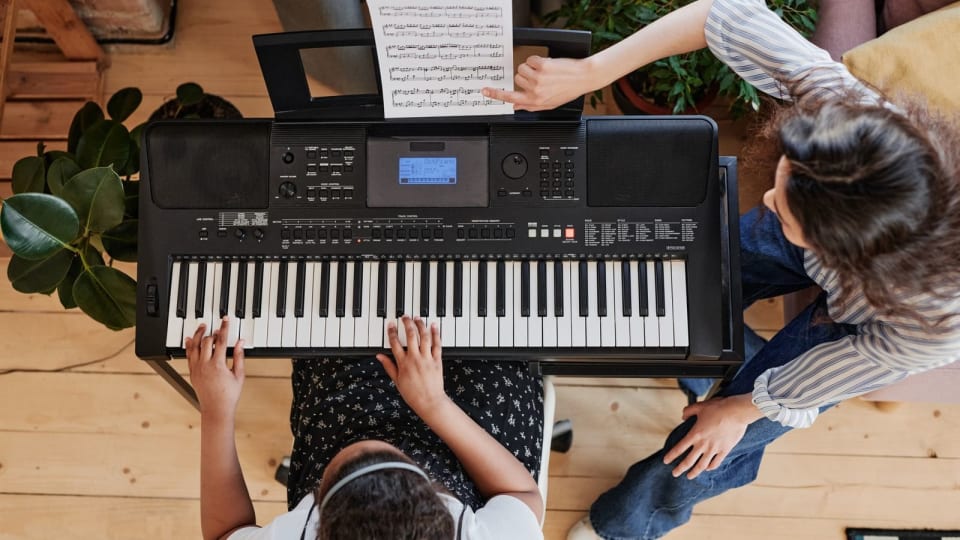
How to Start Teaching Piano Online in 2026 (From First Student to Full Studio)
Start teaching piano online with a clear offer, first-student plan, studio policy, lesson workflow, and growth system that stays manageable.
Pract.is Editorial